 Bellingham Siding
 Ferndale's Coastal Climate Is Harder on Siding Than Most Homeowners Realize
Ferndale sits close enough to the water and the Nooksack lowlands that its homes deal with a specific combination of stressors: salt-laden air drifting in off the Strait of Georgia and Bellingham Bay, long stretches of driving rain that comes in sideways during winter storms, and a moss and algae season that can run eight or nine months out of the year in shaded, north-facing exposures. Any one of these on its own is manageable. Together, over ten or fifteen years, they wear through paint film, swell wood fiber, and quietly rot the sheathing behind siding that still looks fine from the curb.
Salt air is corrosive to fasteners and metal trim, and it also breaks down cheap paint and coatings faster than inland exposure does. Driving rain doesn't just wet the surface of your siding — wind-driven moisture gets pushed up under laps, around trim, and into any gap in the water-resistive barrier that wasn't detailed correctly the first time. And moss doesn't just look bad; it holds moisture against the wall assembly for weeks at a time, which is exactly the condition that rots wood-based siding and delaminates cheaper composite products.
None of this means Ferndale homes need exotic materials or unusual construction. It means the siding, the water management behind it, and the installation details all have to be right for this specific climate — not for a generic Pacific Northwest average, and definitely not for a drier inland market.
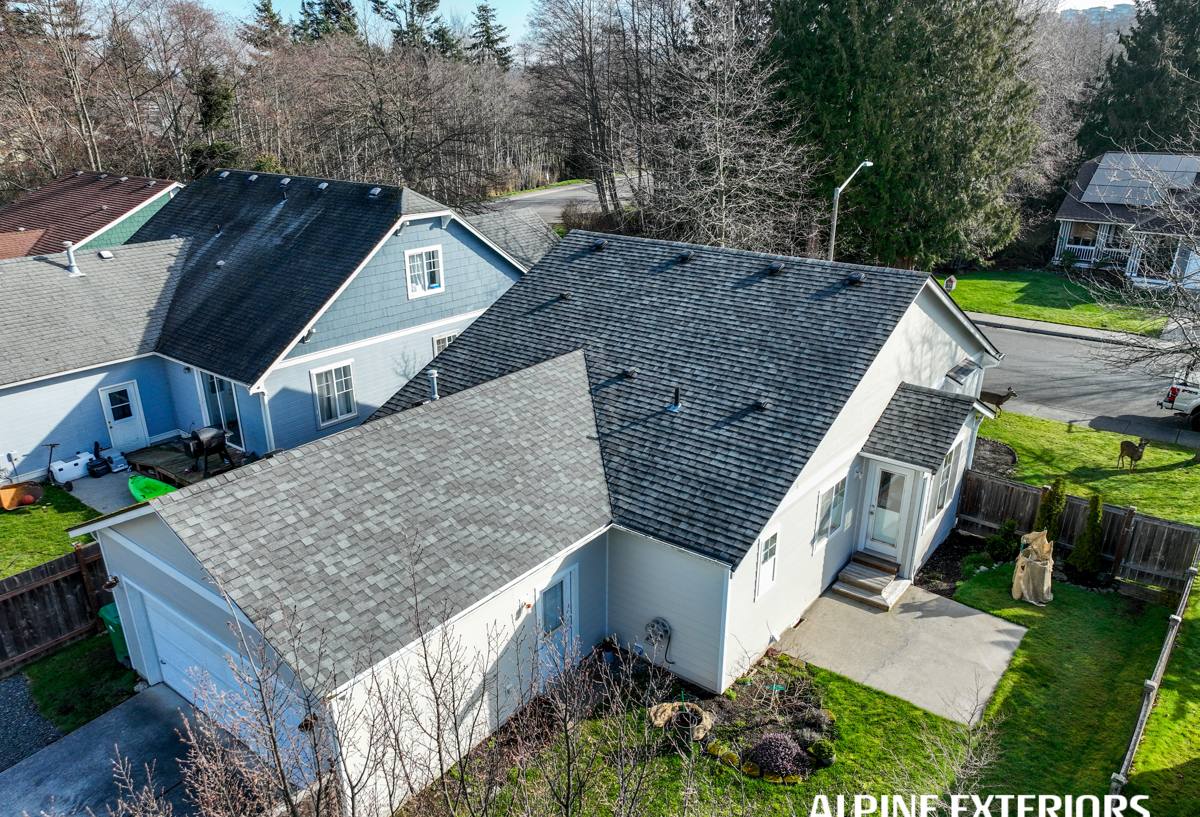
Signs a Ferndale Home Needs Replacement, Not Just Repair
Not every siding problem calls for a full tear-off. But there's a point where patching becomes a waste of money, and Whatcom County's climate tends to push homes past that point faster than homeowners expect. Watch for:
- Soft or spongy spots when you press on the siding, especially near the bottom courses and around windows
- Paint that won't hold — you repaint and it's peeling or bubbling again within a couple of years
- Persistent moss or dark streaking that comes back within weeks of cleaning, particularly on north and west walls
- Visible gaps, warping, or cupping in lap siding boards
- Cracked or crumbling caulk joints that keep failing no matter how often they're redone
- Rising energy bills with no other explanation, which can point to a compromised weather barrier
If you're seeing two or more of these, it's worth having someone look at the wall assembly, not just the visible surface. Surface repairs on top of a failing water barrier just delay a bigger repair bill later.
What a Correct Siding Replacement Actually Involves
Siding replacement is a systems job, not just a materials swap. The siding itself is the last layer applied and, in many ways, the least important layer for keeping water out of your walls. What's underneath it does most of the work.
Tear-Off and Sheathing Inspection
Old siding comes off down to the sheathing, and that sheathing gets inspected — not glanced at. In a wet climate like Ferndale's, it's common to find soft plywood or OSB around windows, doors, and lower wall sections that looked fine with siding covering it. Any compromised sheathing needs to be cut out and replaced before anything else happens. Installing new siding over rotten sheathing just resets the clock on the same failure.
Water-Resistive Barrier and Flashing
A weather-resistant barrier goes over the sheathing, lapped correctly so water sheds downward and outward at every seam. Flashing at windows, doors, and any horizontal trim needs to integrate with that barrier in the right order — flashing under the barrier at the top, over it at the bottom, so water can't work its way behind the assembly. This is the step that separates a job that lasts twenty-plus years from one that fails at year eight, and it's also the step that's easiest to rush.
Fastening and Installation to Spec
Fiber cement siding has manufacturer-specified nailing patterns, fastener types, and clearances from grade, decks, and roof lines. Getting these wrong — over-driven nails, wrong fastener length, siding installed too close to the ground — voids warranty coverage and creates entry points for moisture, even when the product itself is correct.
Trim, Caulking, and Paint Detail
The finish details are what you actually see, and they're also functional: correctly caulked joints, properly primed cut edges, and trim that sheds water instead of trapping it against the wall.
Why We Only Install James Hardie Fiber Cement
We standardized on James Hardie siding for every job we do, including replacements in Ferndale, and we don't install vinyl, LP SmartSide, primed spruce, cedar, or other fiber cement brands. That's a deliberate call based on how these products perform in this specific climate over decades, not just in the first few years.
Fiber cement is non-combustible, which matters more each year given wildfire smoke and ember exposure risk across the Pacific Northwest. It doesn't absorb water the way wood-based products do, so it holds up better against the sustained damp of moss season and driving coastal rain. James Hardie's ColorPlus factory-applied finish is baked on under controlled conditions, which gives it better color retention and adhesion than field-applied paint — a real advantage in an environment where paint failure is one of the most common complaints we see on older siding. Hardie also makes HZ5 products engineered specifically for climates with more moisture exposure, which fits Whatcom County better than a one-size-fits-all product line.
None of this means other products are junk — vinyl is inexpensive and low-maintenance in the right setting, and cedar has real aesthetic appeal for the right homeowner. But we've made a professional decision that for the maintenance burden, moisture behavior, and long-term cost of ownership we want to stand behind, James Hardie fiber cement is what we're willing to warranty and install. That consistency also means our crews are genuinely fluent in one system rather than juggling installation specs across five different product lines.
Our Siding Replacement Process
1. On-Site Assessment
We walk the exterior with you, check for soft spots and moisture intrusion, and talk through what we're seeing before recommending full replacement over repair.
2. Scope and Estimate
You get a written estimate that separates tear-off, sheathing repair (if needed), water barrier and flashing, Hardie siding and trim, and finish work, so you know what you're paying for at each stage.
3. Tear-Off and Sheathing Repair
Old siding comes off, sheathing is inspected and repaired as needed, and we don't cover up problems we find along the way.
4. Weather Barrier, Flashing, and Installation
This is where the job either holds up for decades or doesn't — barrier, flashing, and Hardie siding installed to manufacturer spec with correct fastening and clearances.
5. Trim, Caulk, and Finish Check
Final trim and caulking, followed by a walk-through so you can see the completed work and ask questions before we consider the job done.
Cost Factors for Siding Replacement
Every home is different, and we don't quote firm numbers without seeing the house, but these are the main variables that move the price on a Ferndale siding replacement project:
| Factor | Why It Matters |
|---|---|
| Sheathing condition | Rotted or soft sheathing found during tear-off adds repair scope that can't be known until the old siding is off |
| Home size and wall complexity | More corners, dormers, and trim detail means more labor and material waste |
| Siding profile chosen | Lap width, shingle-style panels, and trim board width affect material cost and install time |
| Existing siding type | Removing multiple layers or brittle old material takes longer than a single clean tear-off |
| Access and site conditions | Tight lots, tall walls, or landscaping obstacles affect staging and labor time |
Why Local Ferndale Experience Matters
A contractor who works Ferndale and the surrounding parts of Whatcom County regularly already understands how the local climate behaves — which walls take the worst driving rain, which exposures grow moss fastest, and what kind of moisture damage tends to hide behind older siding in this area. That's not something you get from a crew that mostly works drier inland markets and treats every coastal job as an exception.
Local experience also means knowing the practical realities of scheduling around this area's wet season, and understanding which older Ferndale homes are more likely to have outdated or missing water barriers behind the original siding. That context shapes how we assess a job before a single board comes off the wall.
Checklist: What to Ask Before You Hire a Siding Contractor
- Do they inspect and repair sheathing as part of the job, or just cover whatever is underneath?
- Do they detail how the water-resistive barrier and flashing will be installed, or only talk about the visible siding?
- Are they installing to the manufacturer's specified fastening pattern and clearances?
- Do they carry manufacturer certification or training for the specific siding product they're installing?
- Is the warranty transferable if you sell the home?
- Can they explain, specifically, why they recommend one siding product over another for your home?
A contractor who can answer these clearly and specifically, without vague reassurances, is usually one who does the underlying work correctly and not just the parts a homeowner can see.
If your Ferndale home's siding is showing its age — persistent moss, failing paint, or soft spots you've noticed on a walk around the house — we're happy to take a look and give you a straightforward, no-pressure estimate. Use the form below to get started.