 Bellingham Siding
 Metal Roofing in Ferndale: Built for What This Corner of Whatcom County Actually Deals With
Ferndale sits close enough to Bellingham Bay and the Strait of Georgia that salt-laden air is a real factor in how a roof ages here, not just a talking point. Add in the long stretch of driving rain that comes through Whatcom County most of the year and the shaded, moisture-holding conditions that let moss take over a roof deck within a season or two, and you've got a climate that is genuinely hard on roofing materials. Metal roofing can handle all of it extremely well — but only when it's specified and installed correctly for these specific conditions. A metal roof installed the same way you'd install one in a dry inland climate will not perform the same way in Ferndale, and the difference shows up in loosened fasteners, streaking, and premature coating failure within a handful of years.
This page covers what we actually do differently for metal roofing jobs in Ferndale, why those choices matter, and what to expect if you're considering a metal roof for a home in this area.
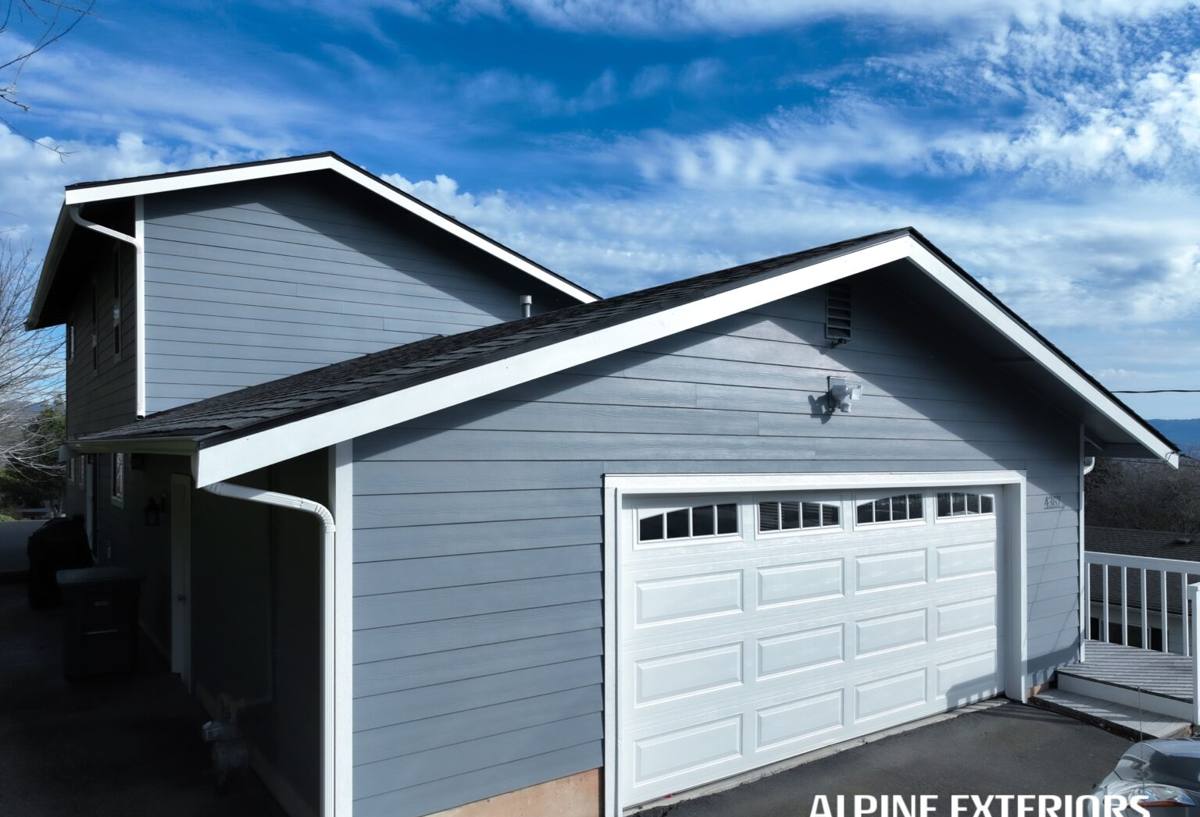
What Ferndale's Climate Does to a Roof Over Time
Salt Air
Homes closer to the water pick up airborne salt that settles on roofing surfaces and works into any exposed fastener, seam, or scratch in a protective coating. Over years, that accelerates corrosion on lower-grade steel and untreated hardware. It doesn't mean metal roofing is a bad choice near the coast — it's actually one of the more corrosion-resistant options available when the coating system and fasteners are matched to the exposure level. It does mean the wrong panel finish or the wrong screws can shorten a roof's usable life significantly.
Driving Rain
Whatcom County doesn't just get a lot of rain — a good portion of it comes in sideways during winter storms, which puts pressure on details that a dry-climate installer might treat as an afterthought: end laps, side laps, valley flashing, and penetrations around vents and chimneys. Wind-driven rain finds any gap that isn't properly lapped, sealed, or fastened, and it finds it at the worst possible time.
Moss and Persistent Moisture
Shaded rooflines and slow-drying north-facing slopes in this region grow moss readily. On composition roofing that means granule loss and mat degradation; on a poorly ventilated or poorly detailed metal roof, trapped moisture underneath can lead to condensation issues on the underside of panels, deck rot, and rust from the inside out — which is often worse than surface corrosion because it isn't visible until it's advanced.
What a Correct Metal Roof Installation Actually Involves
A metal roof is only as good as the assembly underneath it. The visible panels get all the attention, but the parts that determine whether the roof lasts 20 years or 50 are mostly hidden:
- A synthetic underlayment rated for the panel type and climbing zone, not just whatever is on the truck
- Proper deck inspection and repair before anything goes down — panels installed over a soft or rotted deck fail early regardless of panel quality
- Ice-and-water shield or equivalent membrane at eaves, valleys, and penetrations, sized for our rainfall volumes
- Corrosion-appropriate fasteners and flashing metals that won't set up a galvanic reaction with the panel material
- Correct panel overlap and fastening pattern for the pitch and exposure of that specific roof plane
- Ventilation that lets any trapped moisture escape rather than condense against the panel underside
Skipping or cutting corners on any one of these doesn't usually show up in the first year. It shows up in year five or six, as a leak, a rust stain, or a soft spot in the decking that costs far more to fix than it would have to do right the first time.
Panel Types: What Fits a Ferndale Home
Not every metal roofing product is a good match for coastal, high-moisture conditions. Here's how the common options compare for this specific climate:
| Panel Type | Best For | Coastal/Moisture Considerations |
|---|---|---|
| Standing seam (concealed fastener) | Long-term, low-maintenance performance | No exposed screws to work loose or corrode over time; best choice for salt-air exposure and driving rain |
| Exposed-fastener panels | Budget-conscious projects, outbuildings, shops | Fasteners and washers are a maintenance point — need periodic inspection and eventual re-torquing or replacement near the coast |
| Stone-coated steel | Homeowners wanting a shake or tile look | Performs well but installation detailing around laps and fasteners matters even more given the profile |
| Aluminum panels | Properties very close to the water | Naturally corrosion-resistant, a strong option where salt exposure is highest, though it dents more easily than steel |
For most homes in Ferndale, we steer people toward standing seam because the concealed-fastener design removes the single biggest long-term maintenance liability in a wet, salty climate: exposed hardware. That's not a knock on exposed-fastener systems — they have a real place on budget-driven or secondary structures — it's just a matter of matching the product to how much upkeep an owner wants to sign up for down the road.
Flashing, Fasteners, and the Details That Determine Roof Life
We treat flashing metal and fastener selection as climate decisions, not just hardware choices. Mixing incompatible metals (say, the wrong flashing against certain panel finishes) can set up galvanic corrosion that eats through material from the inside of a joint, long before the panel face shows any wear. Around chimneys, skylights, and vent penetrations — the most common leak points on any roof — we use flashing details sized for wind-driven rain, not just standing water, because that's the actual condition these roofs face several months a year here.
Ventilation and Moss Prevention
Because moss thrives on shaded, moisture-retentive surfaces, keeping a metal roof dry underneath matters as much as keeping it clean on top. Proper intake and exhaust ventilation keeps warm, moist interior air from condensing against the panel underside, which protects both the deck and the panel finish. On the exterior, metal's smooth surface already resists moss far better than composition shingles or wood shakes — moss needs something to grip and hold moisture against, and a clean-lapped metal panel gives it very little to work with. That's one of the practical advantages of metal roofing in a moss-prone area like this, though it isn't a total guarantee on heavily shaded, north-facing slopes.
Our Process for Ferndale Metal Roofing Projects
- On-site assessment — we look at pitch, exposure, existing deck condition, and how close the property sits to salt air sources before recommending a panel type or finish.
- Deck inspection and repair — any soft, rotted, or under-ventilated decking gets addressed before a single panel goes on.
- Underlayment and membrane installation — sized to our rainfall and installed at all vulnerable points, not just per code minimums.
- Panel installation — fastening pattern and lap details set for the specific pitch and wind exposure of each roof plane.
- Flashing and penetration detailing — the step where most roofs succeed or fail long-term, and where we spend the most careful attention.
- Final walkthrough — we go over what maintenance, if any, the specific system needs going forward.
What Metal Roofing Costs to Consider
Exact pricing depends on the roof's size, pitch, current condition, and panel type, but the factors that move the number are consistent from job to job:
| Cost Factor | Why It Matters |
|---|---|
| Panel type (exposed-fastener vs. standing seam) | Concealed-fastener systems cost more upfront but reduce long-term maintenance |
| Roof pitch and complexity | Steep or multi-plane roofs take more labor and material for proper lapping and flashing |
| Deck condition | Rot or soft decking found during tear-off adds repair cost but prevents a much bigger problem later |
| Panel material and finish | Steel, aluminum, and coating grade all affect both price and corrosion resistance |
| Tear-off vs. overlay | Removing old roofing lets us inspect and fix the deck; overlay is sometimes possible but limits what we can verify underneath |
We'd rather walk a homeowner through these trade-offs honestly during an estimate than quote a number without context. A lower bid that skips deck inspection or uses mismatched hardware isn't actually cheaper once you account for what it costs to fix in five years.
Maintenance: What a Metal Roof in Ferndale Actually Needs
One of the appeals of metal roofing is how little upkeep it requires compared to composition shingles — but "little" isn't "none," especially this close to the water:
- Periodic visual check of flashing points around chimneys, vents, and skylights, especially after major winter storms
- Keeping gutters and valleys clear of debris so water isn't sitting against panel edges
- Watching shaded, north-facing sections for early moss or algae growth and addressing it before it spreads
- Checking exposed fasteners (if that's the panel type) every few years for backing-out or corrosion
- Trimming overhanging branches that keep sections of roof shaded and slow to dry
Why a Crew That Already Works Ferndale Matters
Metal roofing failures around here are rarely about the metal itself — they're almost always about details that weren't adjusted for local conditions: the wrong fastener near salt air, underlayment that wasn't sized for driving rain, or ventilation that didn't account for how much moisture this climate holds onto. A crew that regularly works Whatcom County roofs has already made those judgment calls on other homes in similar exposure conditions, and that experience shows up in fewer callbacks and a roof that's still performing the way it should well past year ten.
If you're weighing metal roofing for a home in Ferndale, we're glad to come take a look, walk the roof, and talk through what actually makes sense for your specific property — no pressure, no upsell, just a straight answer. Reach out using the form below to set up a free estimate.