 Bellingham Siding
 Siding Repair in Ferndale: Built for a Tough Marine Climate
Ferndale sits close enough to Puget Sound and the open marine air of Whatcom County that its homes take a different kind of beating than houses further inland. Salt-laden air corrodes fasteners and trim, driving rain off the water finds every gap in flashing and caulk, and the long, wet, shaded stretches of fall and winter turn north-facing walls and shaded siding into a moss and algae farm. None of that means your siding is doomed — but it does mean repairs here need to account for conditions that a general contractor from a drier climate might not think twice about.
We work on siding repair calls in Ferndale regularly, and the patterns repeat: rot hiding behind caulked joints, fastener corrosion at trim edges, moss holding moisture against the wall long after the rain stops, and repairs that were patched with the wrong product and failed again within a couple of seasons. This page walks through what we actually find, what a repair should include to hold up here, and when repair is the right call versus when it's time to talk about replacement.
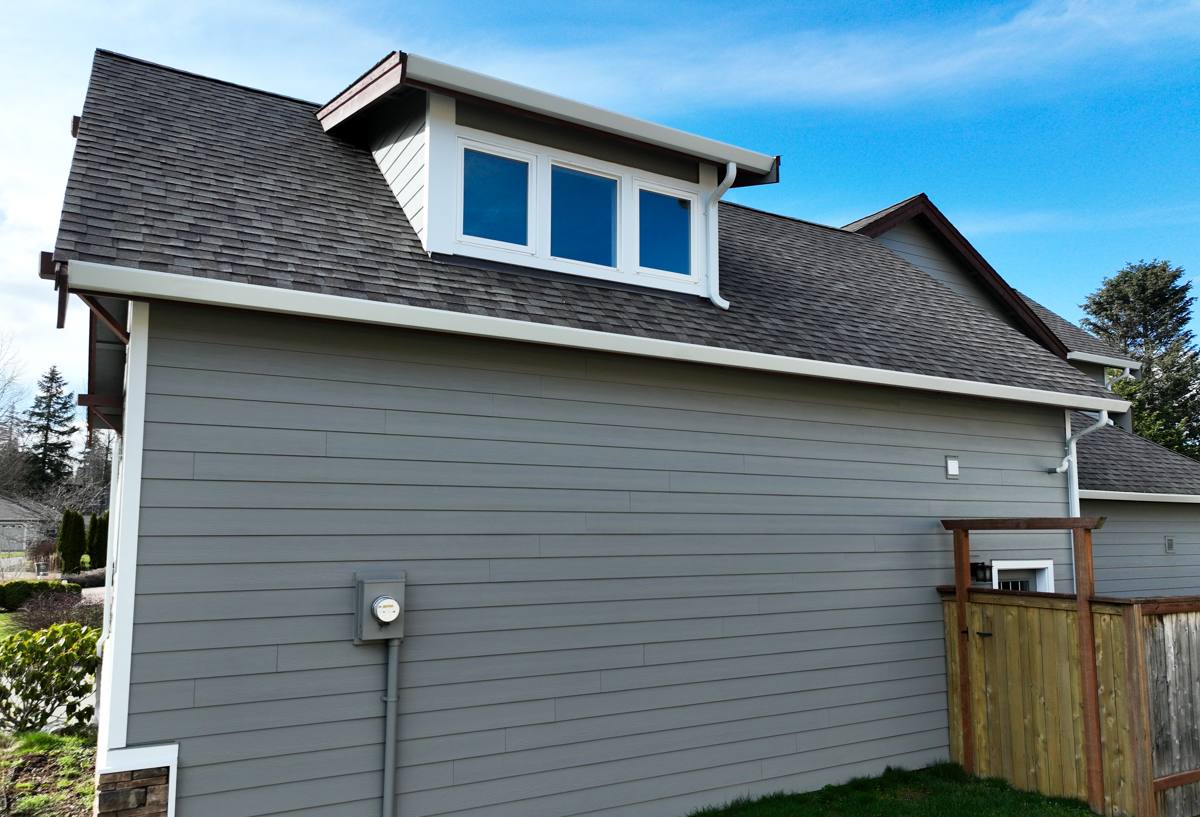
Why Ferndale's Climate Is Hard on Siding
A few regional factors combine to make siding repair in this part of Whatcom County its own specialty, not just a smaller version of a Seattle or Spokane repair job.
Salt air and moisture-laden wind
Proximity to the water means chloride-laden air reaches building exteriors even a few miles inland. Over years, that accelerates corrosion on nails, staples, and any exposed metal trim or flashing — which is often the actual point of failure behind a cracked or bulging siding panel, not the siding material itself.
Driving rain and wind-driven water intrusion
Storms coming off the Sound don't just fall straight down — wind pushes rain sideways into wall assemblies, testing every seam, joint, and piece of flashing. Siding that looks fine from the ground can be hiding water that's been working behind it for a season or more.
A long moss and algae season
Shaded walls, tree cover, and the region's extended damp months give moss and algae a long runway to establish themselves on siding surfaces. Beyond the cosmetic issue, moss holds moisture directly against the substrate, which is exactly the condition that leads to rot in wood-based products and paint failure on almost anything.
Common Siding Problems We See on Ferndale Homes
- Rot at butt joints and corners — water gets in where boards meet and doesn't dry out fast enough between storms.
- Cracked or warped panels — common on wood-based and vinyl products after repeated wet/dry and freeze/thaw cycles.
- Failed caulk joints — caulk is a maintenance item, not a permanent fix, and it fails faster in constant damp conditions.
- Moss and algae staining — a visible symptom of a wall that isn't shedding water and drying properly.
- Corroded or popped fasteners — nail heads that have rusted, backed out, or torn through the siding.
- Impact damage — from storm debris, fallen branches, or everyday wear near grade level.
- Flashing failures — around windows, doors, and roof-to-wall transitions, often the real source of a "siding" leak.
What a Correct Siding Repair Actually Involves
A repair that just covers the visible damage without checking what's underneath is a repair you'll likely pay for twice. Here's what we consider a complete job.
Diagnose before you patch
Any time we're called for cracked, stained, or bulging siding, the first step is figuring out why it happened — not just replacing the board. If the cause is a flashing gap, a clogged gutter dumping water onto a wall, or grade sloping water toward the foundation, patching the siding without fixing the cause just buys time before the same spot fails again.
Check for hidden moisture and rot
Surface damage is often the tip of the problem. We check the sheathing and framing behind damaged siding sections for soft spots, staining, or active moisture before closing anything back up. Repairing over hidden rot is one of the most common ways a "small" siding repair turns into a bigger problem a year or two later.
Match materials correctly — or explain when you can't
Older siding, especially discontinued profiles, colors, or product lines, can be difficult or impossible to match exactly. We'll tell you upfront when a perfect match isn't realistic so you can decide whether a visible patch, a larger repair area, or a partial re-side of that wall makes more sense.
Restore the water management, not just the surface
Proper repair means correct flashing, house wrap integration, and fastener placement — the parts you don't see that determine whether the repair actually holds. A repair that looks clean but skips this step is a cosmetic fix, not a structural one.
Repair or Replace? A Practical Look
Not every damaged section needs a full re-side, but repair isn't always the economical or lasting choice either. This is the honest breakdown we walk homeowners through.
| Factor | Repair usually makes sense | Replacement is the better call |
|---|---|---|
| Extent of damage | Isolated to one or two areas | Recurring across multiple walls or elevations |
| Underlying moisture | None found behind the damaged section | Rot or moisture found in sheathing/framing |
| Material age | Siding is otherwise sound and not near end of service life | Siding is original, discontinued, or already failing elsewhere |
| Material match | Close visual match is available | No reasonable match exists; patches would stand out |
| Root cause | Cause is identifiable and fixable (flashing, caulk, fastener) | Cause is systemic (grading, chronic moss, wall assembly) |
If a wall is already showing early signs of the same failure in more than one spot, a repair is often a short-term fix for a longer-term problem. In those cases we'll say so directly rather than sell a patch we don't think will hold.
Our Siding Repair Process
- On-site inspection — we look at the damaged area and the surrounding wall, not just the spot you called about.
- Moisture check — probing or moisture-meter testing behind visibly damaged siding when there's any sign it's warranted.
- Honest scope and estimate — what needs to be repaired, what's optional, and what we'd recommend replacing instead.
- Root-cause correction — flashing, caulking, or drainage fixes addressed alongside the visible repair.
- Repair or panel replacement — matched as closely as the existing material allows, installed to hold up to wind-driven rain.
- Final check — confirming water sheds correctly and fasteners and seams are properly sealed before we consider the job done.
Why Material Matters When You're Repairing, Not Just Installing
We install exclusively James Hardie fiber cement siding, and that standard shapes how we approach repairs too — including on homes where the existing siding isn't Hardie. A few reasons material choice matters at repair time:
Not all siding repairs age the same way
Vinyl siding repairs are limited by the fact that vinyl fades and becomes brittle with UV and temperature cycling over time — a patch installed years after the original can be a visibly different shade and may crack more easily during cold snaps. Wood-based and OSB-core products like LP SmartSide can be repaired, but any repair that doesn't fully resolve the moisture source risks the same edge-swelling or rot returning, since the core material is still wood fiber.
Why we recommend Hardie when a wall needs more than a patch
When damage is widespread enough that we're talking about re-siding a wall or the whole house rather than a spot repair, we recommend James Hardie fiber cement. It's non-combustible, engineered for wet Pacific Northwest climates in its HZ5 product line, holds its factory ColorPlus finish without the repeated repainting wood siding demands, and carries a strong transferable warranty. We won't push a full re-side on a home that just needs a legitimate repair — but when replacement is the honest recommendation, Hardie is what we install and stand behind.
Why Hiring a Crew That Already Works Ferndale Matters
Siding repair isn't just a materials question — it's a diagnosis question, and local experience shortens that process. A crew that regularly works Whatcom County's marine climate already knows to check flashing before blaming the siding, knows what moss buildup on a north wall usually means, and knows the difference between cosmetic weathering and an active moisture problem in this specific climate. That translates into a more accurate estimate and a repair that's actually built to hold up through another wet season, not just patched to look right on the day we leave.
Signs Your Ferndale Home May Need Siding Repair
- Soft or spongy spots when you press on the siding
- Visible cracking, warping, or buckling panels
- Paint that's peeling or bubbling in a specific, repeating area
- Persistent moss or algae growth that returns after cleaning
- Staining or discoloration streaking down from a joint or trim piece
- Gaps or separation at corners, window trim, or butt joints
- A musty smell or moisture noticeable from inside near an exterior wall
If any of these sound familiar, catching it early is almost always cheaper and simpler than waiting until it spreads.
If you're noticing damage, discoloration, or moss buildup on your Ferndale home's siding, we're happy to take a look and give you a straight answer on what it needs — repair, partial replacement, or nothing urgent at all. Request a free, no-pressure estimate using the form below.