 Bellingham Siding
 Deck Repair Built for Ferndale's Weather
A deck in Ferndale takes a beating that a deck in a drier climate never has to deal with. You're close enough to Bellingham Bay and the Strait of Georgia that salt-laden air reaches wood, metal, and fasteners year-round, and Whatcom County's long wet season keeps decking damp for months at a stretch. Add a moss season that can run from fall through spring, and you have three separate forces working against the same structure at the same time: corrosion, rot, and slip-hazard buildup. Most deck problems we see in this area aren't a single dramatic failure — they're the slow, compounding result of moisture and salt doing their work on wood and hardware that was never quite matched to the conditions.
This page covers deck repair specifically — not new deck construction — for homes in and around Ferndale. If your deck is structurally sound but showing wear, or if you're not sure whether a problem is cosmetic or structural, this is what an honest assessment and a correct repair actually involve.
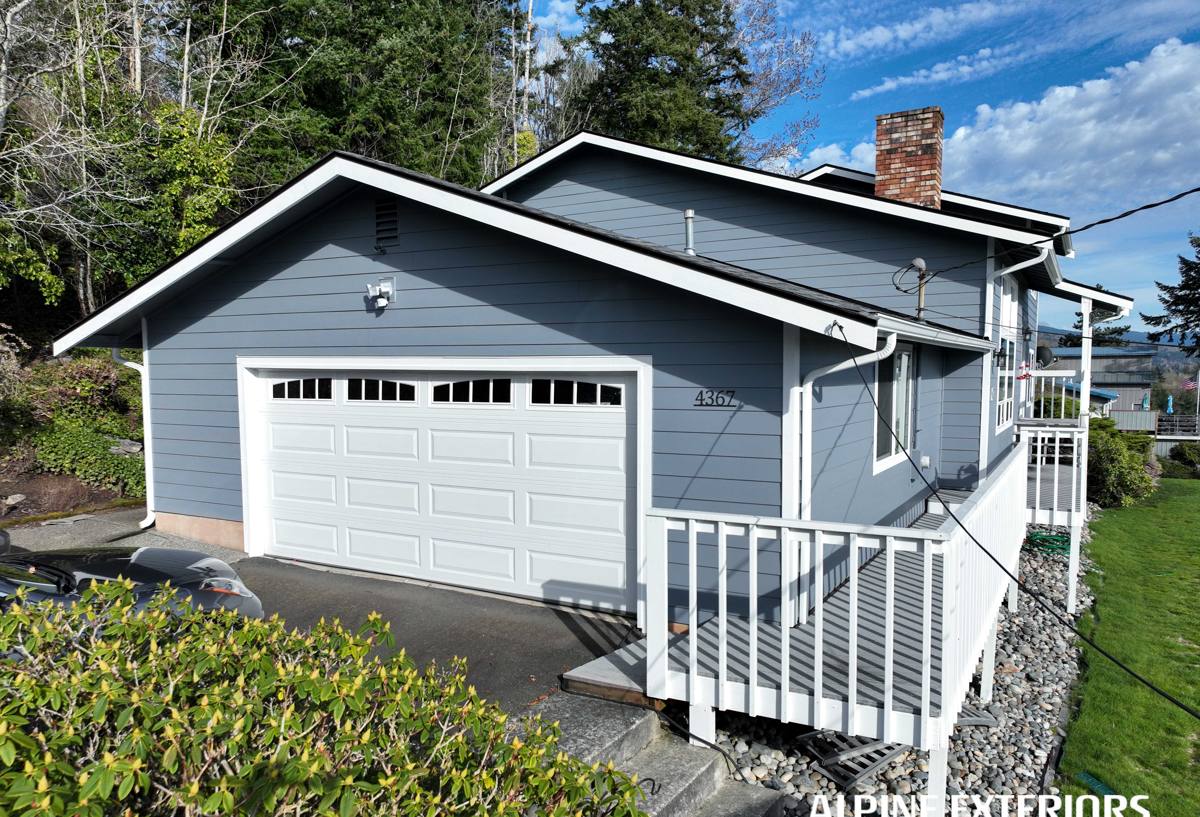
Why Decks Fail Faster Here Than in Drier Climates
Salt Air and Fastener Corrosion
Airborne salt from the Sound doesn't just affect homes right on the water. It travels inland on prevailing winds and settles on any exposed metal — deck screws, joist hangers, post brackets, railing hardware. Once corrosion starts on a fastener, it works from the inside out: the screw head can look fine while the shank has already lost most of its holding strength. This is one of the most common reasons a deck board that looks intact will still lift, squeak, or pull loose under weight.
Driving Rain and Trapped Moisture
Whatcom County doesn't just get rain — it gets sustained, wind-driven rain that finds its way into every gap, seam, and fastener hole. On a deck, the danger spots are predictable: the ledger board where the deck meets the house, the tops of posts, and the narrow gaps between boards where debris collects and holds water against the wood. Once moisture gets trapped in those spots instead of shedding off, rot sets in even on decks that are only a few years old.
Moss, Algae, and the Slip Hazard They Create
A long, shaded moss season is part of life in this region, and decking is a prime surface for it — especially under trees, on the north side of a house, or anywhere sun doesn't reach for weeks at a time. Moss and algae aren't just cosmetic. They hold moisture against the board surface, accelerate wood breakdown, and turn a deck slick and dangerous underfoot, particularly on stairs.
Signs Your Ferndale Deck Needs Repair
- Boards that flex, bounce, or feel soft when you walk on them
- Visible gaps opening up around the ledger board where the deck attaches to the house
- Rust streaks bleeding from screw heads or joist hangers
- Railings or posts that wiggle or feel less solid than they used to
- Persistent moss or dark staining that keeps returning after cleaning
- Stair stringers or the bottoms of posts that look discolored or feel spongy when pressed
- Nails backing out or screw heads stripped and spinning in place
- A musty smell coming from underneath the deck
Any one of these on its own might be minor. Several together, especially near the ledger board or post bases, usually mean the structural connections need a closer look — not just the visible boards.
What a Correct Deck Repair Actually Involves
Structural Inspection First
Before any board gets replaced, the framing underneath needs to be checked: ledger board attachment and flashing, joist condition, post bases, and the hardware holding it all together. A deck can look fine on the surface while its structural connections are compromised — replacing surface boards without addressing that is a cosmetic fix on a structural problem, and it doesn't hold up.
Ledger Board and Flashing
The ledger board is where most serious rot starts, because it's the hardest spot on a deck to keep dry. Proper flashing directs water away from this connection instead of letting it pool against the house. If flashing is missing, damaged, or was never installed correctly, that gets corrected as part of the repair — not just patched around.
Fastener and Hardware Replacement
Corroded screws, nails, and joist hangers get replaced with hardware rated for exterior and coastal-influenced conditions. This matters more here than in a lot of places — using standard interior-grade fasteners on a deck exposed to salt air is a short-term fix that creates the same failure again within a few years.
Board Replacement and Refastening
Individual boards that are cracked, soft, or badly weathered get replaced and matched as closely as possible to the surrounding decking. Boards that are sound but loose get refastened properly rather than just topped with another screw next to the failed one.
Moss and Algae Treatment
Cleaning addresses what's on the surface, but a repair that doesn't account for why moss keeps coming back — poor drainage, shade, debris trapped between boards — just means it returns in a season or two. Where it makes sense, we address the underlying moisture and airflow issue, not just the growth itself.
Sealing and Finish
Once structural and board-level repairs are done, a fresh sealant or stain coat protects the wood going into the next wet season. Skipping this step after a repair shortens the life of the work that was just done.
Repair or Replace? Honest Cost Factors
Not every deck problem calls for full replacement, and not every deck is worth repairing indefinitely. Here's how we think through it:
| Factor | Leans Toward Repair | Leans Toward Replacement |
|---|---|---|
| Ledger board / framing condition | Solid, no significant rot | Widespread rot or soft framing |
| Extent of damage | Isolated boards or hardware | Damage spread across most of the deck |
| Age of the deck | Under 15-20 years, built reasonably well | Original construction was already marginal |
| Post and footing condition | Stable, no movement or settling | Posts shifting, footings cracked or heaved |
| Budget priority | Extend usable life affordably | Want updated layout, size, or materials |
A repair generally costs a fraction of full replacement, but it's only the right call when the underlying structure is sound. We'll tell you plainly if a deck is past the point where repair makes financial sense — there's no benefit to either of us in patching something that needs to come out.
Our Process
- On-site inspection. We look at the whole structure — framing, fasteners, ledger connection, posts and footings — not just the visible boards.
- Straightforward assessment. You get a clear explanation of what's actually wrong, what's cosmetic versus structural, and what your realistic options are.
- Written estimate. Scope and cost laid out before any work starts, so there are no surprises partway through.
- Repair work. Structural fixes first, then board replacement, fastener upgrades, and moss/moisture correction.
- Finish and cleanup. Sealing or staining as needed, and the site left clean when we're done.
Why a Crew That Already Works Ferndale Matters
Deck repair done by someone unfamiliar with this specific climate tends to under-spec the hardware, skip proper flashing details, or use finish products that aren't suited to sustained damp exposure. A crew that regularly works Ferndale and the surrounding Whatcom County area already knows which fasteners hold up against salt air, how aggressive the moss season gets on shaded north-facing decks, and where ledger boards typically fail first on homes in this area. That's not guesswork — it's the difference between a repair that lasts one season and one that lasts a decade.
Local familiarity also matters for permitting and code requirements on structural deck work. Whatcom County and local jurisdictions have specific requirements for railing height, guard spacing, and structural connections when repair work goes beyond cosmetic — a crew that works here regularly already knows what's required and builds to it the first time.
Materials and Fasteners: Our Standard for This Climate
We don't chase the cheapest fastener or the lowest-grade hardware on deck repairs in this area, because the repeat failures we see almost always trace back to materials that weren't matched to salt air and sustained moisture exposure. Our standard is stainless or coated exterior-rated fasteners and hardware on structural connections, proper flashing at every ledger repair, and finish products rated for prolonged wet exposure rather than general-purpose exterior use. It costs a bit more up front than the minimum-grade option, but on a coastal-influenced climate like this one, it's the difference between a repair you do once and one you're back to redo in a few years.
Homeowner Maintenance Checklist
Between repairs, a few habits go a long way toward slowing the cycle down:
- Sweep debris out from between boards regularly, especially in fall
- Keep gutters and downspouts clear so water isn't dumping onto or near the deck
- Trim back vegetation that's shading the deck and keeping it damp
- Clean moss and algae as soon as it appears rather than letting it establish
- Check railings and stair treads periodically for looseness
- Reseal or restain on the schedule appropriate for your finish product, not just when it looks worn
- After heavy storms, do a quick visual check of the ledger board area and post bases
Get a Straightforward Look at Your Deck
If your deck in Ferndale is showing any of the signs above, it's worth getting a straight answer on whether you're looking at a repair or something bigger — before a small problem at the ledger board or a post base turns into a safety issue. We'll come take a look, tell you honestly what we find, and put together a free, no-pressure estimate using the form below.