 Bellingham Siding
 South Hill's Climate Is Hard on Siding
South Hill sits up on the slope above downtown Bellingham, which means homes here catch weather that flatter neighborhoods don't deal with quite the same way. The elevation puts houses more directly in the path of wind coming off Bellingham Bay, and that wind carries salt air that slowly works on anything not built to resist it. Add in the driving rain that blows sideways during a Whatcom County winter storm, and siding on South Hill takes a harder hit than the marketing photos on most siding websites would suggest.
Then there's shade. Mature trees and the hillside's own contours mean parts of many South Hill homes stay damp longer after a storm than they would on an open, sun-exposed lot. That's exactly the kind of environment moss and algae like — and once moss gets a foothold on a wall, it holds moisture against the siding surface for months at a stretch. On wood-based products, that's a slow rot sentence. On the wrong composite product, it's staining and gradual softening. None of this is exotic weather. It's just the normal marine climate we all live in here, applied steadily, year after year, to a building material that either handles it or doesn't.
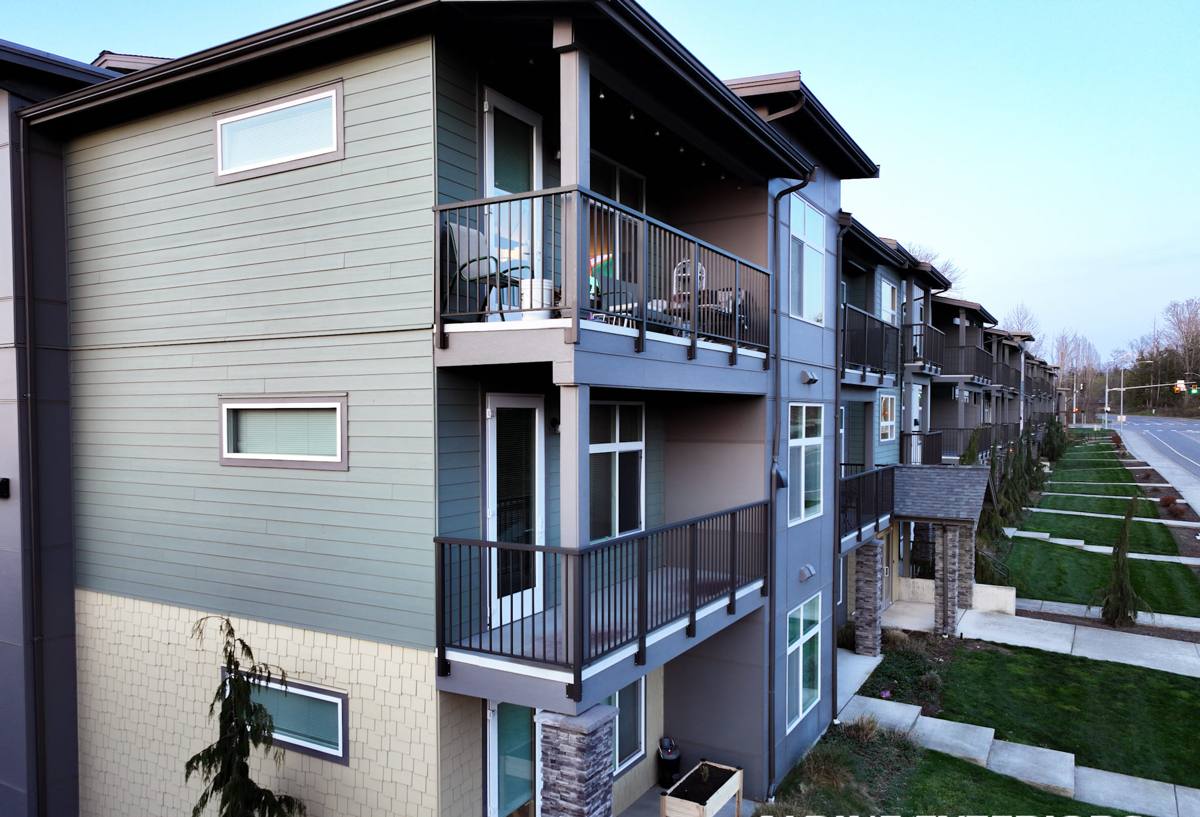
Signs Your South Hill Home's Siding Has Reached the End of Its Life
Siding failure on the hill tends to show up gradually, then all at once. Here's what we look for during an inspection, and what homeowners usually notice first themselves:
- Soft or spongy spots when you press on the siding, especially near the bottom courses and around window sills
- Paint that's peeling, bubbling, or needing repainting more often than it used to
- Persistent moss or algae streaking that comes back within a season of cleaning
- Boards that have cupped, warped, or separated at the seams
- Visible cracking, especially on south- and west-facing walls that take the brunt of storm-driven rain
- A noticeable jump in heating bills, which can point to moisture-compromised insulation behind the siding
- Caulking that's shrunk, cracked, or pulled away from trim and window edges
Any one of these on its own might just mean a maintenance visit. Several together, especially on an older South Hill home that's still wearing its original siding, usually means it's time to talk about full replacement rather than another round of patching.
What a Correct Siding Replacement Actually Involves
A siding job is not just pulling off old boards and nailing up new ones. Done right, replacement is really a chance to fix everything underneath that you can't see once the wall is closed back up — and on a hillside home exposed to driving rain, that underneath work matters as much as the siding itself.
Tear-Off and Inspection
Removing the old siding exposes the sheathing, which is where most hidden problems live. We check for rot, delamination, and soft framing, especially around window and door openings where old flashing details tend to fail first. Any compromised sheathing gets replaced before anything new goes up — covering rot with new siding just buys a few years before the same problem reappears, worse.
Weather-Resistive Barrier and Flashing
A correctly installed weather-resistive barrier, with properly lapped and sealed seams, is what actually keeps wind-driven rain out of the wall assembly. Flashing at every window, door, and penetration has to be installed in the right order — under the barrier at the top, over it at the bottom — so water sheds down and out instead of finding its way behind the cladding. This is the part of the job that's invisible once it's done, and it's also the part that determines whether your siding lasts fifteen years or fifty.
Installation to Spec
Fastener spacing, gaps at butt joints, clearance from the roofline, decks, and grade, and caulking at trim — all of it follows manufacturer specifications for a reason. Skipping these details is how siding that looks fine on installation day starts failing within a few winters.
Why We Install Only James Hardie Fiber Cement
We made a decision as a company to install James Hardie fiber cement siding exclusively. Not because every other product on the market is bad — several have real strengths — but because after years of doing this work in a wet, marine climate, Hardie is what we trust to perform on homes we're putting our name behind.
Vinyl siding is affordable and low-maintenance in the sense that it doesn't need painting, but it's a thin plastic product that can crack in cold snaps, fade unevenly over time, and doesn't hold up well to the kind of wind-driven debris that comes with a coastal storm. Engineered wood products like LP SmartSide use real wood fiber, which means they're still vulnerable to moisture intrusion at cut edges and joints if the installation isn't flawless — a real risk given how much rain South Hill homes see. Primed spruce and cedar are beautiful and traditional, but they demand an ongoing maintenance commitment — regular repainting, sealing, and vigilance against rot — that most homeowners underestimate when they choose them.
James Hardie's fiber cement is non-combustible, which matters increasingly in Washington. It's engineered specifically for our climate zone under Hardie's HZ5 product line, built to resist moisture, freeze-thaw cycling, and the kind of sustained dampness South Hill's shaded lots produce. The ColorPlus factory finish is baked on under controlled conditions, so it resists fading and chipping far better than field-applied paint — which means fewer repaint cycles over the life of the siding. And Hardie backs the product with a strong, transferable warranty, which matters if you ever sell the house. None of this makes fiber cement magic — it still has to be installed correctly to deliver on any of it — but it gives us a material that matches the climate instead of fighting it.
Our Siding Replacement Process, Start to Finish
- On-site inspection and estimate. We walk the exterior, check for rot and moisture damage, and give you a clear, honest assessment of what your home actually needs.
- Tear-off and sheathing repair. Old siding comes off, sheathing gets inspected, and any compromised wood is replaced before we move forward.
- Weather barrier and flashing installation. This is the step that determines long-term performance, and we don't rush it.
- James Hardie installation. Panels or lap siding go up to manufacturer specification and local building code, with correct fastening, spacing, and trim detailing.
- Caulking and finish work. Joints, trim, and penetrations get sealed properly so water has nowhere to get in.
- Final walkthrough and cleanup. We go over the finished work with you and leave the site clean.
What Affects the Cost of Your Siding Replacement
Every South Hill home is different, and costs vary with the size of the home, its complexity, and what condition the underlying structure is in. Here are the main factors that move the number:
| Factor | Why It Matters on South Hill |
|---|---|
| Square footage of exterior wall | The most direct cost driver — larger homes and multi-story hillside builds need more material and labor |
| Condition of existing sheathing | Moisture damage from years of exposure often isn't visible until tear-off, and repairs add cost but prevent repeat failure |
| Access and site grade | Steep hillside lots and tight setbacks common on South Hill can require more setup, scaffolding, or staging time |
| Siding profile and trim detail | Lap siding, panel systems, and detailed trim packages each require different labor and material |
| Number of windows, doors, and penetrations | Each one needs its own flashing detail, which adds labor regardless of home size |
| Existing moss or moisture damage | Homes with a long moss history often need more extensive prep and remediation before new siding goes on |
Choosing a Siding Contractor Who Actually Knows South Hill
Plenty of contractors will quote a siding job. Fewer of them have spent real time on hillside homes dealing with wind-driven rain, salt air, and shaded, moss-prone walls. Before you hire anyone, it's worth asking:
- Are they a certified James Hardie installer, and can they explain why they use the product system they do?
- Will they inspect and repair sheathing as part of the job, not just cover it up?
- Do they explain their flashing and weather-barrier approach in detail, or wave it off as standard?
- Do they pull permits and follow current Whatcom County building code requirements?
- Can they speak specifically to how they handle hillside access, drainage, and grade clearance?
- Do they offer a clear, written warranty on both materials and workmanship?
- Are they willing to walk you through the estimate line by line instead of just handing you a total?
A contractor who's done this work up and down the hill will have straightforward answers to all of these without hesitation.
Living With Your New Siding: Maintenance in a Wet Climate
One of the practical advantages of switching to James Hardie is how little upkeep it demands compared to what most South Hill homeowners are used to. There's no annual repainting schedule to keep up with, since the ColorPlus finish is designed to hold its color for years. You'll still want to rinse off moss or algae buildup on shaded walls occasionally, and it's worth doing a quick visual check of caulking and trim once a year, particularly after a hard winter. But the constant maintenance cycle that comes with wood or the touch-up painting that vinyl eventually needs isn't part of the picture anymore. For a home that spends most of the year in a damp, marine climate, that's a meaningful difference over the life of the siding.
If your South Hill home's siding is showing its age — or you just want a straight answer about whether it's holding up the way it should be — we're happy to take a look. Reach out for a free, no-pressure estimate using the form below.