 Bellingham Siding
 Asphalt Shingle Roofing Built for South Hill's Weather
South Hill sits up above downtown Bellingham with some of the best views in Whatcom County — and some of the most exposed rooflines. That elevation and openness mean more direct wind-driven rain, more salt-laden air moving up off Bellingham Bay, and long stretches of shade on the north- and east-facing slopes where moss and moisture just sit. A roof up here works harder than a roof tucked into a sheltered lot a few miles inland, and it shows in how shingles age: granule loss on the windward slopes, moss creeping in at the eaves and valleys, and soft spots developing wherever water has been allowed to linger instead of shed.
Asphalt shingle roofing is still the right call for the vast majority of South Hill homes — it's durable, cost-effective, and available in styles that suit both the older craftsman homes and newer builds in the neighborhood. But "asphalt shingles" isn't a single product, and installing them correctly in this specific microclimate takes more than nailing shingles to plywood in straight rows.
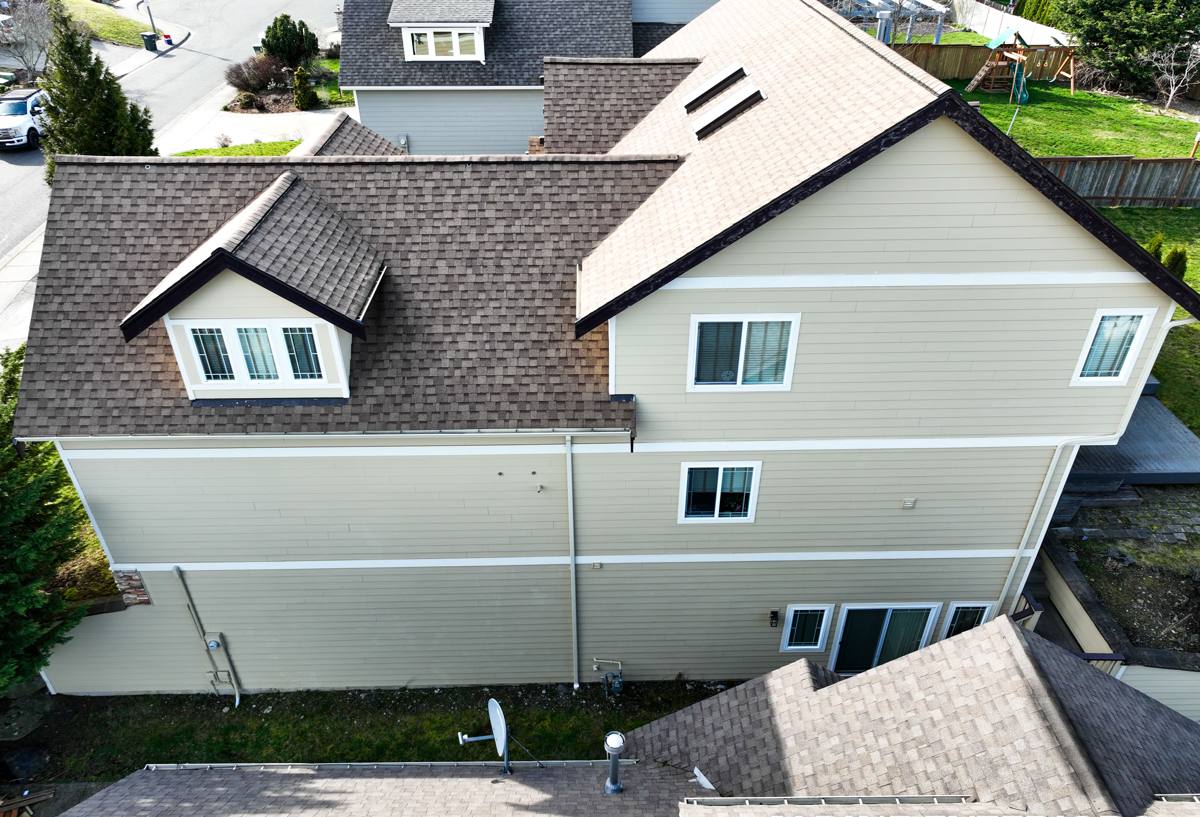
What South Hill's Climate Actually Does to a Roof
Salt Air and Granule Wear
Homes closer to the bay-facing slopes of South Hill deal with a steady drift of salt-laden moisture. Over years, that accelerates the breakdown of the asphalt mat and speeds up granule loss, especially on lower-grade shingles. It's not dramatic or sudden — it's a slow fade that shows up as bald patches and a roof that looks tired well before its rated lifespan is up.
Driving Rain and Wind Exposure
South Hill's elevation catches wind that lower parts of Bellingham don't get as directly. Wind-driven rain doesn't just fall straight down — it pushes up under shingle tabs and into any gap in the flashing or underlayment. A roof system that relies on the shingles alone to keep water out, without proper underlayment and sealed penetrations, will eventually leak here even if it would hold up fine in a calmer spot.
Moss Season
Western Washington's wet season is long, and shaded roof slopes in South Hill's tree-lined streets can stay damp for weeks at a time. Moss and algae take hold in those conditions, and once established they hold moisture against the shingle surface, work into the granule layer, and can lift shingle edges over time. Moss isn't just cosmetic — it shortens the life of the roof underneath it.
What a Correct Asphalt Shingle Roof Involves Here
A roof that's going to hold up on South Hill needs more attention paid to the details than a stock installation. That means:
- Proper underlayment — synthetic or ice-and-water shield in the areas most exposed to driving rain, not just felt paper laid down as an afterthought.
- Correct flashing at every valley, chimney, skylight, and wall intersection, since these are where the vast majority of real leaks start.
- Balanced ventilation — intake at the eaves and exhaust at the ridge — so moisture from inside the attic doesn't condense against the roof deck and cause rot from below.
- Shingle selection matched to exposure — a heavier, algae-resistant shingle on shaded, moss-prone slopes and salt-exposed elevations.
- Tight nailing pattern and fastening to manufacturer spec, which matters more than most homeowners realize for wind resistance in exposed spots.
Skip any one of these and the roof might look fine for a year or two. The failures we get called out to fix are almost always one of these details done wrong or skipped, not a shingle that simply "wore out."
Choosing the Right Shingle for a South Hill Roof
Not every asphalt shingle is built the same, and the right choice depends on how exposed your particular roof is. We walk through this with every South Hill homeowner rather than defaulting to whatever's cheapest or most popular.
| Shingle Type | Best Fit For | Trade-offs to Know |
|---|---|---|
| 3-tab standard | Budget-conscious re-roofs, less exposed slopes | Shorter lifespan, less wind resistance, thinner profile shows less well on steep-pitch homes |
| Architectural (laminate) | Most South Hill homes — good balance of durability and appearance | Higher upfront cost than 3-tab, but far better wind rating and lifespan for the money |
| Algae-resistant (copper-infused granules) | Shaded, north-facing, or tree-covered roof slopes | Slight cost premium; the best defense we have against moss and algae staining without constant treatment |
| Impact-rated / heavier laminate | Fully exposed roofs on the upper part of the hill | Higher material cost; worth it where wind exposure is significant |
For most South Hill properties, we recommend a mid-to-upper-grade architectural shingle with algae resistance built in, especially on any north- or east-facing slope. It costs more than the bare minimum but it's the difference between a roof that needs moss treatment every year and one that mostly takes care of itself.
Our Process for a South Hill Re-Roof
1. On-Site Inspection
We look at more than the shingles — we check the decking condition, existing ventilation, flashing at every penetration, and how water currently moves off the roof. We'll also assess sun and shade exposure on each slope, since that drives our shingle recommendation.
2. Straightforward Written Estimate
You get a clear scope of work and a price, not a vague ballpark. If we find deck rot or ventilation problems once tear-off starts, we stop and talk to you before doing anything — no surprise change orders sprung on you at the end.
3. Tear-Off and Deck Inspection
Old roofing comes off down to the deck so we can actually see what's underneath. Any soft or rotted sheathing gets replaced — this is the point where hidden moisture damage from years of moss or old flashing failures shows up, and it needs to be dealt with before new shingles ever go down.
4. Underlayment and Flashing
This is where a lot of the roof's real weather resistance comes from. We install underlayment rated for our climate and rebuild flashing at valleys, walls, and penetrations rather than reusing old flashing that's already failing.
5. Shingle Installation
Installed to manufacturer spec for nailing pattern and exposure, with attention to ridge and hip detailing, since sloppy work here is one of the first places wind gets underneath a roof.
6. Final Walkthrough
We walk the job with you, clean up the site, and make sure you understand what was done and what basic maintenance (if any) it needs going forward.
Why It Matters That We Already Work in South Hill
A crew that works South Hill regularly already knows which streets catch the worst wind, which lots hold shade and moss longer than others, and how the older housing stock up here tends to be framed and vented. That's not a small thing — it means fewer surprises during tear-off and a shingle and ventilation recommendation that's based on how this specific neighborhood behaves, not a generic playbook. It also means if you ever need a warranty check or a minor repair down the line, you're calling a crew that's a few minutes away and already familiar with your roof, not someone driving in from out of the area.
Maintenance That Actually Extends the Life of Your Roof
- Keep gutters and valleys clear of needles and debris — clogged valleys are one of the most common causes of leaks we see.
- Have moss physically removed (not just chemically killed) from shaded slopes every year or two before it builds up under the shingle edges.
- Trim back overhanging branches where possible to cut down on shade, debris, and moss growth.
- Check attic ventilation isn't blocked by insulation — poor airflow shortens shingle life from underneath, where you can't see it.
- Have a professional look at flashing and penetrations every few years, especially after a hard windstorm.
What Affects the Cost of a South Hill Re-Roof
| Factor | Why It Matters |
|---|---|
| Roof size and pitch | Steeper roofs take longer to work safely and use more material per square |
| Number of layers to remove | Tear-off of multiple old layers adds labor and disposal cost |
| Deck condition | Rotted sheathing found during tear-off needs replacement before new roofing goes down |
| Shingle grade chosen | Algae-resistant and heavier laminate shingles cost more upfront but reduce moss and wear issues |
| Flashing and ventilation work needed | Older homes often need flashing rebuilt or ventilation added/corrected, which adds scope |
| Access and roof complexity | Valleys, dormers, chimneys, and steep pitches all add labor time |
We don't publish a flat per-square price because these factors genuinely change the number from one South Hill home to the next — an accurate quote requires actually seeing the roof.
Signs Your South Hill Roof Needs Attention
- Granules collecting in gutters or at the base of downspouts
- Moss or dark algae streaking on shaded slopes
- Curling, cracked, or missing shingles, especially after a windstorm
- Daylight visible through the attic roof deck
- Water stains on interior ceilings, particularly near valleys or chimneys
- A roof approaching 20+ years old that hasn't been inspected recently
Catching these early is almost always cheaper than waiting for an active leak, since deck damage tends to spread quietly under intact-looking shingles before it becomes obvious inside the house.
If your South Hill roof is showing any of these signs, or you just want an honest read on how many years you've got left before a replacement makes sense, we're happy to take a look. Fill out the form below for a free, no-pressure estimate.