 Bellingham Siding
 Roofing South Hill's Older and Established Homes
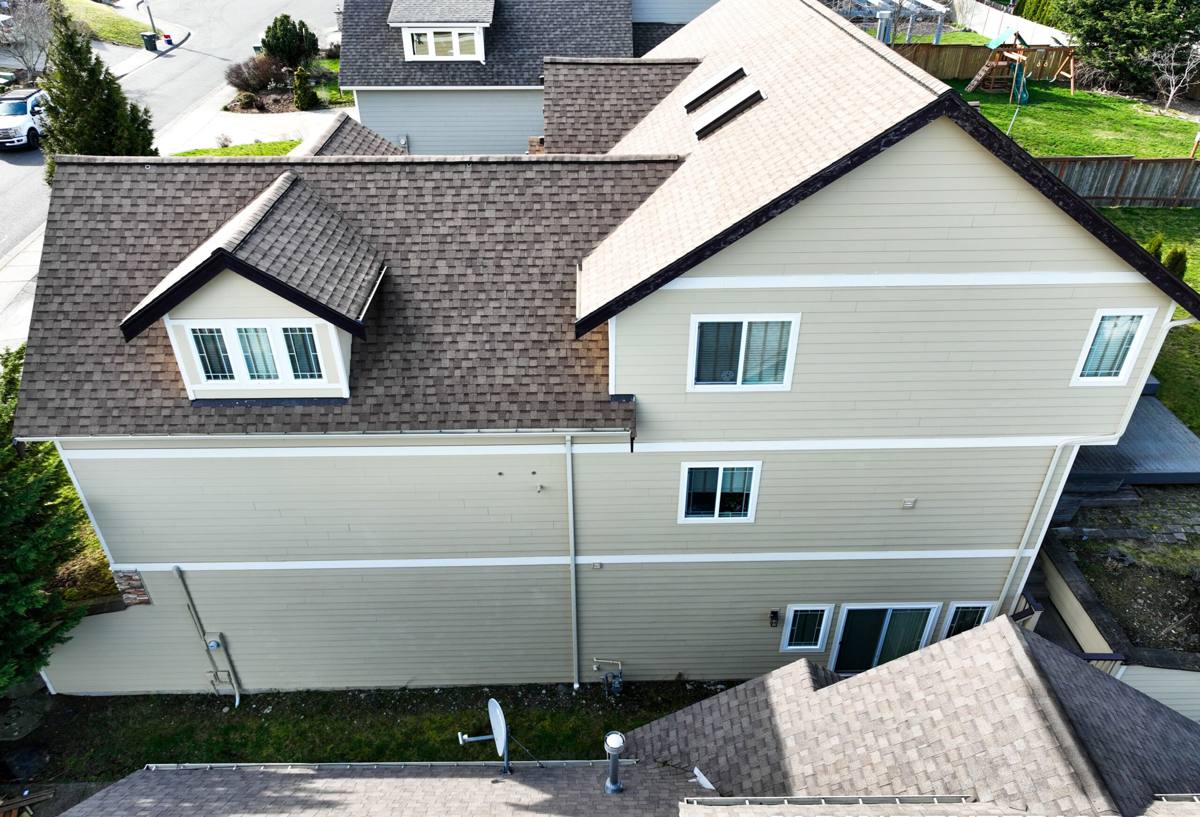
South Hill is one of Bellingham's oldest residential neighborhoods, and that history shows up on its rooflines. You've got a mix of early-1900s craftsman and foursquare homes, mid-century additions, and newer infill construction, often sitting close together on sloped lots with mature tree cover. That combination — older framing, steep or complex rooflines, and a lot of shade from big trees — creates roofing conditions that are different from what you'd deal with on a flat lot out in the county. A roof replacement here has to account for the age of the structure underneath, not just the shingles on top.
We've worked on enough South Hill roofs to know the neighborhood's quirks: original roof decking that may not meet current sheathing standards, additions where roof lines meet at odd angles and valleys, and mature Douglas fir and cedar trees dropping needles and debris onto roofs year-round. None of that is a problem if it's planned for. It becomes a problem when a crew treats every roof the same way.
What Bellingham's Climate Does to a South Hill Roof
Whatcom County roofs deal with a specific set of stresses, and South Hill's tree cover and proximity to Bellingham Bay add a few more on top of the regional baseline.
Salt Air and Metal Fatigue
South Hill sits close enough to the water that salt-laden air is a real factor, especially for anything metal on the roof — flashing, vents, gutters, fasteners. Standard galvanized fasteners and low-grade flashing corrode faster here than they would inland. Over time that corrosion is what actually causes leaks, not the shingles themselves. Choosing corrosion-resistant metals and stainless or coated fasteners at the outset saves a lot of grief ten years down the road.
Driving Rain
Bellingham doesn't just get a lot of rain — it gets wind-driven rain that pushes water sideways under shingle edges, around vent boots, and into valleys. A roof that would perform fine in a calmer climate can leak here if the underlayment, flashing laps, and valley details aren't built for wind-driven moisture specifically. This is where a lot of the difference between an adequate roof job and a good one actually lives — it's rarely visible from the ground.
Moss and Shade
South Hill's mature tree canopy is part of what makes the neighborhood attractive, but it also means long moss season. Shaded, north-facing roof sections stay damp for extended stretches, and moss and algae take hold. Moss isn't just cosmetic — as it grows it lifts shingle edges, holds moisture against the roof deck, and accelerates granule loss. A roof replacement is the right time to address moss-prone areas properly, rather than just treating symptoms after the fact.
Signs a South Hill Home Needs a Full Replacement, Not a Repair
Not every roof problem means starting over. But there are signs that point toward replacement rather than another round of patching:
- Granules collecting in gutters and at downspout outlets in significant amounts
- Shingles that are curling, cupping, or cracking across multiple roof sections, not just one spot
- Moss buildup that keeps returning within a year or two of cleaning
- Daylight visible through the roof deck from inside the attic
- Multiple past repairs in different areas, suggesting the whole roof is aging out together
- Soft or spongy spots underfoot when walked, which usually means deck damage
- A roof already past or near the end of its rated lifespan, especially on an older South Hill home where the original decking may still be in place
If a roof is showing one or two of these in an isolated area, a repair may still make sense. If several are showing up across the roof, replacement is usually the more honest recommendation, both for your wallet and for what's protecting the house.
What a Correct Roof Replacement Includes
A roof replacement is more than swapping old shingles for new ones. On a South Hill home, the work that matters most is often what ends up hidden under the new roofing:
Tear-Off and Deck Inspection
Full tear-off lets us actually see the roof deck, which matters a lot on older Bellingham homes where original sheathing may be decades old. Any soft, delaminated, or water-damaged decking gets replaced before anything new goes down — installing new roofing over compromised decking just hides a problem that will resurface.
Underlayment Built for Driving Rain
Given how much wind-driven rain this area sees, underlayment choice and installation matter more here than in drier climates. We use synthetic or ice-and-water underlayment in vulnerable areas — eaves, valleys, around penetrations — sized to the actual exposure of each roof section.
Flashing and Fasteners That Handle Salt Air
Every valley, chimney, skylight, and vent penetration gets flashing that's sized and lapped correctly for this climate, using materials chosen with the coastal air in mind. Fasteners matter just as much as the visible metal — corrosion-resistant fasteners cost a little more up front and save you a callback years later.
Ventilation Sized to the Roof
Proper intake and exhaust ventilation keeps the attic dry and the roof deck at a stable temperature, which slows moss growth on shaded sections and extends the life of the roofing material. On older South Hill homes, ventilation is often undersized or mismatched for the current roof shape, especially after past additions — replacement is the right time to correct it.
Choosing Roofing Material for South Hill's Conditions
There's no single "best" roofing material — it depends on the home's style, budget, and what the site demands. Here's how the common options stack up for a shaded, salt-air, high-rain neighborhood like South Hill:
| Material | Moss/Algae Resistance | Coastal Air Performance | Typical Lifespan | Notes for South Hill |
|---|---|---|---|---|
| Standard asphalt shingles | Moderate — needs algae-resistant granules | Good with proper metal accessories | 20–30 years | Cost-effective, works well with correct ventilation and flashing |
| Algae-resistant (AR) shingles | Better — copper-infused granules resist algae streaking | Good | 25–30 years | Worth the upgrade on shaded, north-facing sections |
| Metal roofing | Very good — sheds moss more easily due to slope and surface | Requires coastal-rated coatings/fasteners | 40–60 years | Higher upfront cost, low long-term maintenance |
| Cedar shake | Poor without regular maintenance | Needs careful detailing | 20–30 years with upkeep | Fits older/craftsman character but demands ongoing moss management |
For a lot of South Hill homes, algae-resistant asphalt shingles paired with correct ventilation and flashing hit the right balance of cost, appearance, and durability. Metal makes sense where a homeowner wants to minimize long-term moss maintenance and is planning to stay in the home long enough to see the investment pay off. We'll walk through the real trade-offs for your specific roof rather than pushing one product across the board.
Our Process for a South Hill Roof Replacement
- On-site assessment. We walk the roof and attic, check the decking, ventilation, and flashing condition, and note any tree-cover or shading factors specific to the property.
- Written estimate. You get a clear breakdown of materials, scope, and cost — no vague allowances that turn into surprise add-ons mid-job.
- Material selection. We talk through the options that fit your home, your budget, and your roof's actual exposure, not just what's easiest to install.
- Tear-off and deck repair. Full removal of old roofing, with any damaged decking replaced and documented before new roofing goes down.
- Installation. Underlayment, flashing, ventilation, and roofing material installed to manufacturer spec and adjusted for this site's rain and salt exposure.
- Final walkthrough. We review the finished roof with you, including care and maintenance specific to a shaded, coastal-adjacent property.
Why Local Experience on South Hill Matters
South Hill's older housing stock, tree canopy, and hillside lots mean a roof crew needs to plan for things that don't show up on a standard checklist — where the moss will come back, which valleys catch the most wind-driven rain, how much shade a given roof section actually gets through the year. A crew that's worked other South Hill roofs already knows these patterns going in, which means fewer surprises during tear-off and a roof that's built for the way this specific neighborhood behaves, not a generic Whatcom County average.
It also means we're a known, findable business in the neighborhood — not a crew that showed up from out of the area for one job and moved on. If a question comes up two years after installation, we're still local and still reachable.
Maintenance After Replacement
A new roof still needs periodic attention, especially on a shaded South Hill lot:
- Clear gutters and downspouts at least twice a year, more often under heavy tree cover
- Remove debris and needles from valleys and roof planes before they hold moisture
- Have moss growth addressed early with proper treatment rather than pressure washing, which can strip granules
- Schedule a roof check after major windstorms to catch lifted or damaged flashing early
- Keep an eye on attic ventilation — blocked vents undo a lot of the protection a new roof provides
A roof replacement done right for this climate should mean fewer surprises for years, not more maintenance than the old roof needed.
If your South Hill home's roof is showing its age, we're happy to take a look and give you a straightforward, no-pressure estimate — what shape it's in, what your real options are, and what it would take to do it right. Use the form below to get started.