 Bellingham Siding
 Windows in South Hill Take a Different Kind of Beating
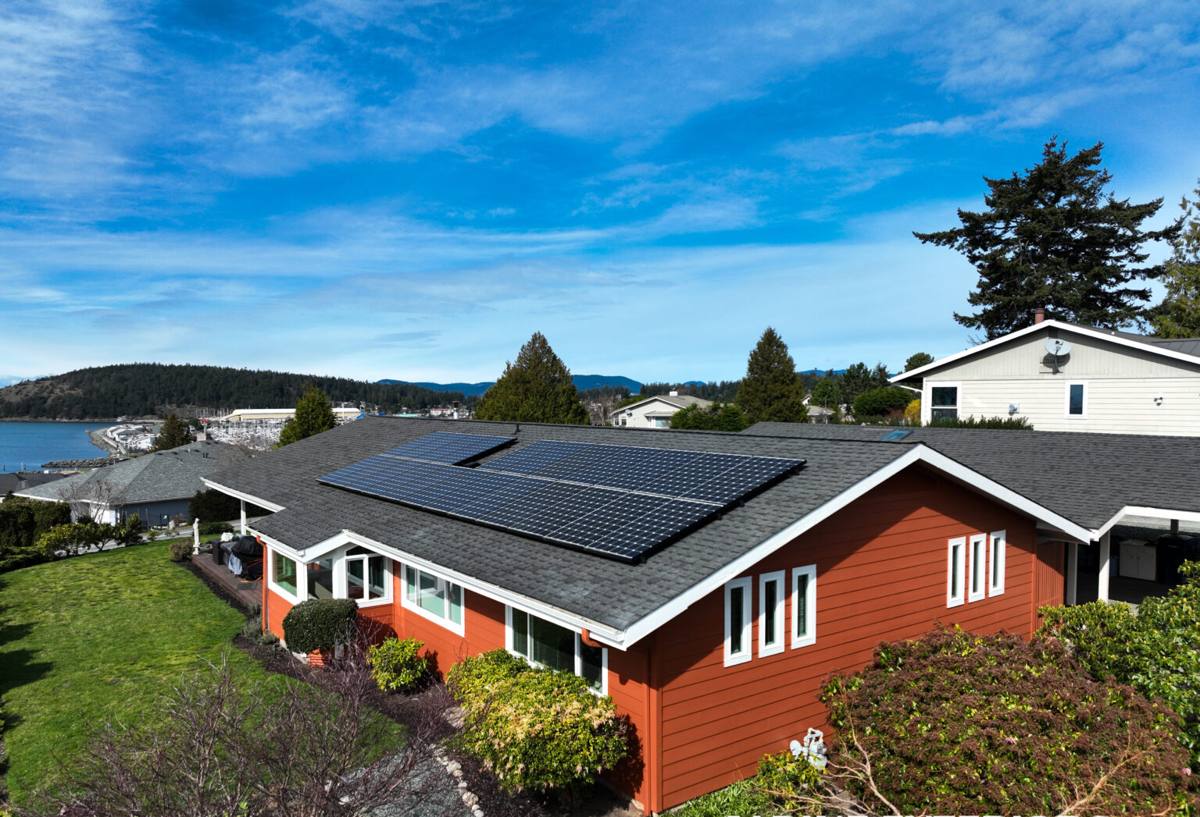
South Hill sits up high with some of the best exposure in Bellingham, and that exposure cuts both ways. The same elevation and open aspect that gives South Hill homes their views also means more direct wind-driven rain, more salt-laden air moving in off Bellingham Bay, and less tree cover in spots to break up the weather compared to more sheltered Whatcom County neighborhoods. Older single-pane and early dual-pane windows in this area tend to show their age faster than the same windows would in a more protected location: seals fail sooner, wood sashes hold moisture longer, and hardware corrodes ahead of schedule.
None of that means South Hill is a bad place for windows — it just means a window replacement here has to be specified and installed correctly, not just "swapped in." A window that's fine in a low-exposure neighborhood can underperform on a South Hill lot if the flashing detail, frame material, or glass package wasn't chosen with the site in mind.
What "Correct" Window Replacement Actually Means
Window replacement gets sold as a simple swap — old unit out, new unit in. That's the easy part. The part that actually determines whether the window performs for the next 20 years happens at the rough opening, before the new window ever gets set.
The parts that matter more than the window itself
- Removing the old unit without tearing up more of the wall assembly than necessary, and inspecting the framing and sheathing underneath for hidden rot or moisture staining
- Correcting any water damage found before the new window goes in — never sealing a new window over a wet or compromised opening
- Installing (or restoring) a proper weather-resistive barrier and flashing sequence, lapped shingle-style so water sheds outward and down, never inward
- Sealing the sill pan so any water that does get past the exterior cladding drains back out instead of pooling
- Setting the window level, plumb, and square, then shimming and fastening per the manufacturer's instructions — not just caulk and hope
- Insulating the gap between the frame and rough opening properly, without over-packing it in a way that bows the frame
- Finishing the exterior trim and sealant joints so the whole assembly sheds water as a system
Skip or rush any one of these steps and the window itself becomes almost irrelevant — a premium unit installed with a bad flashing detail will leak, and a mid-range unit installed correctly will often outperform it.
Signs a South Hill Home Actually Needs Window Replacement
Not every drafty window needs full replacement — sometimes it's a hardware or weatherstripping fix. But there are signs that point to the window and its installation being past the point of repair:
- Fogging or a permanent haze between the panes (a failed seal on dual-pane glass — this cannot be repaired, only replaced)
- Soft or discolored wood at the sill or the interior trim around the window
- Visible gaps between the window frame and the siding or trim, especially after wind events
- Green or black growth on the exterior casing or sill — a sign moisture is sitting rather than draining
- Windows that are difficult to open, close, or lock, especially if they used to work fine
- A noticeable draft or cold spot near the window even when it's fully closed
- Condensation forming on the interior glass or frame regularly through the wetter months
Frame Material: What Actually Holds Up Here
Frame material matters more in a marine, high-moisture climate like this than it does inland. Here's how the common options compare for a South Hill installation specifically:
| Material | How it handles salt air & moisture | Maintenance | Typical trade-off |
|---|---|---|---|
| Vinyl | Won't rot or corrode; handles moisture well | Low — occasional cleaning | Limited color/finish options, can't be repainted |
| Fiberglass | Very stable, resists moisture and expansion/contraction well | Low | Higher upfront cost |
| Wood (unclad) | Attractive but vulnerable if finish isn't maintained | High — needs regular repainting/sealing | Best fit for sheltered walls, not exposed elevations |
| Wood-clad (aluminum or vinyl exterior) | Good — exterior shell protects the wood core | Moderate | Cladding seams need to be detailed correctly during install |
| Aluminum | Durable but conducts heat/cold and can corrode near salt air over time without proper coatings | Moderate | Less common choice for this climate unless specified with marine-grade coatings |
We don't push any one brand or material as the only "right" answer — the right call depends on the specific wall, the home's exposure, and the owner's maintenance appetite. What we won't do is install a material that we know is a poor match for a given elevation just because it's cheaper or in stock. If a wood-frame window makes sense on a sheltered side of the house but not on the weather side, we'll say so.
Glass and Hardware Choices Worth Understanding
Glass packages
Dual-pane is standard now, and low-E coatings help with both heat retention in winter and reducing solar heat in the rare hot stretch. In a wetter, cooler climate like Whatcom County's, the return on triple-pane is smaller than it is in extreme climates — it can still make sense for a north- or west-facing wall that takes the brunt of storms, but it's not automatically the right upgrade for every window in the house.
Hardware and weatherstripping
Cheap hardware is one of the first things to fail in a salt-air environment. Look for corrosion-resistant hardware and compression-style weatherstripping rather than the thin foam strips that compress permanently within a few years and stop sealing.
Our Window Replacement Process
- On-site assessment — we look at each window individually, not just the house as a whole, since exposure varies wall to wall on most South Hill lots
- Honest recommendation — which windows need full replacement now, which can wait, and which material/glass package fits each elevation
- Written estimate — a clear scope, so there's no ambiguity about what's included
- Opening prep — old window removal, inspection of framing and sheathing, and repair of any hidden moisture damage before anything new goes in
- Flashing and sill pan installation — done to shed water correctly, not just to look sealed from the outside
- Window setting — leveled, plumb, shimmed, and fastened to manufacturer spec
- Insulation and interior finish — gap filled correctly, interior trim reinstalled or replaced cleanly
- Exterior trim and sealant — finished so the whole assembly works as one weatherproof system
- Final walkthrough — every window opens, closes, and locks the way it should before we consider the job done
Timeline expectations
A straightforward multi-window replacement on a typical South Hill home usually runs a few days to about a week, depending on window count and whether hidden framing repairs turn up once old units come out. We'd rather find and fix a soft sill now than have it show up as a callback in two years.
What Drives the Cost
| Factor | Why it matters |
|---|---|
| Number and size of windows | The biggest single driver of total project cost |
| Frame material chosen | Vinyl, fiberglass, and wood-clad all price differently |
| Glass package | Standard low-E vs. upgraded coatings or triple-pane on exposed walls |
| Condition of the existing opening | Hidden rot or water damage adds repair scope before the window can go in |
| Access and window height | Second-story or hard-to-reach windows take more labor and equipment |
| Full-frame vs. insert replacement | Full-frame costs more but is the right call when the existing frame or sill is compromised |
Most full-home window replacement projects in this area land in a broad middle range per window once material, labor, and any framing repair are factored in — the only honest way to give a real number is to look at the actual openings, since a project with three straightforward windows and one that needs sill repair will price very differently than either extreme alone.
What to Ask Before You Hire Anyone
- Will you inspect the rough opening and framing before installing, or just set the new window in the existing hole?
- What's your flashing and sill pan detail, and will you explain it before work starts?
- Do you carry manufacturer certification for the window lines you install?
- What's covered under warranty — glass, frame, hardware, and labor — and for how long?
- Will the same crew be doing the work, or is it subcontracted out with no direct oversight?
- Can you show me examples of similar homes you've worked on in this area?
Any contractor should be able to answer these directly and without hesitation. Vague answers about installation method are usually the clearest warning sign there is.
Why Local Experience in South Hill Matters
A crew that already works this neighborhood knows which walls take the worst of the driving rain, how moss and algae growth behaves on North-facing trim through Bellingham's long wet season, and what kind of flashing detail actually holds up here versus what a generic installation guide assumes for a milder climate. That local pattern recognition is the difference between a window that's technically installed and one that's installed correctly for this specific site. We work throughout Whatcom County, and South Hill's mix of elevation, exposure, and older housing stock is a profile we see regularly — it shapes how we approach every estimate here.
After Installation: Keeping New Windows Performing
- Rinse frames and glass periodically to clear salt residue, especially on walls facing open exposure
- Check exterior caulk and sealant joints once a year, and touch up any that have cracked or pulled away
- Keep gutters and downspouts clear so runoff isn't sheeting down across window heads
- Clear moss or debris that accumulates on sills or nearby trim before it holds moisture against the frame
- Operate locks and hardware periodically through the winter so mechanisms don't seize from disuse
New windows installed correctly shouldn't need much beyond this — but a little seasonal attention goes a long way in a climate that stays wet as much of the year as this one does.
If you're noticing drafts, fogged glass, or soft trim around your windows, we're glad to come take a look. The estimate is free, there's no pressure to move forward, and you'll get a straight answer about what actually needs to happen — use the form below to get started.