 Bellingham Siding
 Building Decks That Actually Hold Up on South Hill
South Hill sits above downtown Bellingham on sloped, view-oriented lots that catch weather differently than flatter parts of town. Homes up here get more direct exposure to wind off Bellingham Bay, more driving rain on north- and west-facing elevations, and slower drying time in the shoulder seasons because of the elevation and tree cover on many lots. A deck built to a generic spec sheet — the kind you'd find on a big-box plan — tends to show problems here faster than it would in a drier, more sheltered part of Whatcom County. We build decks specifically with this hillside, marine-influenced climate in mind, not as an afterthought.
This page covers what a deck actually needs to hold up on South Hill, what correct construction looks like below the decking boards, how our process works from first visit to final walkthrough, and why hiring a crew that already works in this neighborhood is worth something real.
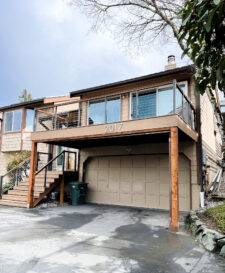
What Bellingham's Climate Does to an Outdoor Deck
Driving Rain and Standing Moisture
Whatcom County doesn't get the heaviest rainfall in Washington, but it gets a lot of it spread across many months, often driven sideways by wind coming off the water. On a hillside lot, that means water finds its way into joints, fastener holes, and end grain that a flatter, more sheltered site would rarely see. Decking that isn't properly gapped, flashed, or sloped will trap water against framing, and framing that stays wet for weeks at a time starts to rot from the inside before it ever looks bad on the surface.
Salt Air Off Bellingham Bay
Proximity to the bay means airborne salt is a real factor for South Hill homes, especially on exposed, higher-elevation lots. Salt air accelerates corrosion in standard fasteners, brackets, and railing hardware. A screw or joist hanger that would last decades inland can start rusting and weakening within a few years this close to salt water if it isn't rated for the exposure. This is one of the most common causes of premature deck failure we see on inspections — not the decking material, but the hardware holding it together.
A Long Moss Season
Between the rain, the shade many hillside lots have from mature trees, and cooler temperatures much of the year, moss and algae have a long window to establish themselves on horizontal surfaces. Moss holds moisture against the deck surface, and on wood decking it can work into the grain and accelerate decay. Beyond the maintenance headache, a mossy deck is also a slip hazard on stairs and landings — a real concern on sloped South Hill properties where steps often do double duty getting people from house to yard to street.
Choosing a Decking Material That Fits South Hill
There's no single "best" decking material — the right choice depends on budget, how much maintenance the homeowner actually wants to do, and how exposed the deck is to rain and salt air. Here's how the common options compare for this specific climate:
| Material | Upfront Cost | Maintenance | How It Handles Moss & Moisture | Typical Lifespan Here |
|---|---|---|---|---|
| Pressure-treated wood | Lowest | Annual cleaning, periodic sealing | Needs regular sealing or moss returns quickly; end grain is the weak point | 10-15 years |
| Cedar | Moderate | Regular sealing to hold color and resist decay | Naturally moisture-resistant but still needs upkeep in constant damp shade | 15-20 years |
| Composite decking | Higher | Occasional washing, no sealing | Doesn't rot, but can still grow surface moss/algae in shaded, damp spots | 25-30 years |
| PVC / capstock boards | Highest | Lowest — occasional rinse | Fully synthetic surface resists moss adhesion best of the group | 30+ years |
For a lot of South Hill homes, especially ones with shaded or north-facing decks, we steer homeowners toward composite or capstock boards specifically because of the moss and moisture pressure, not because wood is a bad product. Wood decking done right — with proper ventilation underneath, correct fastening, and a realistic sealing schedule — still performs well on sunnier, more exposed sites. The honest trade-off is maintenance time versus upfront cost, and we lay that out plainly before you commit to a material.
The Structural Work That Determines Whether a Deck Lasts
The decking boards are the part everyone sees, but the framing underneath is what actually determines whether a deck is safe and how long it lasts. This matters more on South Hill's sloped lots, where footings often have to deal with uneven grade and where a poorly attached ledger board is a genuine safety issue, not just a cosmetic one.
Footings Set Below Frost Depth
Footings need to be sized and set deep enough to stay stable through freeze-thaw cycles and avoid shifting in the loose, often clay-heavy soils common on hillside lots in this part of Whatcom County. On sloped ground, this sometimes means deeper or stepped footings rather than a uniform grid — cutting corners here is invisible until the deck starts to rack or settle unevenly.
Ledger Board Attachment and Flashing
Where a deck attaches to the house is the single most common failure point in decks nationwide, and it's a bigger risk here because of how much rain the ledger area is exposed to over a year. Correct attachment means through-bolting (not just screwing) into solid framing, and installing proper flashing that directs water away from the house band board instead of behind it. Skipping or shortcutting ledger flashing is how homeowners end up with hidden rot behind the siding years later.
Framing, Joist Spacing, and Fasteners
Joist spacing needs to match the decking material's requirements — composite and PVC boards often call for tighter spacing than solid wood to prevent flexing. And every fastener, hanger, and bracket should be corrosion-rated for coastal exposure, not just standard galvanized hardware that looks fine in the box but wasn't built for salt air.
- Footings sized and set to local frost depth, adjusted for sloped or uneven grade
- Ledger board through-bolted into house framing, with proper flashing installed
- Joist spacing matched to the specific decking product being installed
- Stainless steel or coastal-rated hardware throughout, not standard galvanized
- Under-deck ventilation to let framing dry out between rain events
- Proper gapping between boards for drainage and expansion
- Stair stringers and railing posts anchored to structural framing, not just decking
How We Build a Deck, Start to Finish
- Site visit and assessment. We walk the property, look at grade, drainage, sun/shade exposure, and how the deck will tie into the house, and talk through how you actually plan to use the space.
- Design and material selection. We go over layout, size, and material options honestly, including maintenance expectations for each, so there are no surprises later.
- Permitting. We handle the permit application and inspection scheduling with the City of Bellingham or Whatcom County, depending on where the property sits.
- Excavation and footings. Footings are dug, sized, and poured to depth before any framing goes up.
- Framing. Ledger attachment, joists, and beams go in with corrosion-rated hardware, built to the load and spacing the decking material requires.
- Decking, railings, and stairs. Boards, railings, and any stairs are installed with proper gapping, fastening, and code-compliant railing height and baluster spacing.
- Final walkthrough. We inspect the finished deck with you, cover basic care for the material you chose, and answer any remaining questions before we call the job done.
Railings, Hardware, and the Small Details That Prevent Early Failure
Railings take a lot of abuse — leaned on, gripped, rained on constantly — and they're also a safety-code item, not just a design choice. Post attachment needs to reach structural framing, not just the rim joist or decking, and every bolt and bracket exposed to weather should be rated for coastal, salt-air conditions. We see a lot of premature railing failures on hillside homes that trace back to standard hardware corroding faster than anyone expected this close to the water. It's a small cost difference upfront and a significant difference in how long the railing stays solid.
Permits and Code Requirements in Bellingham and Whatcom County
Most new decks and significant deck rebuilds require a building permit, with inspections at the footing and framing stages before decking goes down. Requirements can differ slightly depending on whether the property is inside Bellingham city limits or in unincorporated Whatcom County, particularly around setbacks on sloped lots and railing height/spacing rules for elevated decks. We handle the permit process as part of the job so you're not left navigating city or county paperwork on your own, and so the finished deck is inspected and documented correctly — which matters when you go to sell the house.
Keeping a South Hill Deck Moss-Free and Sound Year After Year
Even a well-built deck needs some seasonal attention in this climate. What that looks like depends on the material, but a few habits apply across the board:
- Sweep leaves and debris off the deck surface regularly in fall, especially in shaded areas where moss gets a head start
- Wash the surface at least once or twice a year to remove algae and moss buildup before it takes hold
- Keep gutters and downspouts clear so runoff isn't dumping extra water onto or near the deck
- Check and reseal wood decking on the schedule appropriate for the product — don't wait until it's visibly gray and dry
- Inspect railings and stair connections annually for any looseness, which can signal hardware corrosion underneath
- Keep nearby vegetation trimmed back so sun and air can actually reach the deck surface
None of this requires major work if it's done consistently — it's the decks that get ignored for years that end up needing board replacement or structural repair instead of a simple wash.
Why It Matters That We Already Work in South Hill
A crew that already builds and repairs decks in this neighborhood knows which lots have drainage issues before the first shovel goes in, which elevations catch the worst of the wind-driven rain, and which hardware actually holds up a few years in rather than just looking good on installation day. That local knowledge shows up in fewer surprises during the build and a deck that's specced correctly for its exact spot on the hill, not a one-size-fits-all approach borrowed from a drier climate.
If you're planning a new deck or need to replace one that's showing its age, we're happy to come take a look and give you a straightforward, no-pressure estimate — just fill out the form below.