 Bellingham Siding
 Roofing in South Hill: A Different Set of Problems Than Most of the Country
South Hill sits above downtown Bellingham with some of the best views in Whatcom County — and some of the toughest conditions for a roof. The elevation and exposure mean more direct wind-driven rain, more moss-friendly shade from mature trees on the older lots, and enough salt-laced air rolling in off Bellingham Bay to accelerate corrosion on anything metal that isn't rated for it. A roof that would hold up fine in a drier inland climate can start showing problems here years ahead of schedule if it wasn't installed with this specific environment in mind.
New roof installation in South Hill isn't just about picking a shingle color and nailing it down. It's about building an assembly — decking, underlayment, flashing, ventilation, and the finish material — that's matched to a marine climate with a long wet season and an even longer moss season. That's the lens we bring to every South Hill roof, whether it's a craftsman bungalow near the historic core of the neighborhood or a newer build on the hill's upper streets.
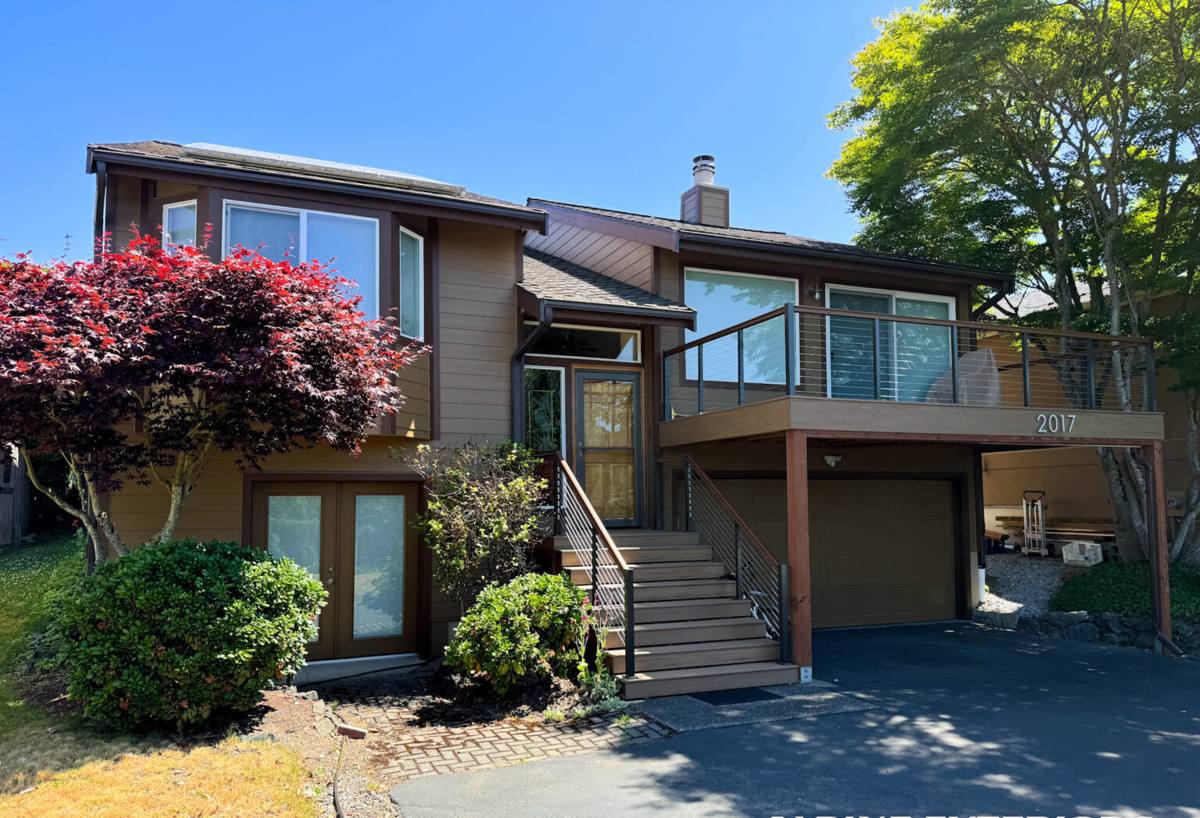
What Bellingham's Climate Actually Does to a Roof
Driving Rain and Wind
South Hill's elevation exposes it to more sustained wind than lower-lying parts of Bellingham. Wind-driven rain doesn't just fall straight down — it gets pushed sideways and upward under shingle tabs, around chimney flashing, and into any gap in the underlayment. A roof system built for calmer climates often skips details that matter here: high-quality synthetic underlayment, properly lapped ice-and-water shield at vulnerable transitions, and flashing that's mechanically fastened and sealed rather than just tucked in place.
Moss and Sustained Moisture
Whatcom County's wet season runs long, and shaded roof sections — north-facing slopes, areas under fir and cedar canopy — stay damp for weeks at a time. That's exactly what moss needs to establish. Once moss gets a foothold, it lifts shingle edges, holds moisture against the roof deck, and accelerates granule loss. A new roof installed with moss-resistant materials and proper airflow underneath will hold up far longer than one installed without those considerations.
Salt Air and Corrosion
Bellingham Bay isn't far from South Hill as the crow flies, and salt-laden air travels. Fasteners, flashing, and any exposed metal components need to be rated for coastal exposure — plain galvanized steel corrodes faster here than most manufacturers' general specs assume. This is a detail that's easy to overlook if a crew isn't used to building for this specific stretch of coastline.
Signs a South Hill Home Needs a New Roof, Not Another Repair
- Granule loss heavy enough that you're finding grit in gutters and downspouts every season
- Moss or algae staining that keeps coming back within months of cleaning
- Shingles that are cupping, curling, or cracking, especially on south- and west-facing slopes
- Soft spots or sagging when walked on, which usually means deck damage underneath
- Daylight visible through the attic roof boards, or consistent damp spots on interior ceilings
- A roof already past 20-25 years old with multiple past repairs — patch fatigue sets in and repairs stop being cost-effective
If you're seeing two or more of these, a full replacement is usually the more honest recommendation than another round of patching. We'll tell you plainly if a repair still makes sense for your situation — a new roof is a real investment and we're not going to push one prematurely.
What a Correct Roof Installation Involves Here
Tear-Off and Deck Inspection
Every proper installation starts with a full tear-off down to the deck. This is the only way to actually see what's underneath — soft or rotted sheathing, undersized ventilation, old flashing that's been failing quietly for years. Skipping this step (or "roofing over" existing layers) just buries problems under a new surface, which is a bad trade in a climate this wet.
Underlayment and Ice/Water Protection
Given the wind-driven rain typical on the hill, we use synthetic underlayment across the full roof and self-adhering ice-and-water shield at eaves, valleys, and any roof-to-wall transitions — the spots where water is most likely to find a way in.
Flashing Details
Chimneys, skylights, dormers, and sidewall transitions are where the majority of roof leaks actually originate, not the open field of shingles. Correctly stepped and counter-flashed details, tied properly into the underlayment, are non-negotiable on a South Hill roof.
Ventilation
Balanced intake and exhaust ventilation keeps the attic dry and temperature-regulated, which does double duty here: it reduces condensation risk during the wet months and helps prevent the kind of trapped moisture that invites moss and mildew on the underside of the deck.
Material Selection and Fastening
We fasten with corrosion-resistant hardware suited to coastal air, and we favor algae- and moss-resistant shingle products for shaded slopes. Material choice gets matched to each roof's actual sun and shade exposure rather than a single default spec for the whole job.
Material Options for South Hill Homes
| Material | Moss/Moisture Performance | Typical Lifespan Here | Best Fit |
|---|---|---|---|
| Algae-resistant architectural asphalt shingles | Good, with copper or zinc granules that inhibit moss growth | 25-30 years | Most South Hill homes; strong value and proven performance in wet climates |
| Standard 3-tab asphalt shingles | Weaker resistance to moss and algae staining over time | 15-20 years | Budget-driven projects on well-sun-exposed roofs |
| Standing seam metal roofing | Excellent — sheds moisture fast, minimal moss adhesion | 40-50+ years | Homeowners wanting long-term, low-maintenance performance |
| Synthetic/composite shake | Good, doesn't absorb moisture like wood shake does | 30-40 years | Homes wanting a traditional look without wood's moisture upkeep |
We steer most South Hill homeowners away from untreated wood shake and shingle roofing. It's not that the product can't look good — it's that in a climate this wet, wood roofing needs a level of ongoing maintenance (treatment, cleaning, moisture monitoring) that most homeowners don't want to keep up with, and the moisture-retention behavior works against the roof's own lifespan. That's a maintenance trade-off worth knowing before you commit, not a knock on anyone who chooses it.
How Our Process Works
- On-site inspection. We walk the roof and the attic, check deck condition, ventilation, and flashing points, and note anything specific to your home's exposure — tree cover, slope orientation, wind patterns.
- Written estimate. You get a clear scope of work and pricing before anything is scheduled — no vague allowances that turn into surprise add-ons.
- Material selection. We walk through the options that fit your roof's actual conditions and your budget, not a one-size-fits-all recommendation.
- Scheduling around the weather. Whatcom County's wet season means timing matters. We plan installation windows to minimize exposed-deck time and keep your home protected if weather shifts mid-project.
- Tear-off, deck repair, and installation. Full removal of the old roof, replacement of any damaged decking, and installation following manufacturer specs plus our own detailing standards for wind and moisture.
- Final walkthrough. We review the finished roof with you, confirm ventilation and flashing details, and go over warranty coverage.
What to Have Ready Before You Call
- Rough age of the current roof, if known
- Any known leak history or interior water stains
- Whether you've had moss or algae treatments done recently
- Your general timeline — some homeowners plan around the drier months, others need repairs sooner
Why a Crew Already Working South Hill Matters
A roofing crew that regularly works South Hill and the surrounding Bellingham neighborhoods knows the patterns before they ever get on your roof — which slopes tend to hold moss, how wind behaves coming off the hill, which older homes in the area were built with ventilation that's now undersized for current energy codes. That local pattern recognition shortens the inspection process and reduces the chance of missing something that a crew unfamiliar with Whatcom County conditions might not think to check.
It also means accountability. A local crew is here after the job is done — for warranty questions, for a follow-up inspection after the first hard winter, for whatever comes up. That's a different relationship than a crew that installs and moves on to the next region.
Cost Factors for South Hill Roof Replacement
| Factor | How It Affects Cost |
|---|---|
| Roof size and pitch | Larger and steeper roofs require more material and labor time |
| Deck condition | Rotted sheathing found during tear-off adds repair cost not visible from the ground |
| Material choice | Asphalt shingles are the most budget-friendly; metal and composite options cost more upfront but reduce long-term maintenance |
| Number of roof penetrations | Chimneys, skylights, and vents each require additional flashing work |
| Access and site conditions | Steep driveways, tree cover, or tight lot access on hillside properties can affect labor and staging |
| Ventilation upgrades | Older South Hill homes sometimes need added intake or exhaust venting brought up to current standards |
We give exact numbers only after seeing the roof in person — anyone quoting a firm price over the phone for a job like this is guessing.
Get a Straightforward Estimate
If your South Hill roof is showing its age — or you just want an honest read on how many years it has left — we're happy to take a look. There's no pressure and no sales script, just a clear assessment of what your roof needs and what it would take to do the job right for this climate. Use the form below to request a free estimate.