 Bellingham Siding
 South Hill's Siding Takes a Different Kind of Beating
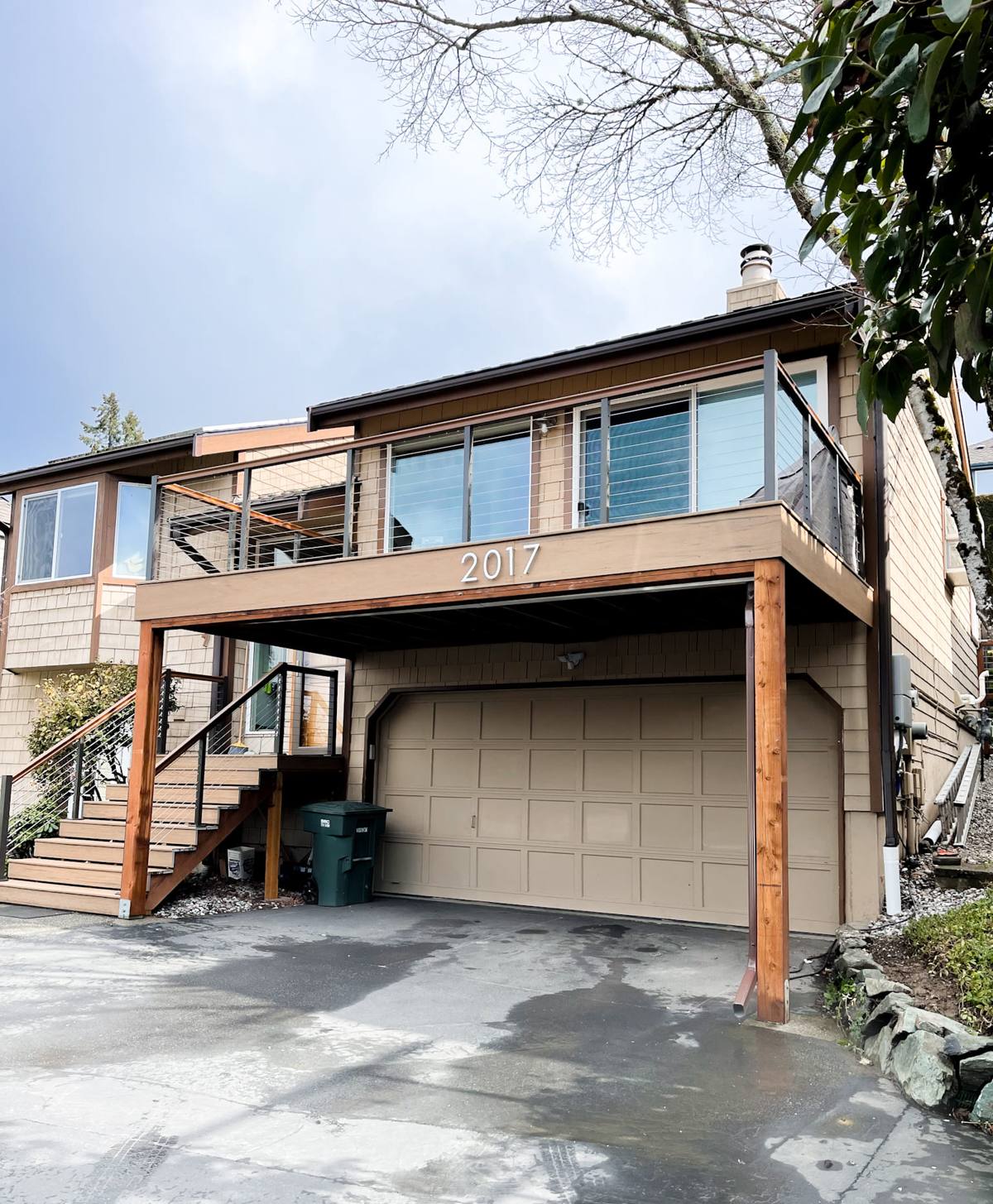
South Hill sits above the rest of Bellingham, and that elevation cuts both ways. The views are real, but so is the exposure. Homes up here catch wind and driving rain coming off Bellingham Bay and the Strait of Georgia with less to block it than homes down in the flats. Add in the mature tree canopy that shades a lot of South Hill's older, established lots, and you get a neighborhood where siding stays damp longer, dries slower, and grows moss and algae almost year-round. That combination — salt-laden wind, sustained rain, and shade — is exactly the environment that finds every weak point in a siding system.
We repair siding all over Whatcom County, but South Hill calls come with a recognizable pattern: moisture damage concentrated on the west- and south-facing walls that take the weather straight on, moss buildup on shaded north sides and under tree cover, and corrosion on fasteners and trim that's been breathing salt air for years. Understanding that pattern is what separates a repair that actually holds from one that fails again in a season or two.
What's Actually Causing the Damage
Wind-Driven Rain
Bellingham doesn't just get rain — it gets rain pushed sideways by wind off the water. On an elevated, less-sheltered lot like many in South Hill, that wind-driven rain finds its way behind loose panels, through failed caulk joints, and into any gap around windows, trim, or penetrations. Once water gets behind the siding, it doesn't just sit there — it wicks into sheathing and framing, and the damage keeps spreading long after the rain stops.
Moss and Algae
Whatcom County's moss season runs long, and shaded, north-facing walls or anything under tree cover can stay damp for weeks at a stretch. Moss holds moisture directly against the siding surface, which accelerates rot in wood-based products and can degrade paint finishes and caulk lines on almost any material. It's not just cosmetic — persistent moss is a moisture-delivery system aimed at your wall.
Salt Air
Being close to Bellingham Bay means airborne salt is a constant, low-grade factor. It corrodes exposed fasteners, pits unprotected metal trim, and accelerates the breakdown of finishes that aren't built to handle it. Salt exposure is subtle — homeowners rarely notice it until a fastener head is rusted through or a trim piece has visibly pitted.
Signs Your Siding Needs Repair, Not Just a Cleaning
A lot of siding problems look cosmetic from the ground and turn out to be structural once you get close. These are the signs worth taking seriously:
- Soft or spongy spots when you press on the siding, especially near the bottom of walls or under windows
- Paint that's bubbling, peeling, or failing in patches rather than evenly across a wall
- Visible moss or dark streaking that keeps coming back within weeks of cleaning
- Gaps, warping, or buckling panels, particularly on the wind-exposed sides of the house
- Rust staining running down from fastener heads or trim
- A musty smell in an interior room that shares a wall with a suspect area outside
- Caulk joints that have cracked, shrunk, or pulled away from trim and corners
Any one of these is worth a look. Two or more together usually means moisture has been getting in for a while.
What a Correct Repair Actually Involves
A lot of "siding repair" in this region amounts to caulking over a problem or swapping a single visibly cracked board and calling it done. That approach doesn't hold up on a South Hill exposure, because it never addresses what let water in to begin with. A repair done right starts with finding out how far the damage actually goes, not just where it's visible.
Diagnose Before You Touch Anything
We pull the damaged siding, not just patch around it, to check the condition of the water-resistive barrier and the sheathing underneath. Surface damage on siding is often the smallest part of the problem — soft sheathing or compromised house wrap underneath is what actually needs fixing.
Fix the Water Path, Not Just the Symptom
If flashing is missing or improperly lapped, if house wrap is torn, or if a window or door penetration was never properly sealed, replacing the siding on top of that same setup just buys you a few more years before the same spot fails again. Correct repair means restoring the drainage plane, not just the finish layer.
Match Materials and Method
Repairs need to match the existing siding's material, profile, and reveal so the patch doesn't stand out or create a new weak seam. When we're repairing into an existing wood, vinyl, or older fiber cement product, we'll tell you honestly whether a patch will actually blend and perform, or whether that section of wall is better addressed with a proper fiber cement repair section.
Repair vs. Replacement: How We Decide
Not every problem area needs a full re-side, and not every damaged section can be responsibly patched. Here's generally how the decision plays out:
| Situation | Usually Repair | Usually Replace (Full Wall or Home) |
|---|---|---|
| Damage limited to one or two isolated areas | Yes | No |
| Sheathing underneath is sound | Yes | No |
| Damage traced to one clear cause (flashing, caulk failure) | Yes | No |
| Rot or moisture found spreading along multiple walls | No | Yes |
| Original siding is failure-prone material nearing end of life | Short-term only | Yes |
| Home has recurring moss/moisture issues tied to shade and exposure | Case-by-case | Often, for long-term fix |
We'll always tell you straight which category your home falls into. A targeted repair is the right call far more often than a full re-side — but if we find widespread rot behind the siding, patching it would just be spending your money on a problem that comes back.
Why We Repair and Rebuild With James Hardie Materials
When a repair calls for new siding material — whether it's a single damaged section or a broader wall — we install James Hardie fiber cement, and it's the only siding product we install, full stop. We don't carry vinyl, LP SmartSide, Cemplank, Allura, or primed wood, because in a climate like Whatcom County's, those products come with trade-offs we're not willing to build into a repair we're putting our name on.
Fiber cement doesn't feed mold and moss the way wood-based siding can, it doesn't warp or buckle the way vinyl does under sustained damp-and-dry cycling, and Hardie's ColorPlus factory finish is engineered to hold up against exactly the kind of UV and moisture cycling South Hill sees. Hardie also builds region-specific HZ product lines, so the siding we install is matched to the Pacific Northwest's wet climate rather than a generic national spec. For a neighborhood that already puts extra strain on a home's exterior, using a product built for exactly that pressure makes the repair actually last.
How Our South Hill Repair Process Works
1. On-Site Inspection
We look at the visible damage, but also check the surrounding area — adjacent panels, trim, flashing, and any penetrations nearby — since moisture problems rarely stay contained to one board.
2. Honest Diagnosis
We'll tell you plainly what we find: whether it's a contained repair, a larger section, or something that points to a bigger issue. No inflated scope, no downplaying a real problem either.
3. A Clear, Written Plan
Before any work starts, you get a straightforward explanation of what's being repaired, what materials we're using, and why.
4. Repair Done to Spec
Proper flashing, correct fastening, manufacturer-spec gaps and sealant — not a shortcut patch. If sheathing or house wrap needs replacing, we replace it before the new siding goes back on.
5. Cleanup and Walkthrough
We walk the finished repair with you so you know exactly what was done and what to keep an eye on going forward.
What Happens When Repairs Get Put Off
Siding damage in a wet, shaded, salt-exposed neighborhood doesn't stay the same size. A small soft spot behind a cracked board this year can become compromised sheathing, insulation, or even framing damage in a couple more wet seasons. Moss left to sit continues to hold moisture against the wall the entire time it's there. And once rot sets into sheathing, the repair scope — and the cost — grows fast, often turning a modest patch job into a full wall section replacement. Catching it early is almost always the cheaper, simpler path.
Get a Straight Answer on Your Siding
If you're seeing soft spots, persistent moss, peeling paint, or damage that keeps coming back no matter how often it's cleaned, it's worth having someone take a real look before it spreads further. We offer free, no-pressure estimates for South Hill homeowners — we'll tell you honestly what we find, what it'll take to fix it right, and what your options actually are. Reach out using the form below to get started.