 Bellingham Siding
 South Hill's Siding Climate: Salt Air, Rain, and Moss
South Hill sits above Bellingham Bay, which means homes here take on a mix of exposures that a lot of siding products simply aren't built for. You've got marine air drifting up off the water, wind-driven rain that doesn't just fall straight down, and enough shade from mature trees and hillside terrain to keep siding damp long after a storm has passed. Add in a moss season that can stretch for months in Whatcom County, and you have a climate that will find every weak point in a siding system over time.
Salt Air and Coastal Moisture
Proximity to the bay means a steady, low-level exposure to salt-laden moisture in the air. It's not the same as a beachfront property getting direct salt spray, but it's enough to accelerate corrosion on fasteners and hardware, and to keep humidity levels around the home slightly higher than you'd see further inland. Siding materials that rely on paint film alone for protection, or that use fasteners not rated for coastal exposure, tend to show their age faster in this kind of environment.
Wind-Driven Rain on an Exposed Hillside
Elevation and exposure work together here. When storms move through, rain on South Hill often comes in at an angle rather than straight down, which pushes water into laps, seams, and trim joints that a calmer climate would never test. Siding on a hillside lot needs a real drainage plan behind it — not just a water-resistant face — because wind-driven rain will eventually find any gap in the system.
Shade, Moss, and Slow-Drying Siding
Tree cover and hillside shading are part of what makes South Hill a nice place to live, but they also mean some walls of a house — particularly north- and east-facing ones — can stay damp for days after a rain event. That slow drying is exactly what moss, algae, and mildew need to take hold. Over a long moss season, siding that can't shed moisture efficiently ends up hosting more organic growth, which traps even more moisture against the wall.
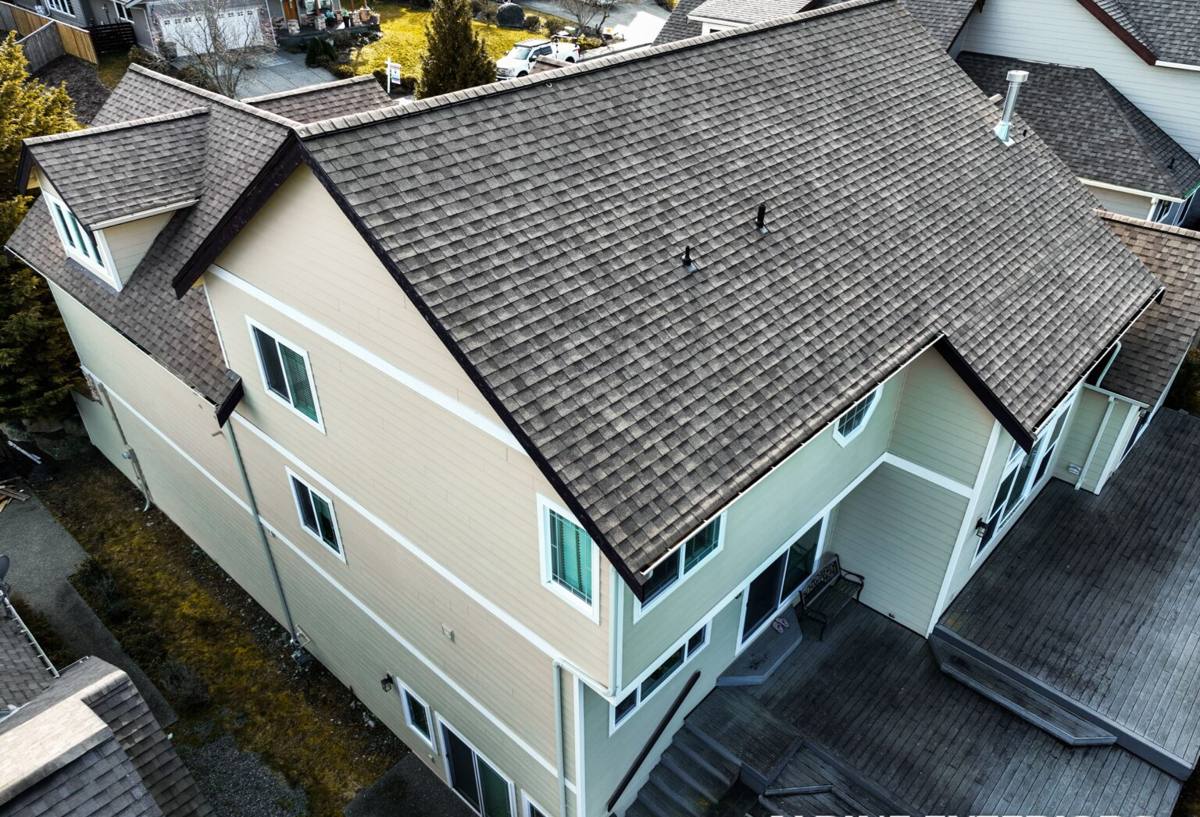
Why We Only Install James Hardie in This Climate
We standardized on James Hardie fiber cement siding for every project we take on, and in a climate like South Hill's, that's not a marketing preference — it's a practical one. Hardie siding is made from cement, sand, and cellulose fibers, which means it doesn't absorb and swell with moisture the way wood-based products can, and it won't support rot. It's also non-combustible, which matters given how much wildfire smoke and dry-season fire risk the Pacific Northwest has seen in recent years, even in a generally wet county like Whatcom.
ColorPlus Factory Finish
Hardie's ColorPlus finish is baked on at the factory under controlled conditions, rather than field-applied on site. That finish is engineered to resist fading and to handle repeated wet-dry cycling better than a standard field paint job — which matters directly here, since South Hill siding goes through that cycle constantly during the rainy months.
HZ5 Engineering for the Pacific Northwest
Hardie makes climate-specific product formulations, and the HZ5 line is engineered for the wetter, more temperate regions of the country — including Western Washington. It's built with this kind of moisture exposure in mind, rather than being a one-size-fits-all product adapted after the fact.
What a Correct Installation Requires Here
James Hardie siding performs the way it's supposed to only when it's installed to spec — and in a climate like this, the details behind the siding matter as much as the siding itself.
A Real Drainage Plane
Given the wind-driven rain South Hill sees, we install Hardie over a proper water-resistive barrier and drainage plane, so any moisture that does get past the siding face has somewhere to go instead of sitting against the sheathing.
Flashing at Every Transition
Windows, doors, roof-to-wall intersections, and deck ledgers are where most siding failures actually start — not in the field of the wall. Correct flashing at these transitions is non-negotiable on a hillside home taking on angled rain.
Fastening, Clearance, and Caulking
Fasteners need to be corrosion-resistant given the salt air exposure, siding needs proper clearance from grade, roofing, and decks to avoid wicking moisture, and caulking needs to follow Hardie's actual guidance — which means caulking some joints and intentionally leaving others open to drain, not sealing everything shut.
| Hardie Product | Best Use | Why It Fits South Hill |
|---|---|---|
| HardiePlank Lap Siding | Primary wall siding | Traditional lap profile sheds wind-driven rain efficiently when properly lapped and flashed |
| HardiePanel Vertical Siding | Accent walls, modern facades | Fewer horizontal laps means fewer places for water to collect on exposed elevations |
| HardieShingle | Gable accents, architectural detail | Adds texture while keeping the same fiber cement moisture performance |
| HardieTrim | Corners, window and door trim | Resists the swelling and rot that wood trim develops in shaded, damp corners |
Our Process for South Hill Siding Projects
We don't install Hardie the same way on every house — the process starts with actually looking at what the current siding and structure are telling us before a single new panel goes up.
- Evaluate the existing siding and sheathing for hidden moisture damage, particularly on shaded and downhill-facing walls
- Check grade clearance, gutter performance, and drainage around the foundation, since standing water and poor drainage are common on sloped South Hill lots
- Install or repair the water-resistive barrier and drainage plane before any new siding goes on
- Flash all windows, doors, and roof-wall intersections to manufacturer spec
- Install James Hardie siding, trim, and accessories to Hardie's fastening and clearance requirements
- Caulk and touch up per Hardie's finish guidelines, then walk the home with the owner before calling the job done
What We Check On-Site Before We Quote
- Grade and hardscape clearance beneath existing siding
- Gutter and downspout condition, especially on the uphill side of the home
- Soft or discolored siding near roof-wall intersections and deck ledgers
- Existing moss, algae, or mildew buildup on shaded elevations
- Cracked, shrunk, or missing caulk at trim and window joints
- Tree cover and shading patterns that affect how fast each wall dries
Why Not Vinyl, LP SmartSide, or Cedar Here
We get asked why we don't offer other siding options, and the honest answer is that we've made a professional call based on what holds up in this climate over the long run. Each of these products has real strengths — vinyl is inexpensive, LP SmartSide has a wood-grain look at a lower cost than real wood, and cedar has genuine natural appeal — but none of them match fiber cement's combination of moisture tolerance, fire resistance, and finish durability in a wet, shaded, salt-air environment.
| Factor | James Hardie | Vinyl | LP SmartSide | Cedar |
|---|---|---|---|---|
| Moisture tolerance | High — cement-based, won't rot | High but can warp/crack in heat-cold cycling | Moderate — engineered wood strand core can swell if compromised | Moderate — natural wood, needs consistent sealing |
| Moss/algae resistance | Strong with factory finish | Moderate — surface growth common in shade | Moderate | Lower — porous surface favors growth |
| Fire resistance | Non-combustible | Combustible | Combustible (treated, but wood-based) | Combustible |
| Maintenance | Low — occasional wash, factory finish | Low but limited color life | Moderate — field paint/seal upkeep | High — regular staining/sealing |
| Typical lifespan when installed to spec | Multiple decades | 20-30 years | 20-30 years | Varies widely with maintenance |
Maintenance: What to Expect in a Wet, Mossy Climate
James Hardie siding is low-maintenance, not no-maintenance, and South Hill's climate means a little seasonal attention goes a long way. A yearly soft wash — never a high-pressure blast directly at the siding — keeps moss and algae from getting a foothold on shaded walls. Gutters and downspouts should stay clear so water isn't sheeting down the siding face during heavy rain. It's also worth checking caulking at trim and window joints every couple of years, since caulk is the one component in the system that wears out before the siding itself does.
Cost Factors for a South Hill Hardie Project
Every home is different, but a few things consistently move the price on a South Hill siding job: how much of the existing siding and sheathing needs to come off versus staying in place, whether hidden moisture damage turns up once old siding is removed, how much trim and architectural detail the home has, and how much access the terrain allows for staging material and equipment on a sloped lot. We walk through all of this with you before any work starts, so there are no surprises once the job is underway.
Why Hire a Crew That Already Works in South Hill
Hillside lots in Bellingham come with real logistical challenges — staging material on a slope, protecting landscaping on a steep yard, and working around driveway and access constraints that flatter neighborhoods don't have. A crew that already works this part of town knows what a South Hill site walk usually turns up, from the moisture patterns on shaded lots to the drainage issues that come with hillside grading. That familiarity translates into fewer surprises mid-project and a tighter, better-sealed installation once the siding is up.
If you're weighing a siding replacement or repair on a South Hill home, we're happy to walk the property, look at what your current siding and sheathing are telling us, and put together a straightforward, no-pressure estimate — just fill out the form below to get started.