 Bellingham Siding
 South Hill's Roofs Work Harder Than Most People Realize
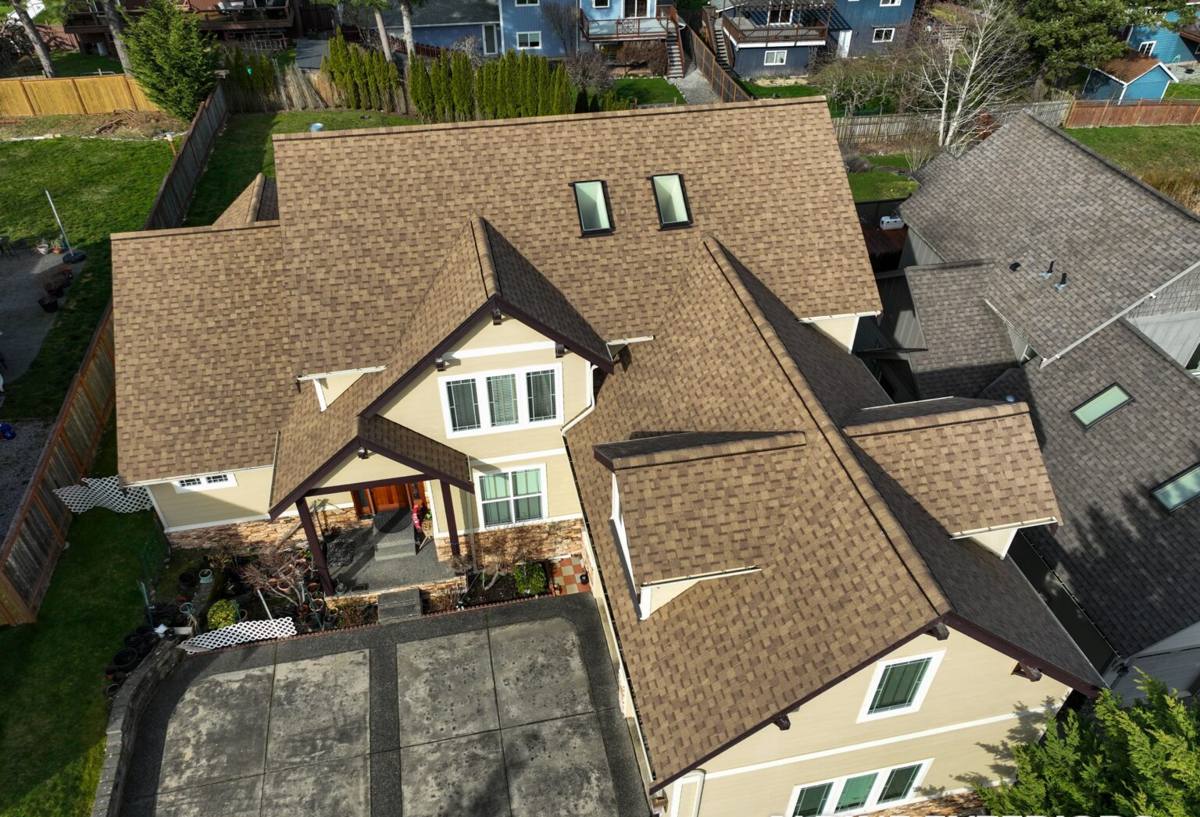
South Hill sits up above the flats of Bellingham, which sounds like an advantage — better drainage, better views — and in a lot of ways it is. But the elevation and tree cover also mean roofs here take on a specific combination of stress that a roof three miles away, closer to sea level and out in the open, doesn't deal with the same way. Between the salt-laden air drifting up from Bellingham Bay, driving rain that comes in sideways off Puget Sound storms, and a moss season that stretches for most of the wet half of the year, South Hill roofs are almost never just sitting there doing nothing. They're being tested constantly.
Older homes make up a good share of this neighborhood, and older roofs mean more layers of past repairs, more transitions where different roof sections meet, and more flashing detail that may or may not have been done correctly the first time. Add mature trees shading large sections of the roof deck for months at a time, and you get the conditions moss and algae love: shade, moisture that doesn't burn off quickly, and organic debris collecting in valleys and behind chimneys.
What Whatcom County's Climate Actually Does to a Roof
Salt Air
Marine air carries fine salt particles that settle on metal flashing, fasteners, and vent caps. Over years, this accelerates corrosion on unprotected or lower-grade metal, which is one of the most common reasons we find a pinhole leak at a flashing seam that otherwise looks intact from the ground.
Driving Rain
Bellingham doesn't just get a lot of rain — it gets wind-driven rain that hits roofs at an angle instead of falling straight down. That matters because a lot of roofing details are built to shed water moving downhill, not water being pushed sideways under a shingle tab or up under a step-flashing lap. Marginal repairs that would hold up fine in a drier, calmer climate fail here.
Moss Season
From fall through late spring, shaded and north-facing roof sections in South Hill rarely fully dry out. Moss doesn't just look bad — it lifts shingle edges as it grows, holds water against the roofing material, and works its way into fastener penetrations. Left long enough, moss turns a roof that needed a repair into one that needs a section replaced.
The Repairs We Actually See Most Often on South Hill Roofs
- Moss-related shingle lifting and granule loss on shaded slopes and north-facing sections
- Corroded or failing flashing around chimneys, skylights, and roof-to-wall transitions
- Valley wear from concentrated water flow carrying debris and moss year-round
- Nail pops and lifted tabs from repeated wind-driven rain events
- Gutter overflow that saturates fascia and the lowest course of roofing above it
- Soft or discolored decking discovered once a small leak is traced back to its source
None of these are unusual roofing problems in general. What's specific to a place like South Hill is how often several of them show up together on the same roof, because the tree cover, the slope of the lots, and the exposure to weather all compound each other.
What a Correct Roof Repair Actually Involves
A roof repair that's done right isn't just about stopping the drip you can see from inside. It requires finding where water is actually entering, which is very often not directly above the stain on your ceiling — water travels along rafters and decking before it shows itself indoors. A proper repair also means matching materials appropriately, cutting back to sound decking if there's rot, and rebuilding flashing details rather than just caulking over a gap.
Diagnosis Before Patching
We start on the roof itself, not just the ceiling stain. That means checking flashing laps, examining the underlayment where it's exposed, and looking at how water is actually moving across that section of roof during weather like Bellingham's.
Matching Materials, Not Just Covering Gaps
Shingles fade and weather over time, so a patch using brand-new material will often stand out. We talk through the options honestly — sometimes a slight color mismatch is the trade-off for a repair instead of a full section tear-off, and that's a decision the homeowner should make with the full picture, not one we make for them.
Flashing Gets Rebuilt, Not Sealed Over
Caulk and roofing cement have their place, but they're not a substitute for proper step flashing, counter-flashing, or valley metal. A repair that relies mainly on sealant is a repair that will need to be redone, usually sooner than anyone wants.
Repair Approaches Compared
| Approach | What It Actually Fixes | Where It Falls Short |
|---|---|---|
| Sealant-only patch | Slows an active drip temporarily | Doesn't address the underlying flashing or shingle failure; breaks down under UV and moisture within a season or two |
| Spot shingle replacement | Restores a small damaged area with matched or close materials | Only effective if decking underneath is sound and the cause of the original damage is addressed |
| Flashing rebuild | Corrects the most common source of chronic leaks at chimneys, walls, and valleys | Requires removing surrounding shingles, so it's more labor than a surface patch |
| Section tear-off and rebuild | Addresses widespread moss damage, rot, or multiple failure points in one roof plane | More cost and time than a targeted repair; only worth it when damage is genuinely widespread |
Our Process, Start to Finish
- Inspection: We get on the roof, not just in the attic, and look at the whole plane where the problem is occurring, not only the immediate spot.
- Honest scope: We tell you plainly whether this is a repair, a larger repair, or something that's crossed into replacement territory, with our reasoning.
- Written estimate: You get a clear description of the work and materials before anything starts — no verbal-only agreements.
- The repair itself: Proper flashing, matched materials where reasonable, and decking replaced wherever it's compromised rather than covered up.
- Cleanup and check: Debris and old material hauled off, gutters checked for anything that fell in during the work.
Moss and Algae: What Actually Helps in a Neighborhood Like This
Because so much of South Hill sits under mature tree canopy, moss control isn't a one-time fix — it's ongoing maintenance. Zinc or copper control strips at the ridge can reduce regrowth over time as rain washes trace metal down the slope, but they work gradually and won't undo years of buildup by themselves. Physical removal, done carefully so granules and shingle edges aren't damaged in the process, is often still necessary on badly affected sections. Keeping overhanging limbs trimmed back so more sun and airflow reach the roof also makes a real difference, even though it's a tree-care task rather than a roofing one.
Pressure washing a roof is something we specifically avoid recommending — high-pressure water strips protective granules off shingles and can force water up under laps, which creates the exact leak risk you're trying to prevent. Low-pressure, roof-safe cleaning methods are the standard we hold ourselves to.
Signs You Likely Need a Roof Repair Soon
- Granules collecting in gutters or at the base of downspouts
- Visible moss or dark streaking concentrated on shaded or north-facing slopes
- A ceiling stain that appears only during or after heavy, wind-driven storms
- Curling, cracked, or missing shingle tabs visible from ground level
- Rusty streaking below metal flashing or vent stacks
- Daylight visible through the roof deck from inside the attic
- Sagging or soft-feeling sections when walked on carefully during an inspection
Why Local Experience on This Specific Terrain Matters
A crew that regularly works South Hill's hillside lots, older housing stock, and heavy tree cover already knows what to check first — where moss tends to build up fastest, which flashing details tend to fail on homes of a certain age, and how Whatcom County's rain patterns behave differently than a roof would experience further inland. That familiarity shows up as fewer surprises during the job and a repair that's built for the conditions your roof will keep facing, not just the symptom that prompted the call. It also means realistic expectations from the start — an honest answer about whether a repair will genuinely hold, or whether you're better served putting that money toward a longer-term fix.
If you're dealing with a leak, visible moss damage, or just want a second opinion on a roof repair someone else quoted, we're happy to take a look. A free estimate on your South Hill home comes with a straight answer about what your roof actually needs — use the form below to get started.