 Bellingham Siding
 South Hill's Setting Is Tough on Windows
South Hill sits up above much of Bellingham, and that elevation cuts both ways. The views are part of why people love living there, but the same exposure that gives you a good look at Bellingham Bay also means your windows take a harder hit from the weather than a house tucked down in a more sheltered part of town. Wind-driven rain off the water, salt-laden air, and the long gray stretch of moss season that Whatcom County is known for all work on window frames, sills, and seals year-round, not just during the odd winter storm.
A lot of South Hill's housing stock is older, with a good number of homes built well before modern window technology, moisture barriers, or energy codes existed. That's not a knock on the neighborhood — it's just the reality of an established area, and it means window replacement here is rarely a simple swap. Old openings settle, framing shifts, and the flashing details (if there ever were any) often don't match what a correct installation needs today.
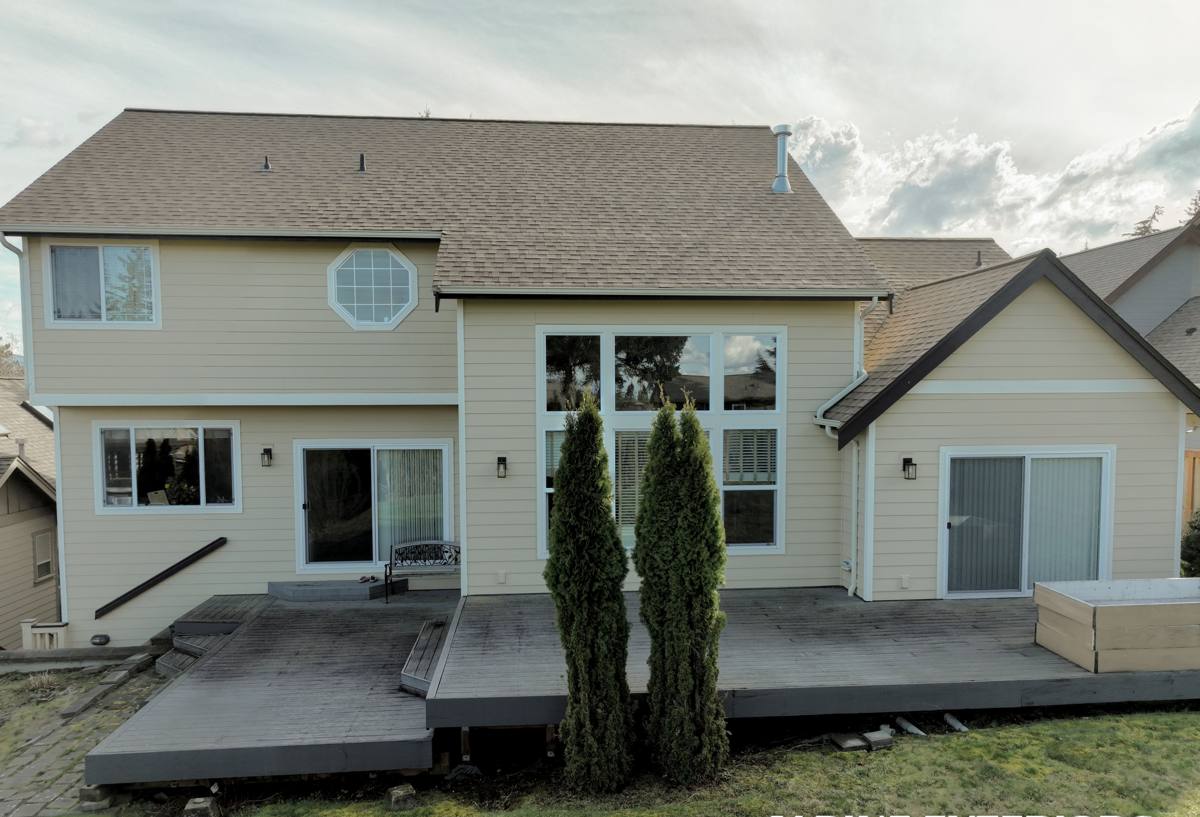
Signs a Window Needs Replacing, Not Just Repair
Homeowners often wait longer than they should because a window still "works" in the sense that it opens and closes. But function isn't the same as performance. Some signs point clearly to replacement rather than another repair:
- Fogging or a permanent haze between the panes — the seal on the insulated glass unit has failed
- Wood that's gone soft, spongy, or dark at the sill or bottom corners
- Visible daylight or a draft you can feel with your hand along the frame
- Paint that keeps bubbling or peeling on the interior trim near the window, even after repainting
- Difficulty opening, closing, or locking that's gotten worse over a year or two
- A musty smell in the room whenever it rains hard
Any one of these on its own might be manageable. Several together, especially on a home exposed to South Hill's wind and rain, usually means the window and its surrounding assembly have reached the point where patching is just delaying the real fix.
What a Correct Window Installation Actually Involves
Window installation looks straightforward from the outside — old window out, new window in — but the parts nobody sees are what determine whether it lasts fifteen years or fifty. Given how much wind-driven rain this part of Whatcom County gets, we treat these details as non-negotiable, not optional upgrades.
Flashing and Moisture Management
Every opening needs a way for water to be directed back out of the wall if it ever gets past the window itself — because eventually, in this climate, it will. That means properly lapped flashing tape at the sill and jambs, a sloped sill pan so water can't pool against the frame, and integration with whatever water-resistive barrier is already on the wall. Skipping this step is the single most common cause of hidden rot we find behind old windows on hillside and coastal-facing homes.
Air Sealing and Insulation
Between the window frame and the rough opening there's a gap that has to be sealed and insulated correctly — not stuffed with whatever's on hand. Too tight and rigid, and you can bow the frame, causing the sash to bind. Too loose, and you've built in a draft and a cold spot that shows up on your energy bill every winter.
Fit and Structural Prep
Older homes settle unevenly, and it's common to find an opening that's slightly out of square or slightly different in size than the original window. A correct installation accounts for this with proper shimming and leveling, not by forcing an off-the-shelf unit into a space it doesn't quite fit.
Choosing the Right Window for This Climate
There isn't one "best" window for every home — it depends on your budget, your home's age and style, and how much upkeep you want to take on. Here's how the common frame materials compare for a place like South Hill, where salt air and constant moisture are part of the equation:
| Frame Material | Typical Lifespan | Maintenance | Best For |
|---|---|---|---|
| Vinyl | 20-30 years | Low — occasional cleaning | Budget-conscious replacements, rental properties |
| Fiberglass | 30-40+ years | Low | Homes wanting durability without wood upkeep |
| Wood, clad exterior | 25-35 years | Moderate — interior wood care, exterior clad is low-maintenance | Historic or character homes where appearance matters |
| Solid wood | Varies widely with upkeep | High — regular painting/sealing required | Strict historic preservation requirements only |
| Aluminum | 20-25 years | Low, but prone to condensation | Rarely our recommendation in this climate |
We tend to steer South Hill homeowners toward fiberglass or clad-wood options when budget allows, mainly because solid wood exteriors require a repainting and resealing schedule that's hard to keep up with given how much moisture this area sees. That's a maintenance conversation, not a knock on wood as a material — it's simply a matter of how much upkeep you want to sign up for long-term. Whatever frame material you choose, insist on dual or triple-pane glass with a low-E coating; in a marine climate like Bellingham's, that coating and the gas fill between panes do real work cutting condensation and heat loss.
Our Installation Process
We keep the process straightforward and try not to overpromise:
- On-site assessment — we look at each opening individually, check for existing rot or moisture damage, and measure for exact fit rather than assuming a standard size.
- Honest scope and estimate — you get a clear picture of what's being replaced, what materials we recommend and why, and what it will cost, before any work starts.
- Removal and inspection — once the old window is out, we check the framing underneath. If there's hidden rot, we tell you before covering it back up, not after.
- Flashing, install, and seal — proper sill pan and flashing tape, correctly leveled and shimmed unit, sealed and insulated per the manufacturer's instructions.
- Interior and exterior finish work — trim, caulking, and touch-up so the result looks finished, not just functional.
- Walkthrough and cleanup — we test every window with you before we consider the job done, and we clean up the site.
Why a Crew That Already Works South Hill Matters
Windows aren't a one-size-fits-all product, and neither is the neighborhood. A crew that regularly works South Hill has already seen how the hillside exposure, older framing, and long wet season here affect window performance over time. That familiarity means fewer surprises during removal, a better sense of which materials hold up and which don't, and a realistic timeline that accounts for Bellingham's weather windows rather than a generic install schedule pulled from a warmer, drier region.
It also matters for something less obvious: knowing which local suppliers stock the sizes and styles that fit older Whatcom County homes without a long custom-order wait, and which manufacturers back their warranties with real support in this area if something needs attention down the road.
Living With Your New Windows Through Moss Season
New windows installed correctly need very little from you, but a few habits will keep them performing well through Bellingham's wet months:
- Rinse frames and tracks a couple of times a year to clear salt residue and grime, especially on sides facing open weather
- Clear debris and moss buildup from nearby gutters and sills so water doesn't sit against the frame
- Check exterior caulking annually and re-caulk any spot that's cracked or pulled away
- Operate locks and hardware periodically, even on windows you don't open often, to keep mechanisms from seizing
- Watch for condensation between panes — that's your early sign a seal has failed, long before you'd notice anything else
None of this is a heavy workload. It's the same basic idea as any home maintenance in this region: stay ahead of the moisture instead of reacting to it after it's caused damage.
What Affects the Cost of a Window Project
Every home is different, but a few factors consistently drive the price of a window installation up or down: the number of openings, whether any framing repair is needed once the old window comes out, the frame material and glass package you choose, and the size or shape of the openings (standard sizes cost less than custom or oversized units). As a broad guide, straightforward vinyl replacements often run in the low hundreds to around a thousand dollars per window installed, with fiberglass, clad-wood, custom shapes, or larger openings running higher. The only way to know your real number is a walkthrough of your actual windows — anything quoted without seeing the house is a guess.
If you're weighing whether to replace a few windows now or wait and do them all at once, we're happy to talk through the tradeoffs honestly, including whether phasing the project makes sense for your budget.
If you're in South Hill and dealing with drafty, foggy, or failing windows, we'd rather look at them in person than guess over the phone. Reach out below for a free, no-pressure estimate — we'll tell you straight what we see and what it would take to fix it right.