 Bellingham Siding
 Deck Repair Built for South Hill's Weather, Not Just the Damage You Can See
South Hill decks take a beating that's easy to underestimate. Between the salt-tinged air drifting off Bellingham Bay, the driving rain that comes in sideways during winter storms, and a moss season that can stretch from October into May, a deck up here ages differently than one built in a drier climate. What looks like a cosmetic problem — a soft board, a gray patch of algae, a rail that wobbles a little more than it used to — is often the visible edge of moisture damage that's been working underneath for a season or two already.
We repair decks in South Hill and the surrounding Bellingham neighborhoods because the fixes that hold up here are specific to this climate. A patch job that would be fine in a dry inland town can fail fast under Whatcom County's rain load if it doesn't account for drainage, ventilation, and the reality that wood and even composite decking here rarely get a long, uninterrupted dry stretch to shed moisture.
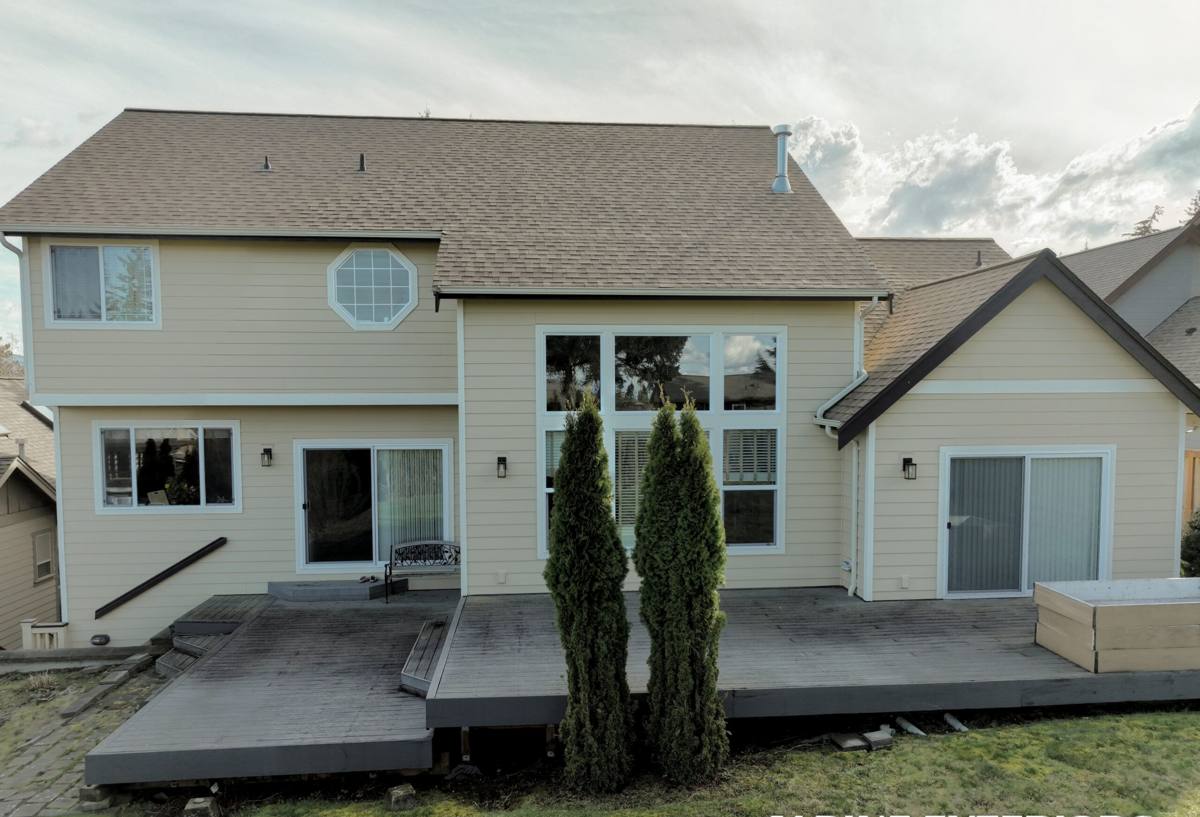
Why South Hill Decks Wear the Way They Do
Salt Air and Metal Fasteners
Proximity to the bay means a steady low-level exposure to salt-laden air, even away from the immediate waterfront. Over years, that air accelerates corrosion on fasteners, joist hangers, and any hardware that wasn't rated for coastal exposure. Corroding fasteners are one of the most common hidden causes of a deck that feels "loose" without any obvious rot — the wood is fine, but the connection holding it isn't.
Driving Rain and Water Intrusion
Bellingham's rain doesn't always fall straight down. Wind-driven rain pushes water into places a deck's original design may not have accounted for — under ledger boards, behind rail posts, into end grain at board edges. Repeated wetting and drying cycles at these entry points are where rot typically starts, long before it's visible from the top of the deck.
Moss, Algae, and a Long Wet Season
A moss season that can run six or more months a year means decking surfaces, especially on the shaded or north-facing side of a house, stay damp far longer than they would in a sunnier climate. Moss and algae hold moisture against the wood surface and make boards slick and dangerous underfoot. Left untreated, that constant dampness softens wood fibers and accelerates decay, particularly on horizontal surfaces like stair treads and deck boards themselves.
Signs a South Hill Deck Needs Repair, Not Just Cleaning
- Boards that feel spongy, springy, or noticeably softer underfoot in specific spots
- Persistent moss or dark staining that comes back within weeks of cleaning
- Railings or posts that flex, wobble, or have visible gaps at their base
- Stairs that feel less solid than the rest of the deck, or treads that have started to cup
- Rust streaks below fasteners or hardware, or fastener heads that have popped up
- Gaps opening between boards and the ledger board where the deck meets the house
- A musty smell coming from underneath the deck or near the house connection
- Standing water that doesn't drain within a few hours after rain stops
Any one of these on its own might be minor. Several together, especially near the ledger board or stairs, usually means it's time for a closer look before the next issue is a safety issue rather than a maintenance one.
What a Correct Deck Repair Actually Involves
A repair that lasts in this climate isn't just about swapping a bad board for a new one. We look at why that board failed in the first place, because in most cases the surrounding structure and drainage played a role.
Diagnosis Before Demolition
We start by probing suspect boards, checking joists and beams from underneath where accessible, and inspecting the ledger connection — the point where the deck attaches to the house and one of the most common sources of hidden rot in this region. We also check fastener condition, post bases, and any spots where water pools instead of draining.
Addressing the Structure, Not Just the Surface
If joists or beams show soft spots or decay, those get sistered or replaced — not just covered over with new decking. A new deck board over a compromised joist buys a season, maybe two, before the same repair has to happen again, this time with more disruption.
Fastener and Hardware Upgrades
Where we find corroding hardware, we replace it with fasteners and connectors rated for coastal, high-moisture exposure. This is a small cost relative to the repair as a whole, and it's one of the more common places we see prior repairs cut corners.
Drainage and Ventilation Corrections
Where standing water or poor airflow contributed to the damage, we address it as part of the repair — adjusting flashing at the ledger, improving gaps for drainage, or clearing airflow paths underneath the deck. Fixing the board without fixing the water problem just delays the next repair.
Matching Materials and Finish
For wood decks, we match species and treatment level to what's already there where possible, and finish or seal repaired sections so they weather consistently with the rest of the deck rather than standing out as an obvious patch. For composite decking, we match board profile and color as closely as current product lines allow.
Repair vs. Replacement: How We Help You Decide
Not every deck with problems needs to be torn out. The decision usually comes down to how much of the structure — not just the surface boards — is affected, and how old the deck is relative to its expected service life in this climate.
| Factor | Leans Toward Repair | Leans Toward Replacement |
|---|---|---|
| Extent of damage | Isolated boards, one rail section, one stair | Widespread soft spots across multiple joists or beams |
| Structural framing | Joists and beams are sound underneath | Ledger board or multiple structural members are compromised |
| Age of deck | Under 12-15 years, built to a reasonable standard | Original construction is older or was built without proper flashing |
| Cause of damage | Localized water intrusion or one bad batch of hardware | Systemic drainage or design issue affecting the whole structure |
| Budget priority | Extend usable life at lower cost now | Eliminate recurring repair costs long-term |
We'll walk the deck with you, show you what we find, and give you a straight answer on which side of that line your deck falls on. If repair is the honest call, that's what we'll recommend — replacement isn't the default just because it's a bigger job.
Wood vs. Composite: What We Consider During Repair
South Hill has a mix of both, and repair strategy differs a bit between them.
Wood Decking
Cedar and pressure-treated lumber are common in this area and both can be repaired board-by-board fairly cleanly. The key in our climate is making sure replacement boards are properly sealed on all six sides, including cut ends, before installation — end grain left unsealed is one of the fastest paths to rot in a wet climate.
Composite Decking
Composite boards resist rot in the board itself, but the substructure underneath still needs to be wood-framed in most cases, and that framing is subject to the same moisture issues as an all-wood deck. We've also seen composite installations where the board itself is fine but fastener or clip failure caused movement or lifting — a repair issue distinct from rot but just as important to catch early. We're upfront about the maintenance tradeoffs of each material rather than pushing one over the other; the right choice depends on your budget, how the deck is used, and how much upkeep you want to do.
Our Repair Process
- Free on-site inspection, including a check under the deck and at the ledger connection where accessible
- Straightforward written scope of what's damaged, what's causing it, and what we recommend fixing
- Repair work scheduled around Bellingham's weather windows to avoid working wet lumber into a repair
- Structural fixes completed first, then surface decking, rails, and stairs
- Final walkthrough so you can see and feel the fix before we call the job done
Why Hire a Crew That Already Works in South Hill
A crew that repairs decks across Bellingham and Whatcom County regularly sees how the same climate factors — salt air, driving rain, extended moss season — show up differently depending on a home's exposure, shading, and orientation. That local pattern recognition matters when diagnosing a repair: it's the difference between fixing a symptom and fixing the actual cause. We're not learning the region on your project; we've already seen how these decks fail here and what actually holds up afterward.
We also stand behind the work with a clear scope and warranty on our labor, so you know what's covered if a repaired area doesn't perform the way it should.
Maintaining Your Deck Between Repairs
A repaired deck lasts longer with a little seasonal attention, especially given how long this region stays wet.
- Sweep debris and standing leaves off the deck surface regularly through fall
- Clean moss and algae buildup before it has a chance to sit through a whole wet season
- Check and re-seal wood decking on the schedule your finish product recommends, typically every 1-3 years in this climate
- Look underneath the deck once a year for early signs of moisture or pest activity
- Keep gutters and downspouts near the deck clear so runoff isn't draining directly onto it
If you're noticing soft boards, a wobbly rail, or moss that keeps coming back no matter how often you clean it, we're happy to take a look. Reach out for a free, no-pressure estimate — we'll tell you honestly what we find and what it would take to fix it right.