 Bellingham Siding
 South Hill's Terrain Puts Real Demands on Siding
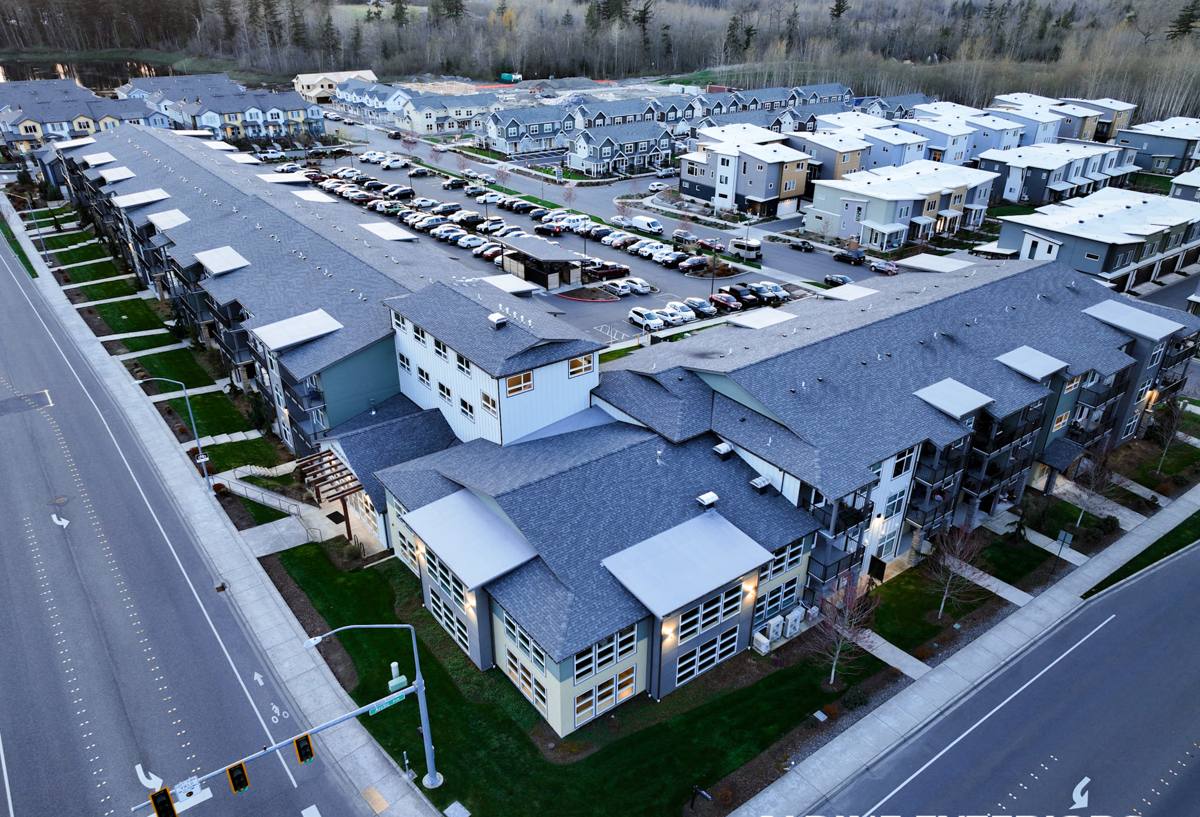
South Hill sits above downtown Bellingham on elevated, sloped terrain with open exposure toward Bellingham Bay. That combination matters more than most homeowners realize. Elevation and slope mean wind-driven rain hits these homes at angles that flatter, low-lying lots never see. Proximity to the bay means a steady dose of salt-laden air working on anything with exposed metal fasteners or a finish that isn't built to hold color and integrity outdoors. And like most of Whatcom County, South Hill gets long stretches of damp, low-light winter weather that keeps north- and shade-facing walls wet and primed for moss and algae growth for months at a time.
None of that is unique to one house on the hill — it's the baseline every exterior on South Hill has to survive, year after year. Siding that isn't specifically suited to this kind of exposure doesn't fail overnight. It fails slowly, in ways that are easy to miss until the damage is already behind the wall.
What South Hill Homes Actually Need From Their Siding
Moisture Management First
In a climate with this much sustained rainfall, the siding material itself is only part of the equation. What happens behind it — the water-resistive barrier, the flashing at windows and roof lines, the drainage plane behind the cladding — determines whether a home stays dry or slowly accumulates moisture in the wall assembly. A correct installation treats the siding as the outer layer of a full water-management system, not a standalone finish.
Salt Air Resistance
Homes with bay exposure need a finish that won't chalk, fade, or lift at the edges from years of salt-tinged moisture cycling through wet and dry. Factory-applied, baked-on finishes hold up to that far better than field-applied paint, which is one of the reasons product choice matters as much as installation quality here.
Standing Up to Moss and Algae Season
Shaded, north-facing walls on sloped lots stay damp longer, and that's exactly where moss and algae take hold on porous or wood-based siding. A dense, engineered fiber cement product resists that growth far better than raw wood or wood-composite siding, and a finish with algae resistance built in helps keep painted color from developing that dull green cast over time.
What a Correct Fiber Cement Installation Involves
Fiber cement siding is only as good as the details underneath and around it. A correct install on a South Hill home includes:
- A properly lapped water-resistive barrier with all seams and penetrations sealed before any siding goes up
- A rainscreen or drainage gap where the wall assembly calls for one, so incidental moisture can drain and the wall can dry
- Manufacturer-spec fastening — correct fastener type, spacing, and penetration depth, not "whatever's on the truck"
- Proper clearance between the siding's bottom edge and grade, decks, and roof lines to keep the material out of standing water and splash-back
- Kick-out flashing at every roof-to-wall intersection, directing water away from the wall instead of behind it
- Factory-cut and painted edges wherever possible, with any field cuts sealed and touched up per the manufacturer's finish system
- Correctly caulked and backer-rodded joints at trim, corners, and penetrations — not just a bead run down every seam
Skip any one of these and the siding can still look fine from the curb for a few years. The problems that show up later — trapped moisture, fastener corrosion, finish failure at the joints — almost always trace back to a shortcut taken during installation, not a flaw in the material itself.
Fiber Cement vs. Other Siding Options in This Climate
Homeowners on South Hill often ask how fiber cement stacks up against the other materials they see around Bellingham. Here's an honest comparison based on how each performs under sustained coastal PNW exposure:
| Factor | James Hardie Fiber Cement | Vinyl | Wood / Wood Composite |
|---|---|---|---|
| Moisture resistance | Engineered for wet climates; won't rot or swell | Won't rot, but can warp and gap, letting water behind it | Absorbs moisture; prone to rot without diligent upkeep |
| Salt air / coastal exposure | Factory finish holds color and integrity | Can chalk and become brittle over time | Finish breaks down faster; more frequent repainting |
| Moss and algae resistance | Dense material resists growth; algae-resistant finish options | Resists growth but shows dirt and staining | Porous surface is prone to moss and mildew |
| Fire resistance | Non-combustible | Melts and can contribute to fire spread | Combustible |
| Maintenance | Occasional wash; no repainting for years with factory finish | Low maintenance but limited repair options when damaged | Regular painting, sealing, and rot inspection required |
| Typical lifespan when installed correctly | Multiple decades | 15-25 years before brittleness/fading sets in | Highly variable; often 10-15 years before major upkeep needed |
Cost up front is usually higher for fiber cement than vinyl, and comparable to or less than high-quality wood siding once you factor in wood's ongoing paint and repair costs. The real difference shows up over time, in how much upkeep the material demands and how well it holds up to this specific climate.
Our Process for a South Hill Installation
- On-site assessment. We look at the home's exposure — how much bay wind and rain it takes, roof lines, shaded walls, existing moisture or moss issues — before recommending a product line or install approach.
- Tear-off and substrate check. Old siding comes off and we inspect the sheathing underneath for hidden rot or moisture damage before anything new goes up. Problems found here get addressed, not covered.
- Water-resistive barrier and drainage plane. We install and detail the barrier and rainscreen system to match the wall assembly and the home's exposure.
- Fiber cement installation to manufacturer spec. Fastening, clearances, flashing, and joint treatment follow James Hardie's published installation requirements — not shortcuts.
- Final inspection and cleanup. We walk the exterior with the homeowner, check every joint and clearance, and leave the site clean.
Why We Install James Hardie and Nothing Else
We standardized on James Hardie fiber cement because it's engineered specifically for climates like this one — Hardie's HZ5 product line is built for the Pacific Northwest's wet, moderate-temperature conditions. It's non-combustible, holds its factory-applied ColorPlus finish far longer than field-painted alternatives, and comes with a strong transferable warranty backed by a manufacturer with decades of track record in fiber cement.
We don't install vinyl, LP SmartSide, Cemplank, Allura, or primed wood siding. That's not a knock on every homeowner who has one of those products — it's a professional standard we hold ourselves to. Each of those alternatives asks the homeowner to accept a trade-off we're not willing to install and stand behind: more maintenance, more moisture sensitivity, a less consistent factory finish, or a weaker warranty structure. On a hill exposed to bay wind and a five-month moss season, those trade-offs show up faster than they would in a milder climate.
Why Hiring a Crew That Already Works South Hill Matters
Installation quality depends on judgment calls that generic experience doesn't always cover — how much clearance a particular roofline needs, where kick-out flashing has to go on a sloped lot, how a wall facing the bay should be detailed differently than one tucked behind a hill. A crew that already works this specific area has made those calls on homes with the same exposure, the same terrain, and often the same building stock.
There's also the practical side: familiarity with City of Bellingham and Whatcom County permitting and inspection expectations, and the ability to respond quickly if a question comes up after the job is done, rather than coordinating with a crew based somewhere else entirely.
Caring for Fiber Cement Siding on South Hill
Once it's installed correctly, fiber cement siding on South Hill doesn't ask for much. A rinse with a garden hose once or twice a year — more often on shaded, moss-prone walls — keeps grime and organic growth from building up. Keep gutters clear so water isn't overflowing onto wall sections, and keep an eye on caulked joints at trim and penetrations over the years, since caulk is the one component that wears out well before the siding itself does. Beyond that, there's no repainting cycle to plan for and no annual sealing to keep up with.
If you're planning a siding project on South Hill and want a straight answer about what your home actually needs, we'll come take a look and give you a free, no-pressure estimate — no scare tactics, just what we'd recommend if it were our own house on the hill.