 Bellingham Siding
 Why Windows in Puget Take More Punishment Than Most
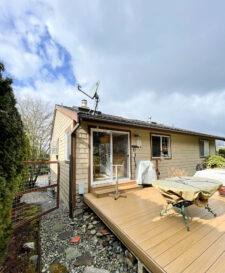
Homes in the Puget area of Bellingham sit in a climate that's tougher on windows than it looks from the outside. You've got salt-laden air rolling in off the water, wind-driven rain that doesn't just fall but gets pushed sideways into wall assemblies, and a long stretch of the year where moisture sits on and around the house instead of drying off. None of that is dramatic on its own, but stacked together over years, it's exactly the combination that finds every weak point in a window system — the seals, the frame material, the flashing, the sill.
Energy efficiency and weather durability aren't separate problems here. A window that leaks air is usually a window that's also vulnerable to water intrusion, because the same gaps that let conditioned air escape are the paths moisture uses to get in. When we talk about "energy-efficient windows" for a Puget home, we're really talking about a window and installation system that keeps water and air where they belong, in both directions.
Salt Air and Metal Components
Proximity to Puget Sound means airborne salt settles on everything, including window hardware, screens, and any exposed metal fasteners. Cheaper hardware corrodes faster here than it would twenty miles inland. Over time, corroded hinges and locks stop sealing tightly, which quietly kills the energy performance of an otherwise fine window.
Wind-Driven Rain and Water Intrusion
Bellingham doesn't just get a lot of rain — a good portion of it arrives at an angle during winter storms. That matters for window installation more than most homeowners realize, because a window can be perfectly well-sealed on a calm day and still fail during a driving rain event if the flashing and sill pan weren't detailed correctly. Water intrusion around windows is one of the more common hidden damage sources we see in this region.
Moss, Mildew, and Prolonged Dampness
The same conditions that grow moss on a north-facing roof or fence line also encourage mildew growth around window frames that don't dry out between rain events. Wood components that stay damp for long stretches are especially at risk, and older wood-frame windows in this area often show rot at the bottom corners and sill long before the glass itself fails.
What "Energy-Efficient" Actually Means for a Home Here
Energy efficiency in windows isn't one number — it's a combination of factors that behave differently depending on the climate. Whatcom County's marine climate is mild in temperature but persistently damp and often overcast, which changes which ratings matter most compared to, say, a hot, dry climate.
U-Factor vs. Solar Heat Gain Coefficient
U-factor measures how well a window resists heat loss — lower is better, and it's the number that matters most for our heating-dominated climate. Solar Heat Gain Coefficient (SHGC) measures how much solar heat passes through the glass. In a climate with as little direct, strong sun as ours, a very low SHGC isn't usually the priority it would be in a sunnier region — we generally care more about keeping heat in than keeping sun out.
Why Climate Zone Matters
Whatcom County falls in a marine climate zone under Washington's energy code, which sets minimum U-factor requirements for replacement windows. A window rated for a hot, dry climate isn't automatically a good fit here, even if it carries a good overall efficiency label. We select and install based on what performs in a cool, wet, moderate-temperature-swing environment, not a generic national average.
Signs Your Current Windows Are Costing You Money
Most homeowners don't replace windows because of one dramatic failure — it's a slow accumulation of small signs. Here's what we typically hear about, and what it usually means:
- Condensation between the panes (not on the inside surface) — the seal has failed and the insulating gas is gone
- Visible drafts near the frame when it's windy, even with the window latched shut
- Soft or discolored wood at the bottom corners or sill — early rot from trapped moisture
- Difficulty opening, closing, or locking — frame movement or hardware corrosion
- Noticeable outside noise that seems louder than it should be for the distance from the road
- Rooms near windows that feel colder than the rest of the house in winter
- Visible daylight or a whistling sound around the frame during storms
Any one of these on its own might just need a repair. Several at once, especially on a home more than 20-25 years old, usually means the windows are past the point where repair makes financial sense.
Window Materials That Actually Hold Up in This Climate
Material choice matters more here than in drier climates, because everything is being tested by moisture and salt air year-round. There's no single "best" option for every home — it depends on your budget, your home's style, and how much maintenance you're willing to keep up with.
| Material | Moisture Performance | Maintenance | Notes for This Climate |
|---|---|---|---|
| Vinyl | Very good — won't rot or corrode | Low | Solid value option; quality varies a lot by manufacturer |
| Fiberglass | Excellent — dimensionally stable in wet/dry cycles | Low | Handles temperature and moisture swings with minimal expansion |
| Wood-clad | Good if detailed correctly, vulnerable if not | Moderate to high | Cladding protects exterior, but any breach exposes wood to rot |
| Aluminum | Prone to corrosion near salt air unless properly coated | Moderate | We're selective about where we recommend this material here |
We don't push one brand or material on every job. What we won't do is install a product where the maintenance burden or moisture behavior is a poor match for a Puget-area exterior — that's a standard we hold regardless of what's cheapest to source.
What a Correct Installation Actually Involves
The window unit itself is maybe half the equation. The other half is how it's installed, and in a climate like ours, installation quality is often the difference between a window that lasts 25+ years and one that fails at the flashing within a decade.
Flashing and Water Management
Every opening needs a properly lapped flashing system and a sloped sill pan so any water that gets past the exterior trim drains back out instead of pooling against the frame or sheathing. This is the step that's easiest to rush and hardest to fix later once siding is closed back up, which is exactly why we don't skip it.
Insulation and Air Sealing
The gap between the window frame and the rough opening needs to be filled with an appropriate insulating material — not stuffed with excess fiberglass that can hold moisture, and not left with gaps that create air leaks. Backer rod and quality sealant at the interior and exterior perimeter finish the job so the window performs at the rating it's supposed to.
How Our Process Works, Start to Finish
We keep the process straightforward and try not to leave you guessing at any stage:
- On-site assessment of your current windows, framing condition, and any existing moisture or rot issues
- Recommendations on materials and glass packages suited to your home and budget — not a one-size pitch
- A written estimate with clear scope, so you know what's included before work starts
- Removal of old windows with attention to what the opening looks like underneath — this is often where hidden issues surface
- Proper flashing, insulation, and air sealing at every opening, not just a drop-in swap
- Final check of operation, seals, and exterior trim before we call the job done
If we find rot or water damage once the old window is out, we'll show you what we're seeing and talk through the options before proceeding — no surprise change orders sprung on you after the fact.
What Affects the Cost of a Window Project
We're not going to quote pricing here since every home and scope is different, but these are the main factors that move the number up or down:
| Factor | Why It Matters |
|---|---|
| Number and size of openings | More/larger windows means more material and labor |
| Material (vinyl, fiberglass, wood-clad) | Upfront cost and long-term maintenance trade off differently |
| Existing rot or water damage | Repair work at the opening adds time before the new window goes in |
| Glass package (double vs. triple pane, coatings) | Higher-performance glass costs more but reduces energy loss |
| Access and story height | Second-story or hard-to-reach openings take more setup and time |
Why It Matters to Hire a Crew That Already Works in Puget
A window installer who mostly works inland or in a different climate can still do competent work, but they're less likely to instinctively over-build the flashing detail for wind-driven rain, or to flag salt-air corrosion risk on hardware before it becomes your problem. Crews that regularly work Bellingham and the surrounding Whatcom County communities have seen what actually fails here over time — not just what fails in a training manual written for a different region.
That local pattern recognition is worth something. It's the difference between a crew that treats every job the same way everywhere, and one that adjusts the details because they know what this specific climate does to a house over the next decade.
Get a Straight Answer for Your Home
If your windows are drafty, fogged between the panes, or just old enough that you're wondering whether repair or replacement makes more sense, we're happy to take a look and give you an honest read — no pressure, no upsell. Fill out the form below to schedule a free estimate for your Puget-area home.