 Bellingham Siding
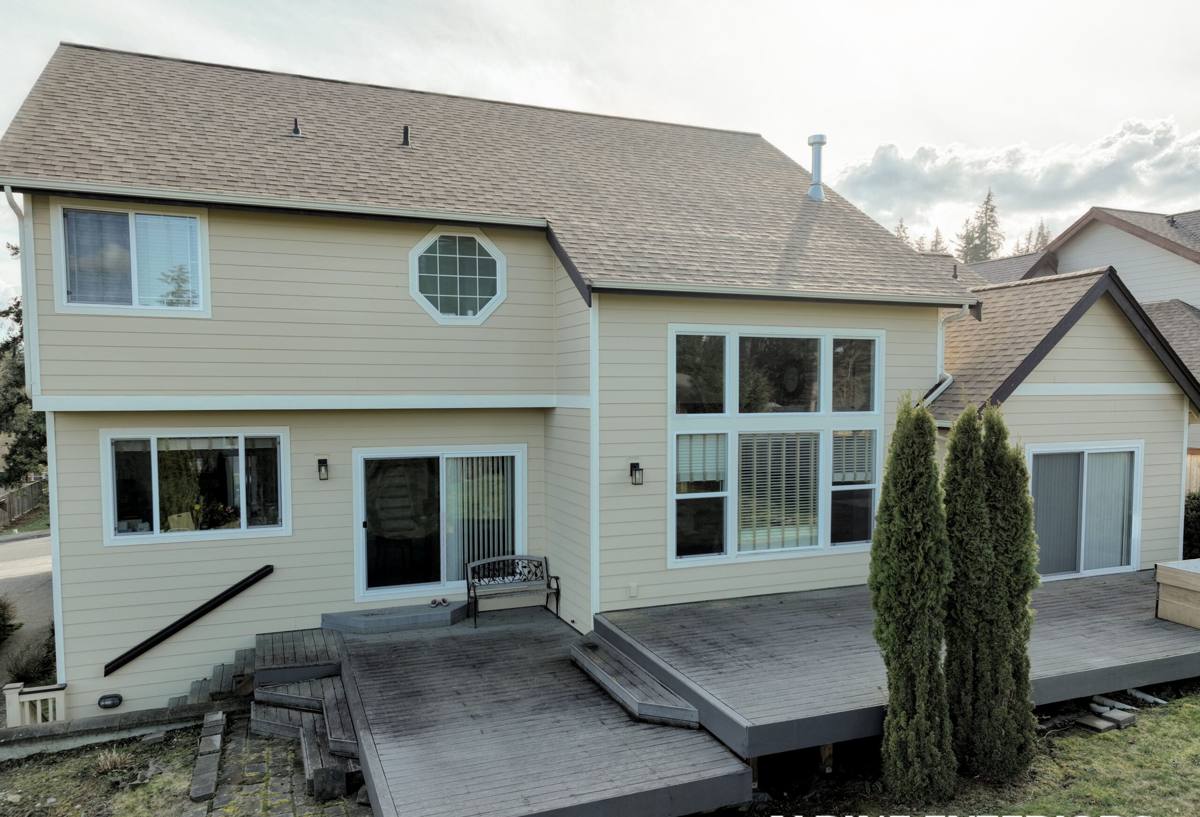
 Composite Decking in Puget: Built for What Bellingham Actually Throws at It
Puget sits close enough to the water that homes here deal with a specific combination of weather most decking never has to survive in drier parts of the country: salty, moisture-laden air off the Sound, long stretches of driving rain, and a moss season that can run from fall through spring. A deck built for a dry climate — or built by a crew that mostly works inland — doesn't hold up the same way out here. Composite decking, installed correctly for this environment, is one of the more sensible answers to that problem, but "composite" isn't a single product and "installed correctly" isn't automatic. This page is about what that actually means for a deck going in on a Puget property.
What Salt Air, Rain, and Moss Actually Do to a Deck
It helps to be specific about the failure modes we're designing against, because they're different from what a deck in eastern Washington deals with.
Salt Air and Moisture
Airborne salt from Bellingham Bay accelerates corrosion on anything metal — fasteners, brackets, railing hardware. On a wood deck, that corrosion often shows up as staining and streaking around every screw head within a couple of years. On any deck, cheap or mismatched hardware is the first thing to fail, well before the decking material itself.
Driving Rain
Whatcom County doesn't just get rain, it gets rain pushed sideways by wind off the water. That means water gets driven into gaps, under boards, and against ledger connections that a calmer climate would never test. Any weak point in flashing or drainage detailing gets found here faster than almost anywhere else in the state.
Moss and Organic Growth
Shade, moisture, and mild temperatures are exactly what moss and algae need, and a lot of Puget lots have mature trees or northern exposure that keep decks damp for days after a storm. Moss holds moisture against a surface, and on some materials it can also make boards slick and, over years, contribute to surface breakdown.
None of this means decking is a bad investment in this neighborhood. It means the material choice and the installation details have to account for these three things specifically, not just meet a generic building code minimum.
Why Composite Makes Sense for This Kind of Climate
Wood decking can look great and plenty of homeowners still choose it, but it asks for a maintenance schedule — stripping, brightening, staining or sealing every year or two — that's harder to keep up with when the weather cooperates less than half the year. Skip a season of maintenance on wood in a wet, mossy climate and you're often looking at cupping, splintering, or soft spots sooner than the manufacturer's finish life would suggest.
Composite decking doesn't need staining or sealing, doesn't absorb water the way wood fibers do, and resists the freeze-thaw and wet-dry cycling that's constant here. That doesn't mean zero maintenance — we'll get to that — but it shifts the burden from "protect the material every year" to "keep the surface clean a few times a year," which is a much easier standard to actually hit in a place where it rains more often than not.
Composite Board Options and How We Choose Between Them
Not all composite decking is built the same way, and the differences matter more in a marine climate than in a dry one. The table below is a general comparison of the categories we work with most; specific product lines within each category vary.
| Board Type | Moisture Behavior | Maintenance | Best Fit |
|---|---|---|---|
| Uncapped composite | Wood fibers can still absorb some moisture at cut edges and surface | Occasional cleaning; more prone to surface mold in shady, damp spots | Budget-conscious projects with good sun exposure |
| Capped composite | Polymer shell resists moisture penetration and staining | Low; periodic washing | Most Puget-area decks, especially shaded or waterfront-adjacent lots |
| PVC/cellular decking | No wood content, essentially moisture-proof | Lowest; simple washing | High-exposure or high-moisture sites, poolside, low ventilation areas |
Brands like Trex, TimberTech, and similar manufacturers all offer capped composite lines, and the right one for a given project usually comes down to color selection, warranty terms, and how the board's grain pattern and edge profile fit the rest of the house — not marketing claims. We'll walk through samples on site rather than sell off a brochure.
What a Correct Installation Actually Involves Here
The decking board is maybe 30% of what makes a deck last in this climate. The rest is in details that don't show up in a finished photo.
Framing and Joist Protection
Every joist gets joist tape or an equivalent moisture barrier before boards go down. Skipping this is one of the most common shortcuts we see on decks that failed early, and it's invisible once the decking is installed — which is exactly why it matters to ask about it before hiring anyone.
Ledger and Flashing
Where the deck attaches to the house is the single highest-risk point for water intrusion, especially with wind-driven rain. Proper flashing here isn't optional trim work — it's the difference between a deck that stays dry at the house connection and one that eventually contributes to rot behind the siding.
Fastening and Spacing
We use corrosion-resistant, marine-rated fasteners and hardware given the salt air off the Bay, and we set board spacing to account for both material expansion and drainage — tight enough to look right, open enough that water and debris don't sit trapped between boards.
Ventilation and Drainage Beneath the Deck
Low-clearance decks are common on sites with grade changes, but poor airflow underneath is exactly what keeps moss and mildew going strong on the underside and around footings. Where clearance is tight, we look at ventilation and drainage solutions rather than just building over the problem.
Our Process for a Puget Composite Deck Project
Site Visit and Assessment
We look at sun exposure, tree cover, drainage patterns, existing structure (if it's a rebuild), and how the deck ties into the house. This is also when we talk through board type, color, and railing options based on the specific site, not a generic recommendation.
Tear-Off and Prep (If Applicable)
On a replacement, we check the substructure underneath the old decking carefully — framing that looks fine from the surface can be hiding rot or corrosion, especially on older decks that predate current flashing standards. We'll flag anything that needs addressing before new decking goes down rather than covering it up.
Installation and Final Inspection
Framing and moisture protection first, then decking, then railing and any trim or fascia. We walk the finished deck with the homeowner, check fastener lines and board gaps, and confirm drainage is working the way it should before we consider the job done.
Keeping a Composite Deck Clean Through Moss Season
Low-maintenance doesn't mean no-maintenance, especially with a moss season as long as this region's. A simple seasonal routine keeps a composite deck looking right and prevents the kind of buildup that can make a surface slick or discolored over time.
- Sweep debris (leaves, needles, seed pods) off the deck regularly, especially under trees — trapped organic matter is what feeds moss and mold
- Rinse the deck with a hose and scrub with a soft-bristle broom and mild soap a couple of times a year, more often in shaded areas
- Avoid pressure washers on composite unless you know the manufacturer's PSI limit — too much pressure can damage the surface texture
- Check and clear gaps between boards so water and debris keep draining rather than pooling
- Keep gutters and downspouts near the deck clear so runoff isn't dumping extra water onto the deck surface
- Trim back overhanging branches where possible to cut down on shade and leaf litter
What Affects the Price of a Composite Deck Project
Costs vary by size, board tier, railing style, and site complexity, so we won't quote a number without seeing the site, but a few factors consistently move the price more than homeowners expect:
- Board tier — uncapped composite costs less upfront than capped or PVC options, but the tradeoffs above are worth weighing against the savings
- Substructure condition on a rebuild — hidden framing or ledger repairs add cost but aren't optional if the deck is going to last
- Railing material — composite or aluminum railing typically costs more than basic wood but matches the low-maintenance intent of composite decking
- Site access and grade — decks with tricky access, steep grade changes, or extensive excavation take more labor than a straightforward flat-lot build
Why a Crew That Already Works in Puget Matters
A lot of what's in this page — joist tape as standard practice, flashing details at the ledger, fastener choice for salt air, drainage planning for shaded lots — isn't unique to Bellingham. But how much it matters, and how often it gets skipped, is directly tied to the climate. A crew that mostly builds decks in a drier region can do competent work and still under-build for what Whatcom County weather does to a deck year after year. Working in and around Puget regularly means we're not guessing at how a given lot drains, how much shade a given tree line throws, or how exposed a site is to wind off the water — we've already seen the pattern play out on other decks nearby.
If you're weighing composite decking for a property in Puget, we're happy to walk the site, talk through board options honestly, and put together a free, no-pressure estimate — no obligation, just a clear look at what your specific lot needs. The form below gets that started.