 Bellingham Siding
 Roofing in Puget Means Building for Water, Not Just Weather
Puget is a part of the Bellingham area where the roof over your head deals with more than the occasional Pacific Northwest shower. Homes here sit close enough to the water and the tree line that they take on salt-laden air, wind-driven rain that hits shingles sideways instead of straight down, and a moss season that can run most of the year in shaded, north-facing sections of a roof. A roof that would hold up fine in a drier inland climate can fail early here if it wasn't built with these specific conditions in mind.
That's the real difference between a generic re-roof and one done right for this part of Whatcom County. The materials, the flashing details, the fastener choices, and the ventilation plan all need to account for moisture that comes from three directions at once: rain driven under the edges of shingles, humid marine air that never fully dries the deck, and moss and organic growth that trap water against the surface long after a storm has passed.
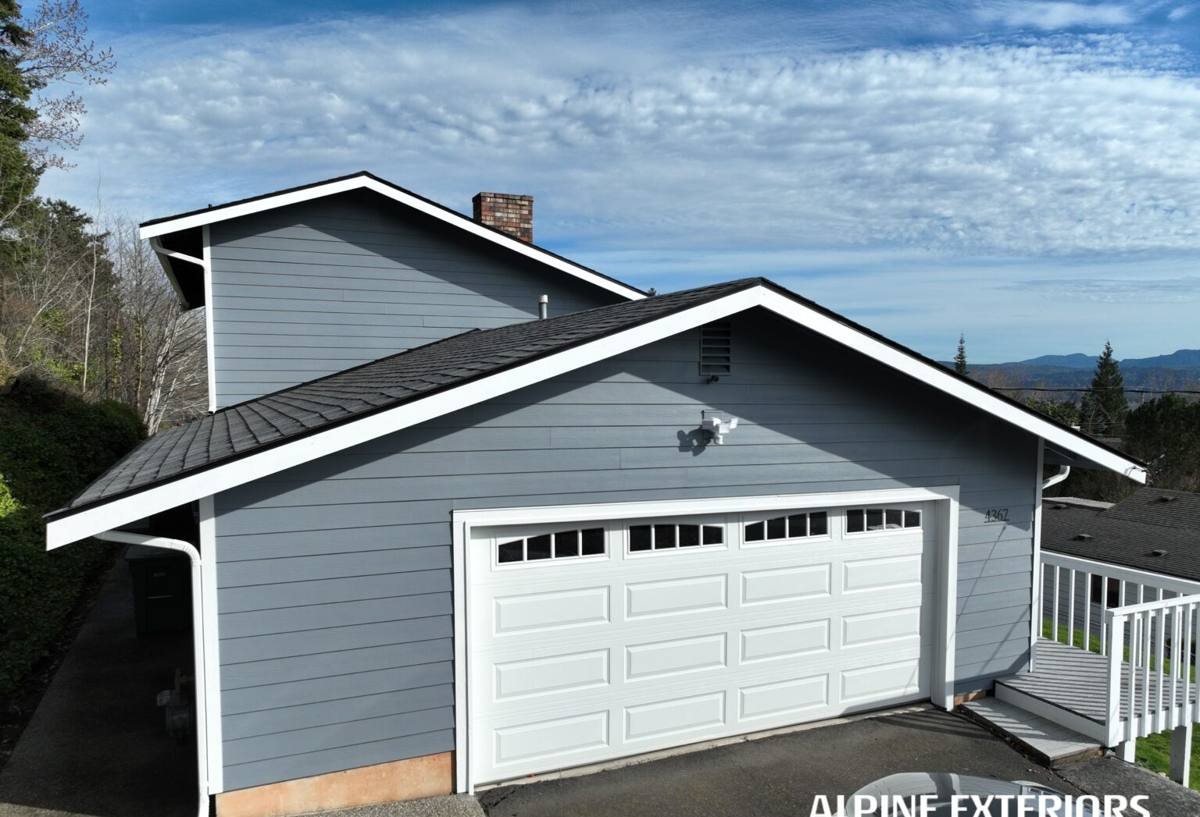
How Salt Air, Driving Rain, and Moss Actually Damage a Roof
Salt Air and Metal Components
Salt in the air accelerates corrosion on anything metal — flashing, fasteners, vent stacks, gutter hardware. Standard galvanized fasteners can start rusting years before they should in a coastal-influenced microclimate, and once a fastener corrodes, the seal around it weakens, giving water a path underneath the roofing material.
Wind-Driven Rain
Rain that comes in at an angle behaves differently than straight-down rain. It can work its way under shingle tabs, around poorly lapped flashing, and through gaps at ridge and hip lines that would never leak in calmer weather. Roofs in exposed or wind-funneled spots around Puget need tighter nailing patterns, proper shingle sealant activation, and flashing that's genuinely lapped correctly — not just caulked to look right.
Moss and Prolonged Moisture
Shaded roof sections, especially those facing north or sitting under overhanging trees, stay damp longer after every rain. Moss takes root in that moisture, lifts shingle edges as it grows, and holds water against the roofing surface and decking far longer than an exposed, sun-facing slope would experience. Left unaddressed, that trapped moisture eventually reaches the underlayment and, over time, the deck itself.
Signs a Puget Home May Be Due for a New Roof
Not every roof problem means a full replacement, but these are the signs worth taking seriously in this climate:
- Granule loss showing up in gutters or at downspout outlets
- Shingles that are cupping, curling, or visibly lifting at the edges
- Persistent moss or algae streaking that keeps returning after cleaning
- Soft spots or sagging when walked on, especially on shaded slopes
- Daylight visible through the attic roof deck, or damp insulation below it
- Flashing around chimneys, vents, or skylights that's cracked, rusted, or separating
- A roof approaching or past the 20-25 year mark for standard asphalt shingles in this climate
If more than one or two of these apply, it's worth getting a straightforward inspection rather than waiting for an interior leak to show up.
What a Correct Roof Installation Involves
Tear-Off and Deck Inspection
We don't install new roofing over old material or over a deck we haven't actually inspected. A full tear-off lets us check the sheathing for soft spots, rot, or delamination caused by long-term moisture — problems that are common on shaded roof sections in this area and invisible from the ground.
Underlayment and Water Barrier Strategy
Given how much of the year Bellingham sees rain, we treat underlayment as a real second layer of defense, not a formality. That means synthetic underlayment across the full deck and self-adhering waterproof membrane at eaves, valleys, and other spots where wind-driven rain and ice damming are most likely to force water backward under the shingles.
Flashing That's Actually Correct
Most roof leaks trace back to flashing, not the shingles themselves. Step flashing at walls, proper valley construction, and correctly lapped flashing at chimneys and skylights matter more in a driving-rain climate than almost anything else in the installation. We install new flashing as part of every re-roof rather than reusing old pieces, since corroded or poorly seated flashing is one of the most common hidden failure points we find during tear-offs.
Ventilation That Fights Moss and Moisture From the Inside
A roof that can't breathe stays wetter longer, which feeds moss growth and shortens shingle life. Balanced intake and exhaust ventilation — soffit vents paired with ridge or roof vents — keeps the underside of the deck drier and reduces the temperature swings that cause shingles to age faster.
Fasteners and Materials Rated for Coastal Exposure
We use corrosion-resistant fasteners and flashing metals suited to salt-air exposure rather than standard-grade hardware that performs fine inland but corrodes faster this close to the water.
Comparing Roofing Materials for a Puget Climate
There's no single "best" material for every home — the right choice depends on your roof's exposure, slope, budget, and how much shade and moss risk you're dealing with. Here's how the common options stack up for this specific climate:
| Material | Moss/Moisture Resistance | Salt Air Durability | Typical Lifespan | Relative Cost |
|---|---|---|---|---|
| Architectural Asphalt Shingle | Good with proper ventilation; algae-resistant granule options available | Good with corrosion-resistant fasteners and flashing | 25-30 years | $ |
| Standing Seam Metal | Excellent — sheds moisture quickly, little surface for moss to grip | Very good with coated, marine-rated panels and fasteners | 40-50+ years | $$$ |
| Synthetic/Composite Shingle | Very good; resists moisture absorption better than wood | Good | 30-50 years | $$-$$$ |
| Cedar Shake | Requires ongoing treatment and airflow to manage moss and rot risk | Moderate; needs more upkeep near salt air | 20-30 years with maintenance | $$$ |
We're happy to talk through the honest trade-offs of each option for your specific roof — including maintenance expectations and how warranty terms differ between manufacturers — rather than steering every homeowner toward the same product.
Our Process, Start to Finish
- Inspection and estimate — We look at the current roof, the deck condition where accessible, ventilation, and any moss or moisture patterns specific to your property.
- Material selection — We walk through options based on your roof's exposure, budget, and how much maintenance you want to take on long-term.
- Tear-off — Full removal of old roofing material and a real look at the deck underneath.
- Deck repair as needed — Any soft, rotted, or delaminated sheathing is replaced before new material goes down.
- Underlayment and flashing installation — Waterproof membrane at vulnerable areas, new flashing throughout.
- Roofing installation — Installed to manufacturer specification and proper fastening patterns for wind exposure.
- Ventilation check — Intake and exhaust balanced for the size and layout of the attic.
- Final walkthrough and cleanup — Site cleared of debris and nails, with a review of the finished work.
Living With Your New Roof: Moss and Salt Air Don't Stop After Installation
A correctly installed roof drastically reduces moss and moisture problems, but Bellingham's climate doesn't take a break once the job is done. Keeping gutters clear, trimming back overhanging branches where practical, and having shaded or north-facing slopes checked periodically for early moss growth will extend the life of any roof in this area — asphalt, metal, or otherwise. Catching a small patch of moss early is a maintenance task; ignoring it for a few seasons can turn into a repair.
Permits, Code, and Warranty in Whatcom County
Re-roofing in this area typically requires permitting through the relevant local jurisdiction, along with work that meets current building code for ventilation, ice/water barrier placement, and fastening in wind-exposed zones. We handle the permitting and inspection process as part of the job, and we make sure manufacturer installation requirements are followed so your material warranty stays valid — many warranties can be voided by improper installation, regardless of how good the shingle or panel itself is.
Why a Crew That Already Works in Puget Matters
A roofer who works this specific area regularly already knows which slopes tend to hold moss, which exposures take the worst of the driving rain, and which flashing details actually hold up to salt air over time instead of just meeting minimum code. That local familiarity shows up in fewer callbacks and a roof that's built for the conditions it will actually face, not just the conditions on a spec sheet.
If your roof in Puget is showing its age or you're just planning ahead, we're glad to come take a look. Estimates are free, there's no pressure to commit on the spot, and you can use the form below to get started.