 Bellingham Siding
 Building Decks for the Puget Area's Marine Climate
Homes in the Puget area sit close enough to the water that the weather behaves differently than it does further inland in Whatcom County. Salt-laden air moves through daily, driving rain comes in sideways more often than straight down, and the gray months bring a long stretch of dampness that never quite dries out between storms. A deck built here has to handle all of that at once, every year, for decades. That's a different design problem than a deck built in a dry inland yard, and it's why we don't treat every custom deck the same way regardless of where it sits.
A deck that looks fine on installation day can start showing problems within a year or two if the framing, fasteners, and decking weren't matched to this environment. We've corrected enough of those early failures to know exactly where they start — and how to build so they don't happen in the first place.
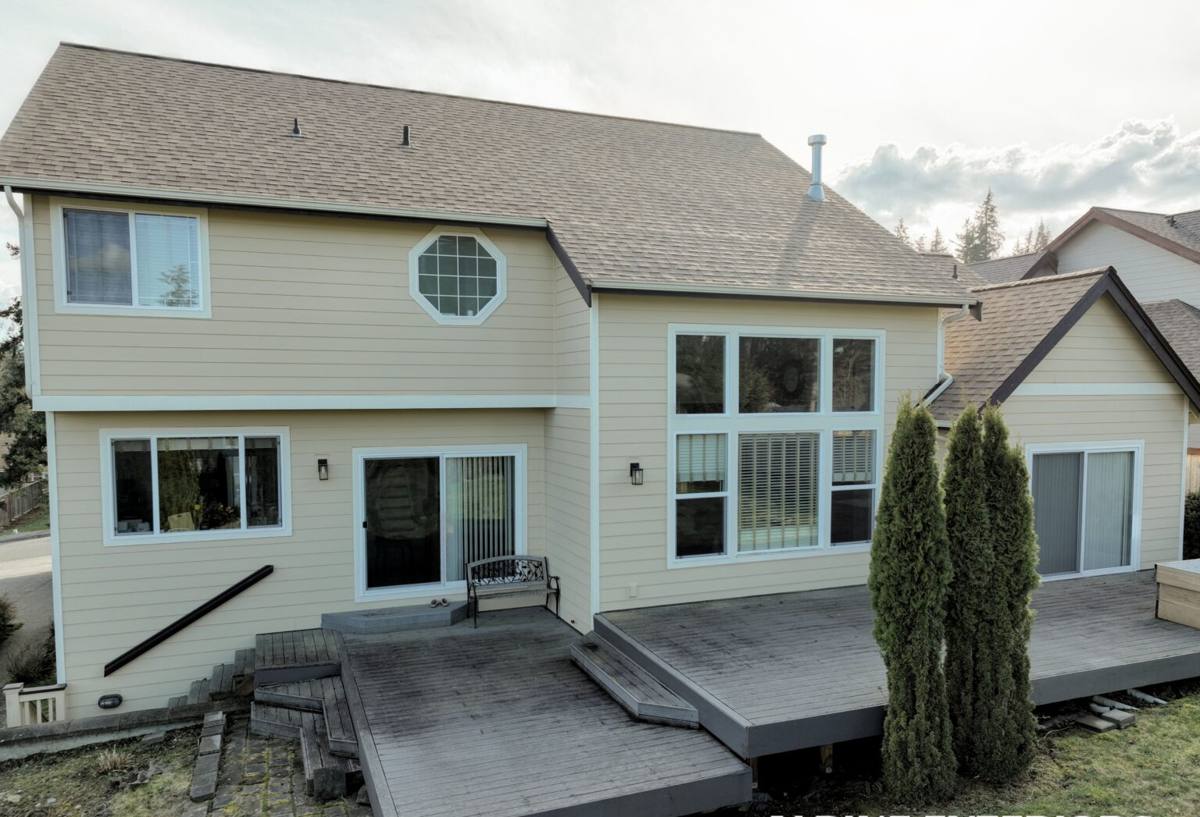
What Salt Air, Rain, and Moss Actually Do to a Deck Over Time
Salt Air and Metal Fasteners
Salt in the air accelerates corrosion on anything metal — nails, screws, brackets, and joist hangers. Standard hardware that would hold up fine forty minutes inland can start rusting within a few seasons this close to the water. Once a fastener corrodes, it loses grip strength long before it looks obviously bad, which is how a structurally sound-looking deck ends up with a loose railing post or a squeaking board.
Driving Rain and Water Intrusion
Wind-driven rain doesn't just fall on a deck's surface — it gets pushed into seams, ledger connections, and any gap where the decking meets the house. Water that can't shed or drain away sits in those joints and works on the wood or the fasteners from the inside, where it's invisible until the damage is advanced.
Moss, Algae, and Extended Dampness
The long stretch of wet, mild weather in this region is exactly what moss and algae need to establish themselves. Beyond looking bad, a mossy deck surface holds moisture against the boards far longer than bare wood or composite would on its own, and it turns a deck slick and genuinely unsafe underfoot — especially on stairs.
Choosing the Right Decking Material for This Site
There's no single "best" decking material — there's a best fit for a given budget, look, and site. For homes in the Puget area, moisture and salt-air resistance move up the priority list compared to a dry inland lot. Here's how the common options compare for this environment specifically:
| Material | Salt Air / Moisture Resistance | Moss Resistance | Maintenance | Typical Lifespan Here |
|---|---|---|---|---|
| Pressure-treated wood | Fair — needs sealing to hold up | Low without regular cleaning | Annual cleaning, periodic sealing | 10–15 years with upkeep |
| Cedar | Good natural resistance, but surface still weathers | Low without regular cleaning | Regular cleaning, occasional oiling | 15–20 years with upkeep |
| Capped composite | Very good | Better — smoother surface sheds algae growth | Occasional washing | 20–30 years |
| PVC decking | Excellent — no wood fiber to absorb moisture | Best of the group | Occasional washing | 25–30+ years |
Wood costs less to install and has a natural look many owners want, but it asks for more upkeep in this climate to get a fair lifespan out of it. Composite and PVC cost more upfront but shed moisture and resist moss with far less ongoing work — a real consideration when the deck sits somewhere the weather doesn't let up for months at a stretch. We'll walk through the honest trade-offs for your specific project rather than push one option across the board.
What We Don't Recommend, and Why
We steer away from uncapped, budget composite boards in this environment. Older composite formulations without a protective cap layer can absorb moisture at the board's core over time, and once that happens the board doesn't dry out the way solid wood does — it just holds water and eventually deteriorates from the inside. That's a maintenance and longevity trade-off worth knowing about before it's your deck ten years from now, not a knock on any single brand.
Framing and Fasteners: Where Cheap Decks Fail First
The decking surface gets all the attention, but the framing underneath and the fasteners holding it together are what actually determine how long a deck lasts near the water. We use corrosion-resistant, coated or stainless fasteners rated for the framing material, and we match joist hangers and structural connectors to the same standard — not the cheapest hardware that happens to fit.
The ledger board — where the deck attaches to the house — deserves particular attention. It's the single most common point of hidden water damage on any deck, and it's also a structural connection that has to be flashed correctly so rain can't work its way behind the siding. A properly flashed, properly fastened ledger is not a place to cut corners, regardless of what decking material sits on top of it.
Design Choices That Fight Moss and Standing Water
Beyond material selection, how a deck is built has a real effect on how much moss and standing water become a problem later:
- Proper board spacing so water drains through rather than pooling on the surface
- A slight slope away from the house so runoff moves off the deck instead of toward the ledger
- Ventilation underneath the deck so the framing can dry out between rain events instead of staying damp
- Picking a surface texture and finish that don't trap organic debris where moss can take hold
- Positioning stairs and high-traffic areas to shed water quickly, since those spots see the most wear and the most safety risk when they're slick
None of these are expensive add-ons — they're just decisions made correctly at the design stage, before the first board goes down.
Our Custom Deck Process, Start to Finish
Assessment and Design
We start by looking at the site itself — sun and wind exposure, drainage patterns, how close the deck sits to salt air, and what the house's existing structure can support. From there we design the layout, size, and material plan around how the space will actually get used.
Permits and Structural Planning
Custom decks in this area typically require a building permit, and the ledger attachment, footings, and railing design all have to meet current building code. We handle that planning and paperwork as part of the project so it's not left for the homeowner to sort out.
Construction
Framing goes in first, built with corrosion-resistant fasteners and connectors sized to the load. Decking, railings, and any stairs follow, with attention paid to the drainage and ventilation details covered above — not just to how it looks on day one.
Final Walkthrough
Before we call a project finished, we walk it with the homeowner, check every railing and stair for solid attachment, and go over what maintenance — if any — the chosen material will need going forward.
Permits, Timelines, and Weather in Whatcom County
Deck construction here has to work around a genuinely wet build season more often than contractors in drier parts of the country. That affects scheduling — we plan around forecasted rain windows rather than pushing through weather that compromises the work, particularly during concrete curing for footings and any staining or sealing steps that need dry conditions to set up properly. Permit review timelines can also add a few weeks to a project's start date, which we factor into scheduling from the outset so there are no surprises.
Maintenance: What a Puget-Area Deck Actually Needs
Maintenance needs vary by material, but every deck in this climate benefits from a basic seasonal routine:
- Sweep debris and standing leaves off the surface regularly, especially in fall and through the wet months
- Wash the surface at least once a year to remove early moss and algae growth before it establishes
- Check railing posts and stair connections annually for looseness, which can signal fastener corrosion
- Inspect the ledger board area yearly for any signs of water staining or soft wood
- Reseal or refinish wood decking on the schedule the product calls for — skipping a cycle here shortens lifespan fast
- Keep gutters and downspouts near the deck clear so runoff isn't dumping extra water onto or near the structure
Why a Crew That Already Works in the Puget Area Matters
A contractor who mostly builds decks in dry, inland conditions will default to methods that work fine there but fall short here. Fastener selection, ledger flashing, drainage slope, and material choice all shift when a deck sits somewhere the air carries salt and the rain comes in sideways for months at a time. We build decks in this specific environment regularly, which means the lessons from every deck we've corrected or maintained here already show up in how we frame and finish the next one — not learned at the homeowner's expense.
If you're planning a custom deck for a home in the Puget area, we're happy to take a look at your site and talk through what actually makes sense for your budget, your use of the space, and the weather it'll be living in. Reach out for a free, no-pressure estimate using the form below.