 Bellingham Siding
 Puget's Climate Is Harder on Siding Than It Looks
Puget sits close enough to the water and to Bellingham's marine weather patterns that homes here take a different kind of beating than siding a few miles inland. It's not one dramatic event that wears siding out — it's the accumulation of small things, repeated for years. Salt-laden air off the Sound corrodes exposed metal fasteners and trim. Driving rain, pushed sideways by wind off the water, finds every gap in a poorly flashed wall. And Whatcom County's long, wet, low-light stretch from fall through spring gives moss and algae months at a time to take hold on north-facing walls and anything shaded by trees.
None of that is unusual for this part of Washington. But it does mean siding decisions that work fine in a drier climate — or even in a less exposed part of Bellingham — don't always hold up the same way in Puget. The material matters, the installation details matter more, and the two have to work together.
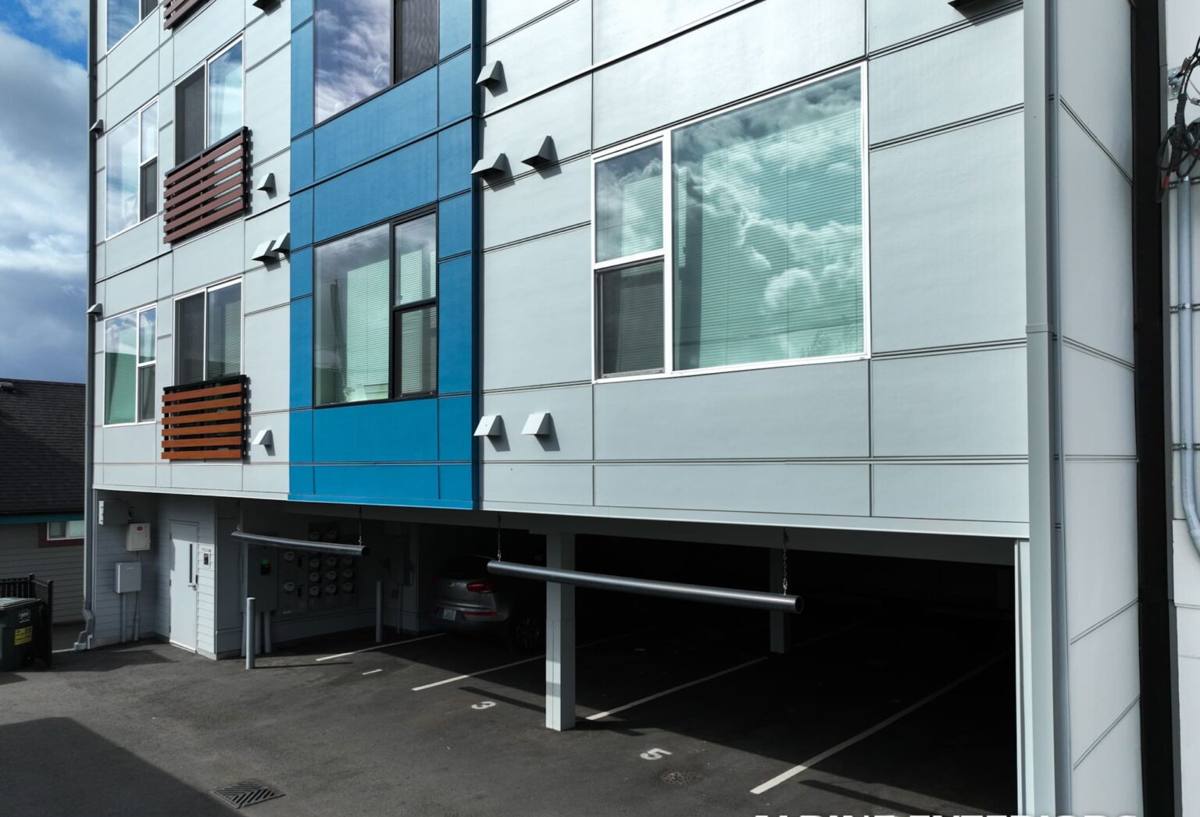
What Salt Air, Driving Rain, and Moss Actually Do to Siding
Salt Air
Salt in the air accelerates corrosion on anything metal — nails, screws, flashing, and trim fasteners. Once a fastener starts to corrode, it can weep rust streaks down the face of the siding and eventually lose its grip, which is a maintenance headache regardless of what material is on the wall. It also settles into any porous or absorbent surface, which is one more reason moisture management at the wall matters as much as the surface material itself.
Driving Rain
Wind-driven rain doesn't just fall on a wall — it gets pushed into laps, seams, and penetrations. Siding that isn't lapped, flashed, and fastened correctly will eventually let water behind it, and once water is behind the cladding, the problem is no longer cosmetic. It's about what happens to the sheathing, the framing, and the insulation behind that siding over the following years.
Moss and Algae Season
Bellingham's wet season runs long. Shaded and north-facing walls, especially near trees or close to neighboring structures, stay damp for extended stretches. Materials that absorb moisture or that develop a porous surface over time give moss and algae something to grab onto. Materials that shed water and resist moisture absorption make it harder for growth to establish and easier to keep clean.
Why James Hardie Fiber Cement Is Built for This
James Hardie siding is fiber cement — a mix of cement, sand, and cellulose fibers, engineered and factory-cured rather than relying on paint or coatings applied on site. For a climate like Puget's, a few characteristics matter directly:
- Non-combustible material — not a factor tied to rain or salt, but a real advantage for long-term home protection in this region.
- Dimensionally stable — it doesn't swell, cup, or warp with repeated wet-dry cycles the way wood-based products can.
- Engineered for Pacific Northwest moisture — Hardie's HZ5 product line is formulated specifically for wetter, harsher climate zones, which includes western Washington.
- ColorPlus factory finish — a baked-on finish applied under controlled conditions, which holds up more consistently than field-applied paint against sun, rain, and salt exposure over time.
Fiber cement isn't immune to moss — nothing mounted on an exterior wall in this climate is — but its surface and moisture behavior make it far more resistant to the kind of long-term degradation that drives most siding replacements in this region.
What a Correct Installation Involves in Puget
The material is only half the equation. Most siding failures we see aren't a product problem — they're an installation problem. James Hardie publishes specific installation requirements, and skipping or shortcutting them is what causes the moisture and corrosion issues homeowners eventually deal with. For a Puget home, the details that matter most include:
Water Management Behind the Cladding
A proper weather-resistive barrier and drainage plane behind the siding gives any moisture that does get past the cladding a way out, instead of trapping it against the sheathing. This is the single most important layer for a driving-rain climate, and it's invisible once the job is done — which is exactly why it needs to be done right the first time.
Flashing at Every Penetration
Windows, doors, vents, hose bibs, light fixtures — anywhere something interrupts the wall plane is a place water can find its way in. Correct flashing, installed in the right sequence with the drainage plane, is non-negotiable in a climate that gets wind-driven rain.
Proper Clearance and Fastening
Hardie specifies minimum clearances from grade, roof lines, decks, and other siding-to-surface transitions, along with specific fastener types, spacing, and placement. Using corrosion-resistant fasteners matters more here than in a drier inland climate, given the salt exposure.
Correctly Sealed and Painted Cut Edges
Every field cut exposes raw fiber cement that needs to be sealed per Hardie's specifications before installation. Skipped or rushed sealing at cut ends is a common shortcut that shows up as a maintenance problem years later.
Comparing Siding Approaches for a Coastal-Influenced Climate
| Factor | James Hardie Fiber Cement | Vinyl | Wood / Primed Spruce |
|---|---|---|---|
| Moisture absorption | Very low; engineered for wet climates | Non-absorbent, but can warp/gap with heat and cold | Absorbent; prone to swelling and rot without upkeep |
| Finish durability | Factory-baked ColorPlus finish | Color molded in, but fades and becomes brittle over time | Field-applied paint; needs recoating on a regular cycle |
| Moss/algae resistance | Strong, especially with a properly maintained finish | Moderate; smooth surface but seams can trap debris | Weaker; porous surface encourages growth |
| Fire performance | Non-combustible | Combustible | Combustible |
| Salt air / corrosion exposure | Fastener choice matters; body of material is inert | Fastener choice matters; panel itself is inert | Fastener corrosion plus wood decay risk compound |
Maintenance Realities for a Puget Home
Even the right material doesn't mean zero maintenance — it means the maintenance is manageable instead of constant. For Hardie siding in this climate, that generally looks like:
- Periodic rinsing of shaded or north-facing walls to keep moss and algae from establishing
- Visual checks after major wind-driven rain events for anything that looks like a gap, crack, or loose trim piece
- Keeping vegetation and sprinkler spray pulled back from the wall to reduce constant dampness
- Repainting on the cycle appropriate to the finish, rather than letting a worn coating sit exposed
Compare that to wood siding, which typically needs full repainting every few years in this climate just to keep water out, or vinyl, which can't really be repainted or refinished at all once it fades or is damaged.
How Our Process Works
We install James Hardie exclusively — it's the only fiber cement system we put on homes, and we don't install vinyl, LP SmartSide, or other composite or wood sidings. For a Puget project, our process generally runs:
- On-site assessment — checking existing siding condition, wall exposure to wind and rain direction, shaded areas prone to moss, and any signs of past moisture intrusion.
- Product selection — matching the right Hardie plank, panel, or shingle profile and HZ climate line to the home's exposure and style.
- Tear-off and sheathing check — removing old siding and inspecting the sheathing underneath for any damage that needs to be addressed before new siding goes up.
- Weather barrier and flashing installation — the drainage plane and flashing details that do the real work of keeping water out.
- Hardie installation to manufacturer spec — correct fastening, clearances, sealed cut ends, and joint treatment.
- Final walk-through — reviewing the finished work and care recommendations specific to the home's exposure.
Why a Crew That Already Works Puget Matters
Installation quality is what separates siding that lasts decades from siding that causes problems in five years — and a crew familiar with Whatcom County's weather patterns tends to make fewer assumptions. They know which walls are more exposed to driving rain, which sides of a house stay damp longest through moss season, and where salt air exposure changes fastener choices. That local familiarity doesn't replace following manufacturer specs — it just means fewer surprises during the job and a better match between the installation details and what the house will actually face over the years.
What to Check Before Hiring Anyone for a Siding Project Here
- Are they installing to the manufacturer's published specifications, not just "how we've always done it"?
- Do they explain the weather-resistive barrier and flashing plan, not just the visible siding product?
- Are they using corrosion-resistant fasteners appropriate for a coastal-influenced climate?
- Can they speak specifically to how they handle wall exposure, drainage, and moss-prone areas?
- Are they licensed, insured, and willing to put the scope of work in writing?
If your Puget home's siding is showing rust streaks, soft spots, persistent moss, or you're just planning ahead, we're happy to take a look and talk through what James Hardie siding would involve for your specific house. Reach out for a free, no-pressure estimate using the form below.