 Bellingham Siding
 Deck Repair Built for Puget's Weather
Homes in the Puget area near Bellingham sit close enough to the water and tree cover that decks take a beating most inland properties never see. Salt-laden air off the water accelerates corrosion on fasteners and hardware. Driving rain off Puget Sound and Whatcom County's marine weather finds every gap in flashing and every open joint in decking. And the long stretch of damp, low-sun months each year gives moss and algae months to work into wood grain and hide standing water against ledger boards and joists. A deck that would last decades in a dry climate can develop real structural problems here in half that time if it isn't built and maintained with that reality in mind.
Deck repair in this area isn't just about swapping a few boards. It's about understanding where water collects, where salt air does its worst damage, and which fixes actually hold up through another Whatcom County winter instead of failing again in two or three years.
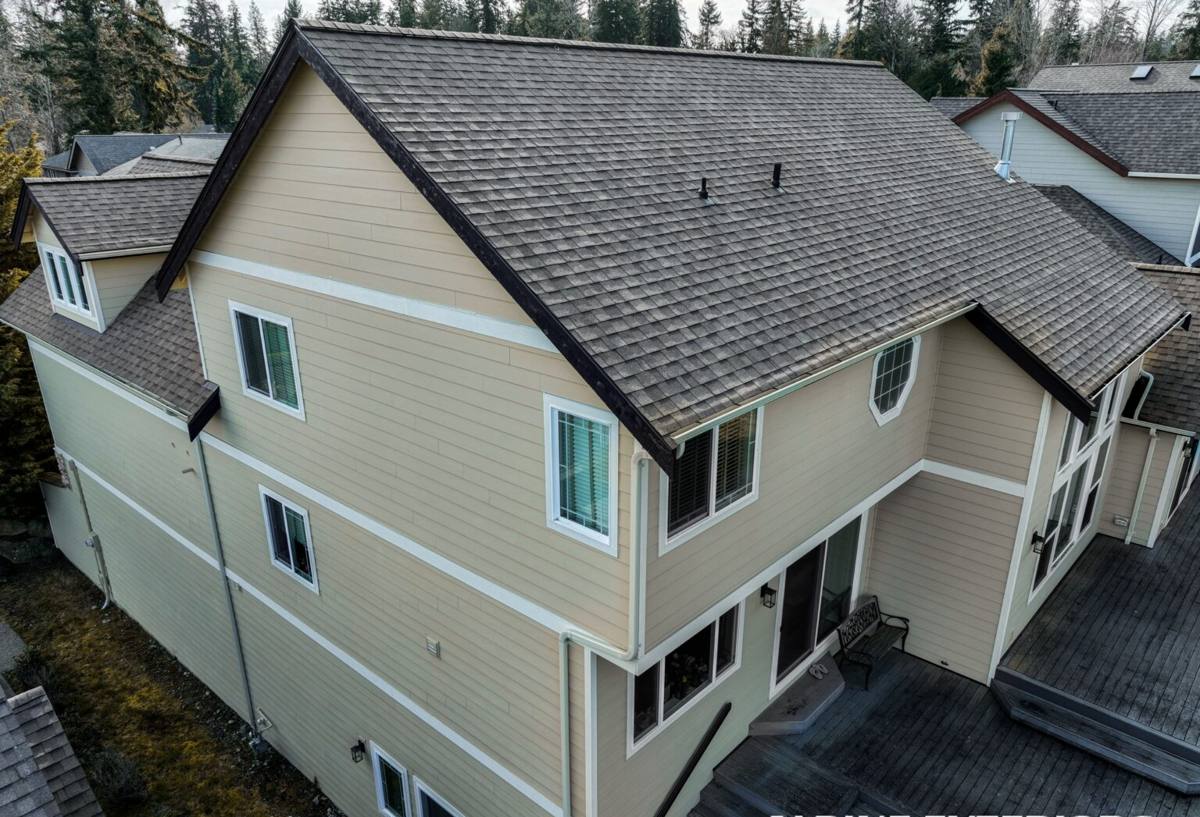
Common Deck Problems We See in Puget
Every deck we look at in this area tends to fail in a handful of predictable spots. Knowing where to look helps homeowners catch problems early, before a soft board turns into a structural repair.
Ledger Board and Rim Joist Rot
The ledger board — where the deck attaches to the house — is the single most important structural connection on most decks, and it's also the piece most exposed to trapped moisture. Poor or missing flashing lets rain wick behind the ledger, and in a climate with as much sustained rainfall as Bellingham gets, that moisture never really gets a chance to dry out. By the time rot is visible, the wood underneath is often already compromised.
Fastener and Hardware Corrosion
Salt air is hard on metal, full stop. Nails, screws, and joist hangers that aren't rated for a coastal or marine environment can rust, weaken, and stain the surrounding wood years before the boards themselves need replacing. We see this most often on decks built with standard hardware instead of coated or stainless connectors.
Moss, Algae, and Surface Decay
Whatcom County's long moss season isn't just a cosmetic issue. Moss and algae hold moisture against the wood surface, block airflow, and make boards slippery and dangerous underfoot. Left alone through several wet seasons, that trapped moisture works its way into checks and fastener holes and starts real decay from the inside out.
Post and Footing Movement
Saturated soil and freeze-thaw cycles through the wetter months can shift posts and footings over time, especially on older decks that weren't set to current depth and bearing standards. This shows up as a deck that feels slightly springy, uneven, or pulled away from the house at one corner.
Repair vs. Replacement: How We Decide
Not every deck problem calls for a full rebuild, and not every deck is worth saving. We look at the structural frame first — posts, beams, joists, and the ledger connection — because that's what determines whether repair makes sense. Surface boards are almost always replaceable on their own; a compromised frame is a different conversation.
| Condition | Typical Fix | Repair or Replace |
|---|---|---|
| Soft or cracked deck boards, frame is solid | Board replacement, refastening | Repair |
| Rot at ledger board, house framing unaffected | Ledger replacement, proper flashing install | Repair |
| Rusted or failing joist hangers | Swap to corrosion-rated hardware | Repair |
| Widespread rot across multiple joists or beams | Partial or full frame rebuild | Often Replace |
| Undersized or shifted footings | New footings to current standards | Replace (substructure) |
| Railing loose or code-noncompliant | Railing repair or rebuild | Repair |
As a general rule, if the frame is sound, repair is usually the more cost-effective route and we'll recommend it. If rot has spread through the structural members that carry the deck's weight, patching around it isn't a real fix — it just delays a bigger problem and can create a safety issue in the meantime.
What a Correct Deck Repair Actually Involves
A repair that holds up in this climate goes a few steps beyond replacing what's visibly damaged.
- Full inspection of the ledger connection, including flashing condition behind the siding, not just the visible board
- Probing joists and beams at connection points, where moisture collects and rot starts, rather than only checking the top surface
- Replacing corroded fasteners and hardware with hot-dip galvanized or stainless connectors rated for coastal exposure
- Reinstalling or upgrading flashing so water sheds away from the house instead of tracking behind the ledger
- Checking post bases and footings for movement, settling, or standing water contact
- Confirming railing height, baluster spacing, and stair details meet current code, especially on older decks being repaired for the first time in years
Skipping any of these steps is how a "repair" ends up needing to be redone in a few seasons. The visible boards are the easy part — the hardware, flashing, and framing underneath are what decide whether the fix lasts.
Decking Materials: Repair Considerations by Type
Wood Decking
Cedar and pressure-treated lumber remain common on older Puget-area decks. Repair usually means sistering or replacing individual joists and boards, then addressing the moisture source that caused the damage in the first place. Wood decks in this climate need a real maintenance rhythm — cleaning, sealing, and moss removal on a schedule — or the same rot returns.
Composite Decking
Composite boards resist surface rot but aren't immune to problems. The structural frame underneath is still wood in most installations, so a composite deck can have serious hidden rot even while the surface looks fine. Composite repair often focuses on the substructure and on hardware, plus addressing any manufacturer-specific fastening or ventilation requirements so the repair doesn't void a warranty.
Railings and Stairs
Railings and stair stringers see constant hand contact and foot traffic and often show wear before the deck surface does. We treat these as a separate check during every repair, since a failed railing is a safety issue regardless of how the rest of the deck looks.
Our Deck Repair Process
1. On-Site Assessment
We start by walking the full deck, probing suspect areas, and checking the ledger, framing, and footings — not just the surface. We'll tell you plainly what we find, including anything that doesn't need immediate attention.
2. Clear Scope and Straightforward Estimate
You get a written scope of what's being repaired and why, with an honest range based on what we found rather than a guess. If we uncover hidden damage once work is underway, we stop and talk to you before proceeding.
3. Repair Work
We replace what's failed, upgrade hardware and flashing where needed, and correct the moisture path that caused the original problem. Our goal is a repair that addresses the cause, not just the symptom.
4. Final Walkthrough
Before we consider the job done, we walk the deck with you, point out what was repaired, and flag any maintenance steps that will help it hold up through the coming wet season.
Moss, Salt Air, and Ongoing Maintenance
Repair work only lasts if it's followed by realistic upkeep. In a climate with as much sustained moisture and moss growth as this area sees, a little regular attention prevents most of the damage we're called out to fix.
- Clear moss and debris from boards and between gaps at least once a year, more often under heavy tree cover
- Keep gutters and downspouts clear so runoff isn't dumping directly onto or near the deck
- Check and re-seal or re-stain wood decking on a regular cycle rather than waiting for visible graying
- Look at fasteners and visible hardware periodically for rust staining, an early warning sign
- Make sure the ledger flashing stays covered and undisturbed during any siding or gutter work on the house
None of this eliminates the need for repair over a deck's lifespan, but it stretches the time between repairs considerably and helps catch problems while they're still small and cheap to fix.
Why Hire a Crew That Already Works Puget
Deck problems in this area follow patterns that come directly from the local climate — salt air corrosion, moss-driven surface decay, and moisture patterns tied to Whatcom County's rainfall. A crew that regularly works decks in and around Puget knows which connection points fail first here, which hardware actually holds up, and which shortcuts show up as callbacks two winters later. That local pattern recognition is what separates a repair that lasts from one that just looks finished on the day it's done.
We also know what a deck needs to survive the specific combination of conditions this area sees year-round, not a generic climate assumption. That shapes every material and hardware choice we make on a repair, from the flashing behind the ledger to the fasteners holding the boards down.
Signs Your Puget-Area Deck Needs a Repair Check
- Boards that feel soft, spongy, or spring back when you step on them
- Visible gaps, cracks, or checking in the wood, especially near fasteners
- Rust staining around screws, nails, or joist hangers
- A deck that feels slightly bouncy or shifts underfoot near the house
- Persistent moss or dark staining that returns quickly after cleaning
- Railings that wiggle, feel loose, or have visible cracking at the posts
- Gaps or daylight visible where the deck meets the house siding
If any of these sound familiar, it's worth getting a proper look before another wet season adds to the damage. We offer a free, no-pressure estimate for deck repair in the Puget area — use the form below to get a time on the calendar.