 Bellingham Siding
 Why Decks in the Puget Area Wear Out Faster Than People Expect
If you live in the Puget area of Bellingham, you already know the weather here isn't dramatic — it's just relentless. Long stretches of drizzle, a marine layer that keeps everything damp well into the afternoon, and a steady dose of salt-tinged air off the Sound add up over the years. A deck that might last two decades in a dry inland climate can start showing real structural problems in half that time here in Whatcom County. The issue isn't one big storm; it's thousands of freeze-thaw cycles, moss holding moisture against wood day after day, and fasteners slowly corroding where nobody's looking.
That's the context we bring to every deck replacement in this area: we're not just swapping old boards for new ones, we're building a structure that's supposed to handle a specific set of conditions — driving rain that hits at an angle, shaded yards that never fully dry out, and a moss season that can run from fall through spring.
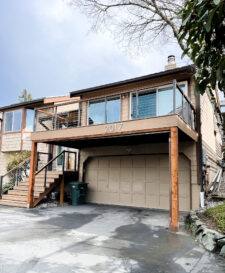
Repair vs. Replacement: How to Tell Which One You Actually Need
Not every tired-looking deck needs a full replacement. But a lot of decks that look fine on the surface are hiding problems underneath that repair alone won't fix. Here's how we tell the difference on a site visit.
Signs a Repair Might Be Enough
- A handful of individual boards are cupped, splintered, or soft, but the framing underneath is solid
- Railings are loose but the posts themselves aren't rotted at the base
- Surface graying or moss staining with no soft spots when probed with a screwdriver
- Fasteners are rusted but the wood around them hasn't started to crumble
Signs You're Looking at a Full Replacement
- Soft, spongy decking across multiple areas, especially near the house or in shaded corners
- Rot at the ledger board — where the deck attaches to the house — which is a safety issue, not a cosmetic one
- Posts or beams that have lost structural integrity from long-term ground moisture
- A deck built before current code requirements for railings, guards, or ledger attachment
- Repeated repairs over the years that haven't stopped the underlying moisture problem
We'll always tell you honestly which category your deck falls into. If a repair will genuinely hold up, we'll say so — a full replacement isn't the right call just because a deck looks dated.
What's Hiding Underneath: Framing, Ledger, and Posts
The visible decking is the easy part. The parts of a deck that actually determine how long it lasts — and how safe it is — are the ones you don't see once the job is done: the ledger board, the framing, the posts, and the footings.
In this climate, the ledger board deserves special attention. It's the board bolted to your house that carries a large share of the deck's weight, and it sits in a spot where water can collect if flashing wasn't installed correctly the first time. A poorly flashed ledger is one of the most common hidden failure points we find on older decks in Bellingham — it looks fine from the yard, but moisture has been working behind it for years. Any full replacement we do includes correcting ledger flashing, not just reusing what's there.
Posts and footings are the other area worth checking carefully. Ground contact posts in a damp climate are vulnerable to rot right at soil level, even when the deck above looks structurally sound. Where it makes sense, we address footing depth and drainage as part of the rebuild rather than just bolting new framing onto old, questionable supports.
Choosing Decking Material for a Marine Climate
Material choice matters more here than in drier parts of the state, mostly because of how each option handles sustained moisture and shade rather than occasional rain. There's no single "best" material — it depends on your budget, how much maintenance you want to do, and how much direct sun your deck gets.
| Material | How It Handles This Climate | Maintenance | Typical Lifespan |
|---|---|---|---|
| Pressure-treated wood | Affordable, but prone to moss growth and surface checking in shaded, damp yards | Annual cleaning and periodic sealing | 10–15 years |
| Cedar | Naturally rot-resistant and handles moisture well, but softer surface can scuff or gray without upkeep | Sealing every 1–2 years to hold color and resist moisture | 15–20 years |
| Composite decking | Resists rot and moss buildup better than wood; some early-generation composites hold surface moisture in shaded spots | Periodic washing, no sealing required | 20–25+ years |
| PVC/capped composite | Best resistance to moisture absorption and staining in persistently damp, shaded areas | Occasional washing | 25+ years |
For yards in the Puget area that get a lot of shade from mature trees, we lean toward recommending composite or capped options where budget allows, simply because moss and algae get a foothold faster on traditional wood surfaces that don't dry out between rain events. That said, plenty of homeowners prefer the look and feel of real wood and are happy to keep up with sealing — that's a legitimate choice too, as long as you know the maintenance commitment going in.
Our Deck Replacement Process
A deck replacement isn't just demo-and-rebuild. Here's the order we actually work in, and why each step matters.
- On-site assessment. We check the ledger, framing, posts, and footings before quoting anything — not just the visible decking surface.
- Demolition and disposal. Old decking, railings, and any compromised framing come out completely. We don't build new surfaces on top of questionable old structure.
- Structural correction. Ledger flashing, post condition, and footing depth get addressed here — this is the step that's easy to skip and expensive to regret skipping.
- Framing installation. New joists and beams are set to current code spacing, sized for your decking material and expected loads.
- Decking installation. Boards go down with the fastening pattern appropriate to the material — hidden fasteners, screws, or clips, depending on what you've chosen.
- Railings and stairs. Built or replaced to meet current guard height and baluster spacing requirements, whether or not the old deck met them.
- Final walkthrough. We go over the finished deck with you, including what maintenance it needs and when.
Railings, Stairs, and Code Requirements
A lot of older decks in Whatcom County were built to standards that have since changed — railing height, baluster spacing, and stair guard requirements have all been tightened over the years for safety reasons. When we replace a deck, we bring railings and stairs up to current code as part of the job, not as an optional add-on. This matters both for safety and because it can come up during a home sale or insurance inspection down the road.
Stair stringers deserve their own mention. They're one of the first structural components to show wear in a wet climate, since water tends to sit on horizontal stair surfaces longer than on a sloped deck. We check stringer condition closely on any replacement and won't reuse ones that have started to soften.
Fasteners, Flashing, and the Small Details That Actually Matter
Salt-tinged marine air is hard on standard fasteners. Galvanized nails and screws that hold up fine inland can start corroding faster this close to the Sound, which is why we spec stainless or coated fasteners rated for coastal exposure rather than defaulting to whatever's cheapest. It's a small cost difference upfront that avoids streaking, staining, and loosened boards a few years in.
Flashing is the other detail that separates a deck that lasts from one that doesn't. Proper ledger flashing directs water away from the house rather than letting it pool where the deck meets the siding — a detail that's invisible once the job is finished but is often the single biggest factor in whether a deck causes moisture problems for the house itself, not just the deck.
Keeping a New Deck in Good Shape Through Moss Season
Once your new deck is in, a little seasonal upkeep goes a long way in this climate. Here's what we recommend to clients in the Puget area specifically.
- Sweep or blow off leaves and debris regularly in fall — trapped organic material is what feeds moss and mildew
- Rinse the deck surface every few months, especially in shaded sections that don't get direct sun or wind
- Check that gaps between boards stay clear so water can drain through rather than pooling
- Inspect railings and stair connections once a year for movement or loosening
- If you chose wood, plan on resealing on the schedule appropriate to that species rather than waiting until it looks gray
- Trim back overhanging branches where possible to cut down on shade and falling debris
Why It Matters to Hire a Crew That Already Works in This Area
Deck construction isn't fundamentally different from one region to another, but the details that make a deck last are regional. A crew that mostly works drier climates may not think twice about ledger flashing, fastener corrosion resistance, or footing drainage — because in their market, those details don't fail as often. Around Bellingham and the rest of Whatcom County, they're exactly the details that determine whether a deck is still solid in fifteen years or starting to fail in five.
Working regularly in the Puget area also means we're familiar with the practical realities of these lots — shaded yards, sloped grades near the Sound, and the moss and moisture patterns that come with them. That familiarity shows up in decisions during the job, not just in the sales pitch beforehand.
Get a Straightforward, No-Pressure Estimate
If your deck is showing soft spots, moss buildup that won't quit, or you're just ready for something built to actually handle this climate, we're happy to take a look and give you an honest read on repair versus replacement. Use the form below to request a free estimate — no pressure, no obligation.