 Bellingham Siding
 Metal Roofing in Puget: Built for What This Corner of Whatcom County Actually Deals With
Puget sits close enough to the water that salt air is a daily fact of life on any roof, not an occasional inconvenience. Add Bellingham's long wet season, the steady drip of moss-friendly shade from mature evergreens, and the driving, wind-pushed rain that comes off Bellingham Bay in the winter months, and you have a roofing environment that punishes shortcuts. Metal roofing, installed correctly for this specific climate, holds up to all of it better than most alternatives — but "installed correctly" is doing a lot of work in that sentence. A metal roof put on the way it would be in a dry inland climate will underperform here. One built for Puget's actual conditions can outlast several generations of asphalt shingles.
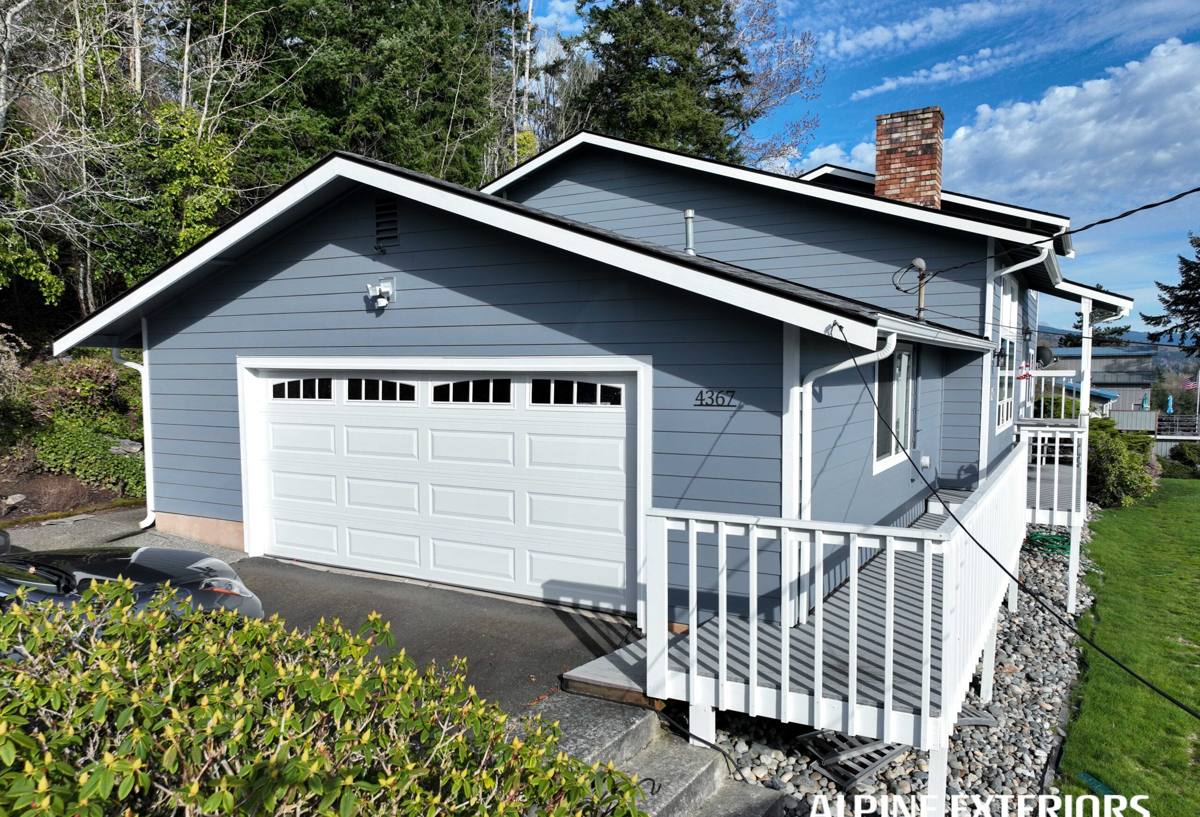
What Puget's Climate Demands From a Metal Roof
Salt Air and Corrosion
Coastal proximity means airborne salt settles on every exterior surface, including the roof deck, fasteners, and any exposed metal edges. Untreated or poorly coated fasteners and flashing are where corrosion starts first — usually at the head of a screw or the cut edge of a panel long before the panel field itself shows any wear. The right coating system and fastener grade matter more here than they would fifty miles inland.
Driving Rain and Wind-Driven Water
Puget doesn't just get rain — it gets rain pushed sideways by wind coming off the water. That changes how water behaves at every transition point on a roof: valleys, penetrations, wall-to-roof intersections, and low-slope sections. Standard lap coverage that works in calm-rain climates can allow water intrusion here if the underlayment, flashing laps, and fastening pattern weren't planned for wind-driven moisture specifically.
Extended Moss Season
Shade, moisture, and mild temperatures year-round make Whatcom County prime moss territory, and moss doesn't need much of a foothold. On metal roofing, moss is less of a structural threat than it is on shingles or wood, but it can still hold moisture against seams and fasteners if the roof design doesn't shed water and debris efficiently. Panel profile, slope, and valley design all affect how much organic debris a roof accumulates over a season.
What a Correct Metal Roofing Job Includes
A metal roof is only as good as the details underneath and around it. For Puget homes, we treat the following as non-negotiable parts of the job, not upgrades:
- A synthetic, high-temperature underlayment rated for long-term moisture exposure, not a basic felt product
- Ice-and-water shield membrane at eaves, valleys, and any low-slope transitions where wind-driven rain is most likely to back up
- Corrosion-resistant fasteners matched to the panel material to avoid galvanic reaction between dissimilar metals
- Properly lapped and sealed flashing at every penetration — chimneys, vents, skylights, and wall intersections
- Adequate roof deck ventilation to manage condensation from inside the attic, which is a separate issue from exterior rain but just as damaging if ignored
- Panel fastening patterns and clip spacing suited to local wind exposure, not a generic manufacturer minimum
Skipping any one of these doesn't necessarily cause a failure in year one. It shows up in year five or eight, usually as a leak at a valley or a rusting fastener line that's hard to trace back to the install decision that caused it.
Choosing a Metal Roofing System for a Puget Home
There's no single "best" metal roofing product — the right choice depends on the home's roof pitch, budget, and how much visual weight the owner wants the roof to carry. The table below covers the main categories we install and how each holds up in this specific climate.
| System | Best Suited For | Coastal/Moss Performance | General Cost Position |
|---|---|---|---|
| Standing seam (concealed fastener) | Most roof pitches, especially where long-term low maintenance matters most | Excellent — no exposed fastener heads to corrode, sheds moss debris well due to smooth vertical panels | Higher upfront, lowest lifetime maintenance |
| Exposed-fastener panel (screw-down) | Budget-conscious projects, outbuildings, simpler rooflines | Good if fasteners and gaskets are maintained; more vulnerable to fastener-level corrosion over time near the water | Lower upfront, more periodic maintenance |
| Stone-coated steel | Homes wanting a shingle- or tile-like appearance with metal durability | Good — textured surface handles debris shedding differently than smooth panel, still corrosion-resistant coatings | Mid-to-upper range |
| Aluminum panel systems | Homes closest to the water or with the highest salt exposure | Excellent corrosion resistance since aluminum doesn't rust the way steel can | Comparable to or above standing seam steel |
For most Puget properties within a few miles of the bay, we lean toward standing seam or aluminum systems specifically because they minimize the number of exposed fasteners exposed to salt air. That's a climate-driven recommendation, not a one-size-fits-all rule — a detached garage or a home set back further from the water may do perfectly well with a screw-down panel system at a lower cost.
Our Process for Puget Metal Roofing Projects
1. On-Site Assessment
We look at the existing roof deck, current ventilation, roof pitch, and how exposed the home is to wind and salt air based on its specific position. Two homes a few streets apart in Puget can have meaningfully different exposure depending on tree cover and orientation to the water.
2. System Recommendation
Based on that assessment, we recommend a panel type, gauge, and fastening approach — explaining the trade-offs in plain terms so the decision is the homeowner's, made with full information, not a sales push toward the highest-margin option.
3. Deck Prep and Moisture Barrier Installation
Any deteriorated decking gets addressed before a single panel goes down. We install the high-temp underlayment and ice-and-water membrane at all the vulnerable transition points before panel work starts.
4. Panel Installation and Flashing
Panels go on with the fastening pattern and clip spacing appropriate to the home's wind exposure. Flashing at every penetration and transition is formed and sealed as its own dedicated step, not an afterthought once the panel field is complete.
5. Ventilation Check
We confirm intake and exhaust ventilation is balanced so interior moisture isn't trapped against the underside of the new roof — a detail that matters as much for a metal roof's long-term performance as anything happening on the exterior.
6. Final Walkthrough
We walk the finished roof and the gutter/drainage transitions with the homeowner so everyone understands how the system sheds water and what, if anything, needs periodic attention.
Why a Crew That Already Works Puget Matters
Metal roofing installation isn't uniform across climates, and a crew that mostly works drier inland regions will make different default assumptions than one that works Bellingham's coastline regularly. Knowing which fastener grades actually hold up against salt air here, how much valley and eave protection driving rain off the bay really requires, and how local moss growth patterns affect long-term panel and gutter performance isn't something you get from a manufacturer's install manual alone — it comes from doing the work in this specific environment repeatedly. That local pattern recognition is what prevents the slow, hard-to-trace failures that show up years after a rushed or generic install.
Maintenance: What a Metal Roof Actually Needs Here
One of the appeals of metal roofing in a climate like this is how little ongoing maintenance it demands compared to shingles, but "little" isn't "none." A short seasonal checklist keeps a Puget metal roof performing the way it should:
- Clear needles, leaves, and debris from valleys and gutters each fall before the heavy rain sets in
- Check for any moss or organic buildup in low-slope areas or against north-facing sections that get less sun
- Visually inspect flashing at chimneys and vents for any lifted edges or sealant wear every year or two
- Confirm gutters and downspouts are directing water away from the foundation, especially during the wettest months
- Watch for any staining or rust streaking near fastener lines, which is the earliest visible sign of coating wear
None of this requires climbing onto steep sections of roof — most of it can be checked from a ladder at the eaves or observed during a normal gutter cleaning.
Cost Factors Specific to Puget Projects
Beyond the panel material itself, a few factors tend to move the price on Puget metal roofing jobs more than homeowners expect: the condition of the existing roof deck (rot from past moss or moisture issues sometimes isn't visible until tear-off), the complexity of the roofline (valleys, dormers, and penetrations all add flashing labor), and the level of corrosion-resistant hardware specified for the home's proximity to the water. We break all of this out clearly in any estimate rather than folding it into a single lump figure, so it's clear what's driving the number.
If you're weighing a metal roof for a Puget property, we're glad to take a look and walk through what your specific roof, exposure, and budget actually call for. There's a free, no-pressure estimate form below — reach out whenever it's convenient.