 Bellingham Siding
 Building New in Sunnyland? The Windows Deserve as Much Attention as the Framing
Sunnyland sits close enough to Bellingham Bay and the surrounding tree cover that new construction here has to answer to a specific set of conditions: salt-tinged air rolling off the water, wind-driven rain that doesn't just fall but pushes sideways into a wall, and long stretches of the year when shaded, damp surfaces grow moss faster than anyone wants to scrape it off. When you're building a new home, an addition, or an ADU in this neighborhood, the window installation is one of the few chances you get to do the building envelope right from the start — no old flashing to work around, no guessing what's behind the siding. Get it right during framing and rough-in, and you won't be chasing water stains or fogged glass ten years from now.
This page is about that specific job: new-construction window installation for Sunnyland properties, not window replacement. The two are related but not the same project, and treating them the same is where a lot of avoidable problems start.
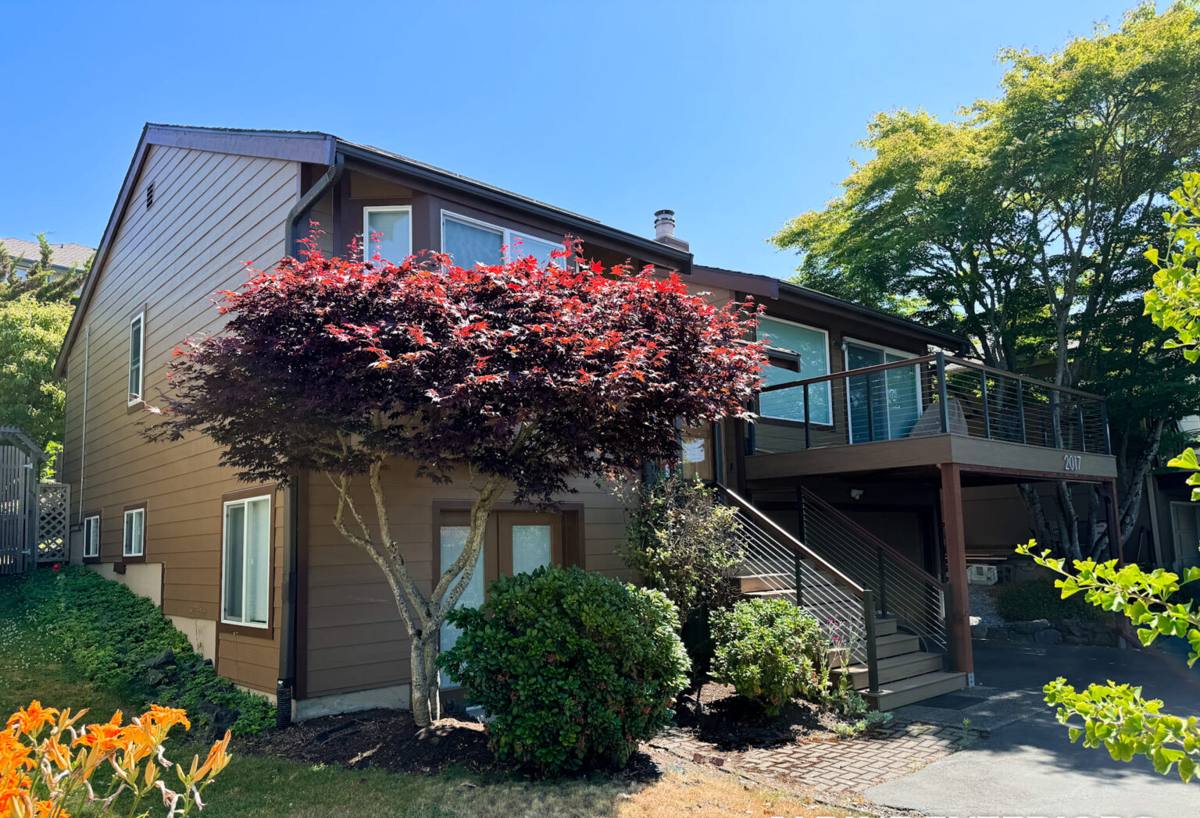
What Bellingham's Climate Actually Does to a New Window Install
Whatcom County's marine climate is mild compared to most of the country, which is exactly why people underestimate it. There's no hard freeze-thaw cycle tearing at materials, but there's something arguably harder to manage: near-constant moisture exposure spread across most of the year.
Salt Air
Homes closer to the bay pick up airborne salt that settles on window hardware, cladding fasteners, and frame components. Over years, that accelerates corrosion on anything not rated for coastal exposure — hinges, locks, and screws in particular. It's not dramatic, it's cumulative, and it's the kind of thing that shows up as a stuck lock or a streaked frame five or six years after move-in if the wrong hardware went in during construction.
Driving Rain
Storms here rarely fall straight down. Wind pushes rain sideways and up under trim, sills, and any gap in the water-resistive barrier. A new-construction opening gives you the chance to build a proper drainage plane and flashing sequence before siding ever goes on — which is a much better position to be in than trying to seal an already-clad wall.
Moss Season
Sunnyland's mature tree canopy means a lot of homes have north- and east-facing walls that stay shaded and damp for long stretches, especially from fall through spring. Moss and algae don't just grow on roofs — they colonize window sills, frame tracks, and trim wherever moisture lingers and sunlight doesn't reach. Sill design and drainage matter as much as the glass itself in those exposures.
New Construction Is a Different Job Than Replacement — Here's Why That Matters
On a replacement job, we're working with an existing rough opening, existing flashing (good or bad), and existing siding that has to be cut and patched back around the new unit. On new construction, none of that exists yet — which is an advantage, but only if the sequencing is handled correctly.
Flashing and Water Management Come First
Before a single window goes into the opening, the water-resistive barrier, flashing tape, and sill pan need to be integrated in the correct order — sill flashing first, then jamb flashing, then head flashing lapped over the top, all shingled so water sheds outward and down, never into the wall cavity. This sequence is far easier to get right on new construction than to retrofit later, which is exactly why it's worth insisting on it now rather than treating it as an afterthought once the windows are "just going to get installed anyway."
Rough Openings Have to Be Built to the Window, Not the Other Way Around
Every window has a manufacturer-specified rough opening tolerance. Framing crews sometimes build to a rounded dimension instead of the actual spec, which forces shimming compromises later — uneven reveals, racked sashes, or units that bind. On a new build, we coordinate rough opening sizes with the framer before walls go up, so the window sits square and plumb without fighting the frame.
Shimming and Fastening for a Long Service Life
Windows should be shimmed at the manufacturer's specified points, fastened per the installation instructions (not just "wherever's convenient"), and insulated around the perimeter without over-packing the gap, which can bow the frame. This is detail work that doesn't show up in a walkthrough but shows up in performance for the next twenty-plus years.
Choosing a Window Built for This Climate
Frame material and glass package matter more here than in a dry inland climate. The goal isn't the flashiest spec sheet — it's a window that resists moisture intrusion, handles temperature swings without excess condensation, and doesn't demand constant upkeep against salt air and shade-driven mildew.
| Frame Material | Moisture & Salt-Air Behavior | Maintenance Load | Best Fit |
|---|---|---|---|
| Vinyl | Won't rot or corrode; performs well in coastal-adjacent moisture | Low — occasional cleaning | Most new-construction homes on a reasonable budget |
| Fiberglass | Very stable dimensionally; strong resistance to swelling and warping | Low | Larger openings, energy-focused builds |
| Wood-clad | Good performance if cladding and seals stay intact; interior wood needs protection from condensation | Moderate to high — cladding seams and interior finish need periodic attention | Homeowners prioritizing a wood interior look who accept the upkeep |
| Aluminum | Conducts cold and can condense heavily in our damp winters unless thermally broken | Moderate — hardware needs corrosion-resistant coating near the bay | Specific architectural styles where the look is the priority |
Whatever frame material a homeowner chooses, we push harder on glass performance than most people expect. In this climate, U-factor (how well the window resists heat loss) matters more day-to-day than solar heat gain, since Bellingham doesn't get the intense summer sun that makes SHGC the deciding factor elsewhere. A low U-factor keeps interior glass warmer, which cuts down on the condensation that shows up on cold, damp mornings.
Meeting Washington State Energy Code on a New Build
New construction in Whatcom County has to meet the Washington State Energy Code (WSEC), which sets minimum performance requirements for windows as part of the whole-building energy budget. On a new build, window U-factor and area are part of the compliance calculation the builder or designer is already working from — so window selection isn't just a style choice, it's a code input. We coordinate with builders and, where needed, the local building department to make sure the units we install actually match what's on the approved plans, not just something close to it.
Our Installation Process for New Builds in Sunnyland
Before Windows Arrive
We review rough opening dimensions against the window schedule, confirm flashing materials and sequencing with the builder or general contractor, and check that the water-resistive barrier is in place and lapped correctly before any unit goes in.
Install Day
- Sill pan flashing installed and sloped to drain outward
- Window set, leveled, plumbed, and squared before fastening
- Shimmed at manufacturer-specified points — no over-tightening that bows the frame
- Fastened per the manufacturer's installation instructions
- Jamb and head flashing integrated over the unit, shingled correctly with the WRB
- Perimeter gap insulated without overpacking
- Interior and exterior sealant applied at the appropriate joints only — not everywhere, which can trap moisture instead of shedding it
Before We Leave the Site
Every unit gets checked for square, smooth operation, and a clean, gap-free seal. On new construction we also walk the exterior with the builder before siding closes in the opening, since that's the last easy chance to catch anything before it's covered up.
What to Check Before Your Windows Go In
- Rough openings match the window schedule dimensions, not rounded approximations
- Water-resistive barrier is continuous and properly lapped at every opening
- Sill pan flashing is specified and sloped to drain outward, not just "caulked"
- Frame material and glass package are matched to the window's actual sun/shade exposure on your lot
- Hardware is rated for coastal-adjacent conditions if the home is within a few miles of the bay
- Window U-factor is confirmed against the energy code calculation the builder is using
- A clear sequence exists for who installs windows relative to siding and trim, so nobody is boxed out of doing their part correctly
Living With New Windows in Sunnyland: A Little Upkeep Goes a Long Way
Even a correctly installed window benefits from some seasonal attention here. Clearing debris and moss from sills and tracks before the wet months set in keeps drainage paths open. Rinsing salt residue off exterior hardware a couple of times a year, especially on homes with a bay-facing exposure, slows corrosion on locks and hinges. None of this is heavy maintenance — it's the kind of five-minute check that keeps a well-installed window performing the way it's supposed to for decades instead of just the first few years.
Why a Crew That Already Works in Sunnyland Makes a Difference
New-construction window work isn't just about the window — it's about how well it's coordinated with everyone else on the build: the framer, the siding crew, the trim carpenter, sometimes the general contractor juggling a dozen trades on a tight lot. A crew that's already installed windows on other Sunnyland and Bellingham projects knows the shade patterns particular streets get, knows which exposures need extra attention to moss and drainage, and has already had the flashing-sequence conversation with local framers often enough that it doesn't need to be relitigated on your job site. That familiarity shows up as fewer surprises during the build and a window that's still performing correctly long after the crew has moved on to the next house.
If you're planning a new build, addition, or ADU in Sunnyland and want windows installed the right way from the framing stage forward, we're happy to walk the plans with you and give you a straightforward, no-pressure estimate — just fill out the form below.