 Bellingham Siding
 Deck Building in Sunnyland: Built for the Climate You Actually Live In
Sunnyland is one of Bellingham's older, well-established neighborhoods, with a mix of mid-century homes and newer infill sitting on lots shaded by mature trees. That combination — established tree canopy, close-set homes, and a short walk to Bellingham Bay — makes it a great place to live and a tough place to keep an outdoor deck looking and performing the way it should. A deck built the same way you'd build one in Phoenix or even Seattle's drier eastside suburbs will not hold up here. Whatcom County's wet season runs long, the air carries salt off the bay, and shaded yards grow moss on nearly any horizontal surface that isn't actively shedding water. Building a deck that lasts in Sunnyland means designing around those three things from the first footing, not adding a coat of sealant after the fact and hoping for the best.
This page covers what deck building actually requires in this specific part of Bellingham — the moisture management, the material trade-offs, and the build practices that separate a deck that's still solid in fifteen years from one that's soft and mossy in five.
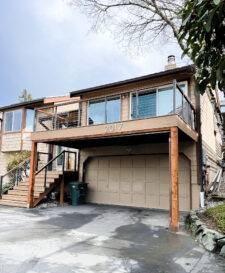
What Bellingham's Climate Does to a Deck Over Time
Three regional factors show up on almost every deck we inspect or rebuild in this part of Whatcom County:
Driving Rain and Standing Moisture
Bellingham gets a lot of its annual rainfall as long, low-intensity soaking events rather than short downpours. That means wood, fasteners, and framing stay wet for extended stretches rather than drying quickly between storms. Any spot on a deck where water can collect and sit — a poorly sloped surface, a ledger board without proper flashing, joists with no airflow underneath — becomes the spot where rot starts first.
Salt Air
Sunnyland sits close enough to Bellingham Bay that salt-laden air is a real factor, especially on exposed or elevated decks. Salt air accelerates corrosion in fasteners, hardware, and any metal connectors that aren't rated for it. A deck built with standard interior-grade screws or generic joist hangers will show rust and weakened connections years before one built with the correct marine-grade or coated hardware.
A Long Moss Season
Shaded lots, filtered sunlight under tree canopy, and months of damp conditions add up to a moss season that, in practice, runs most of the year in the shadier parts of Sunnyland. Moss holds moisture directly against decking boards, and on wood surfaces it also creates a slip hazard that gets worse as it spreads. Decking material, board spacing, and surface finish all affect how much moss takes hold and how hard it is to keep off.
Choosing the Right Decking Material for This Neighborhood
There's no single "best" decking material — there's a best material for a given yard, budget, and how much upkeep the homeowner actually wants to do. Here's how the common options perform under Sunnyland's specific conditions:
| Material | Moisture & Moss Resistance | Upkeep | Typical Lifespan Here |
|---|---|---|---|
| Pressure-treated wood | Fair — needs consistent sealing to keep water out | Annual cleaning and re-sealing recommended | 15–20 years with upkeep |
| Cedar | Good natural rot resistance, but surface still holds moss in shade | Periodic cleaning, oiling to maintain color and protection | 15–25 years with upkeep |
| Composite decking | Very good — non-porous, doesn't absorb water into the board | Occasional washing; no sealing or staining | 25–30+ years, manufacturer-warrantied |
| PVC/capped polymer | Excellent — fully sealed surface resists moisture and staining | Lowest — soap and water as needed | 25–30+ years, manufacturer-warrantied |
Composite and capped polymer boards cost more up front, but in a shaded, damp yard they hold up with far less homeowner labor than wood. Cedar and pressure-treated wood are still good choices for homeowners who like the natural look and are willing to stay on top of cleaning and sealing on a real schedule — the material itself isn't the deciding factor, honest maintenance habits are.
Why We're Selective About Fastener and Hardware Grade
Regardless of decking material, the hardware underneath matters as much as the boards on top. We use fasteners and structural connectors rated for coastal, high-moisture exposure rather than standard interior-grade hardware — it costs a bit more, but it's the difference between connections that stay tight for decades and ones that start failing quietly under the deck surface where nobody sees them until there's a problem.
What a Correctly Built Deck Involves
A deck that's going to hold up in Whatcom County's climate needs to get several structural details right, not just look good from the top. The parts that matter most are almost entirely invisible once the project is finished:
- Footings sized and set below frost depth, on stable soil, so the structure doesn't shift as the ground freezes and thaws through the winter
- Proper ledger board flashing where the deck attaches to the house — this is the single most common source of hidden rot on Pacific Northwest decks when it's skipped or done poorly
- Joist spacing and blocking appropriate to the decking material's span rating, so boards don't flex, bounce, or sag over time
- Airflow underneath the deck so framing can dry out between rain events instead of staying damp against the ground
- Correct surface slope — a deck should shed water away from the house, not let it pool anywhere on the walking surface
- Corrosion-resistant fasteners and connectors rated for the moisture and salt exposure typical of this area
- Code-compliant railing and stair details, sized and fastened to hold up under real use, not just pass a quick glance
Skipping any one of these doesn't usually show up right away. It shows up two, five, or ten years later as soft framing, a wobbly railing post, or a deck that needs to be substantially rebuilt well before it should.
How We Approach a Deck Project in Sunnyland
1. On-Site Assessment
We walk the lot, look at sun and shade exposure, drainage, and how close the build site is to the house's water and grade lines. For a rebuild, we also assess the existing structure to see what's salvageable and what isn't — sometimes footings and framing are fine and only the decking and railing need replacing.
2. Design and Material Discussion
We talk through decking material, layout, and railing style against the homeowner's budget and how much maintenance they actually want to take on going forward. This is where the trade-offs in the table above get applied to the specific yard, not treated as a generic recommendation.
3. Permitting
Most deck projects in the City of Bellingham require a building permit, particularly for elevated structures or anything attached to the house. We handle this as part of the project so the work is inspected and compliant, not something the homeowner has to sort out separately.
4. Construction
Footings, framing, flashing, and decking go in with the moisture-management details above built in from the start — not added as an afterthought. We sequence the work so framing isn't left exposed to prolonged rain any longer than necessary.
5. Final Walkthrough
We go over the finished deck with the homeowner, including what maintenance the chosen material actually needs and on what schedule, so there are no surprises a year in.
Keeping a Sunnyland Deck in Good Shape Year-Round
However well a deck is built, upkeep still matters — especially with the moss and moisture load this neighborhood sees. A simple seasonal routine goes a long way:
- Sweep leaves and debris off the surface regularly through fall — trapped organic matter holds moisture against boards and feeds moss growth
- Rinse or gently pressure-wash the surface each spring to clear moss and grime before it gets established for the season
- Check railings and stair connections once a year for looseness — hardware working loose is often the first sign worth catching early
- Reseal or restain wood decking on the schedule appropriate to the product, not just when it visibly looks dry
- Keep an eye on the area where the deck meets the house — this is the most common spot for hidden moisture problems to start
- Trim back overhanging branches where practical to reduce shade and debris, which cuts down on moss without requiring more chemical treatment
Why Hiring a Crew That Already Works This Area Matters
Deck building isn't the same job in every climate, and it isn't even quite the same job across every neighborhood in Bellingham. A crew that regularly builds and repairs decks in Sunnyland already knows how shaded lots here hold moisture, what the City of Bellingham's permitting process actually requires, and which material and hardware choices hold up against salt air off the bay rather than just looking fine on install day. That local pattern-recognition is worth more than it sounds like — it's the difference between a deck that's designed for this specific climate and one that's built to a generic spec and left to find out the hard way what Whatcom County winters do to it.
What Affects the Cost of a Deck Project
Deck pricing varies a lot based on size, material, and site conditions, and we're not going to put a number on this page that doesn't apply to your specific project. In general, the biggest cost factors are:
| Factor | Why It Affects Cost |
|---|---|
| Decking material | Composite and PVC cost more per square foot than wood, but need far less long-term maintenance spend |
| Deck height and footing depth | Elevated decks and deeper frost-depth footings require more structural work |
| Site access and slope | Tight, sloped, or heavily landscaped lots take longer to build on than flat, open ones |
| Railing style and stairs | Custom railing and multi-level stair layouts add material and labor beyond a basic single-level deck |
| New build vs. rebuild | Rebuilds sometimes reuse sound footings and framing, which can reduce cost — but only if those elements pass inspection |
We give straight, itemized estimates based on what your specific project actually needs — not a one-size-fits-all number pulled from a national average.
Ready to Talk About Your Deck?
If you're planning a new deck or looking at a rebuild in Sunnyland, we're happy to come take a look, walk you through what your specific lot and layout call for, and put together a straightforward, no-pressure estimate. Use the form below to get started.