 Bellingham Siding
 Siding Replacement for Sunnyland Homes
Sunnyland is one of Bellingham's older, more established neighborhoods, and that shows in its housing stock. A lot of homes here were sided decades ago with materials that were standard for their time but weren't built for what Whatcom County weather actually delivers year after year: salt-tinged air off the bay, long stretches of driving rain, and a moss season that can run from fall through spring. When that original siding finally gives out, replacing it correctly is about more than curb appeal. It's about closing the gap between what the old siding could handle and what the house actually needs going forward.
This page focuses on one job, done right, in one place: full siding replacement for houses in Sunnyland. Not a repair, not a patch, not a generic "siding services" pitch. If you're looking at siding that's curling, staining, or soft to the touch, here's what a correct replacement looks like and why it matters where you live.
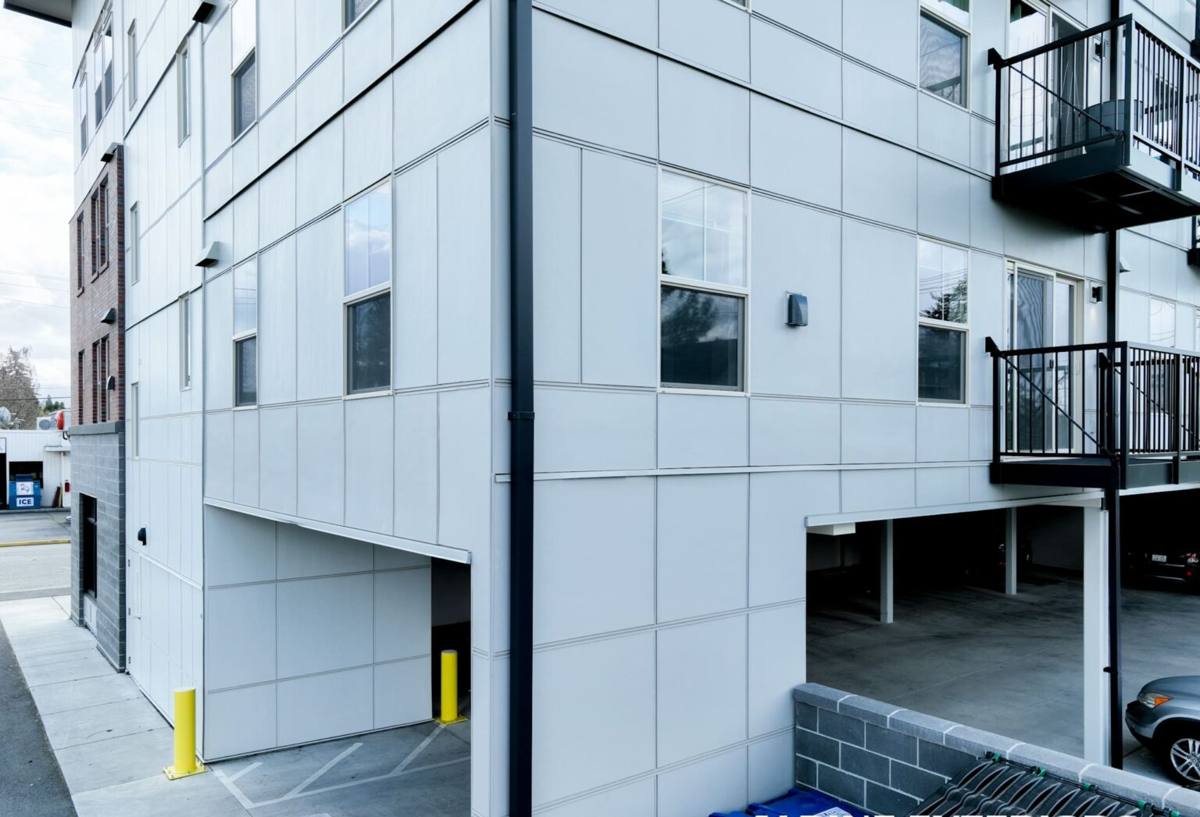
Why Sunnyland Siding Wears Out the Way It Does
Salt Air and Moisture Cycling
Bellingham sits on Bellingham Bay, and homes throughout the city — Sunnyland included — spend their entire lives in a marine climate. Salt-laden air accelerates corrosion on fasteners and metal trim, and it works against paint films and caulking faster than an inland climate would. Combine that with the constant wet-dry cycling of a maritime winter and you get siding materials expanding, contracting, and absorbing moisture in ways manufacturers in drier states never had to design around.
Driving Rain
Whatcom County doesn't just get a lot of rain — it gets a lot of wind-driven rain, which behaves differently than a straight vertical downpour. Driving rain gets pushed sideways into laps, seams, and butt joints that would stay dry in calmer weather. Any weakness in the original installation — a missed flashing detail, a caulked joint instead of a lapped one, house wrap that wasn't shingled correctly — becomes the point where water finds its way behind the cladding.
Moss and Shade
Many Sunnyland lots have mature tree cover, which is part of the neighborhood's character but also means siding on shaded walls and lower sections stays damp longer after every rain. Moss and algae take hold on surfaces that don't get enough sun or airflow to dry out, and on porous or damaged siding that moisture doesn't stay on the surface — it works its way in.
None of this is unique to any one house. It's the baseline environment every exterior wall in this neighborhood is fighting, and it's exactly why the material and the installation details matter more here than they would somewhere drier.
What a Correct Siding Replacement Actually Involves
Siding replacement done right is a system, not a surface swap. Skipping any layer of that system is how a ten-year-old siding job ends up looking like a thirty-year-old one.
Full Tear-Off and Wall Inspection
We remove the old siding completely rather than siding over it. That's the only way to actually see the sheathing underneath — soft spots, old water staining, or rot that's been hiding behind the old cladding for years get caught and fixed before anything new goes up.
Water-Resistive Barrier
A new weather-resistive barrier goes on correctly shingled — meaning each course overlaps the one below it, so water runs down and off rather than finding a lap edge to get behind. Every penetration (outlets, vents, hose bibs) gets properly flashed and sealed at this stage, before siding ever goes on.
Flashing at Every Vulnerable Point
Windows, doors, and roof-to-wall intersections are where most siding failures start. Correct step flashing, head flashing, and kick-out flashing at roof lines direct water away from the wall assembly instead of letting it pool or run behind the cladding.
Correct Fastening and Clearances
Fiber cement has specific fastening patterns, nail spacing, and minimum clearances from grade, roofing, and decks that are engineered into the manufacturer's install requirements. These aren't suggestions — they're what the warranty is actually contingent on.
Finish Work
Trim, caulking at the right joints (and no caulking where a lap should do the work instead), and touch-up of factory-finished panels where they were field-cut. This is the difference between a job that looks clean at handoff and one that still looks clean five years later.
Our Process for a Sunnyland Project
- On-site assessment: We walk the exterior, check for moisture damage, note shaded or high-exposure sections, and look at what's actually causing the current siding to fail.
- Written estimate: A clear scope and price — what's included, what product line and color, and a realistic timeline.
- Tear-off and sheathing check: Old siding comes off, sheathing gets inspected, and any damaged wood is repaired or replaced before we move forward.
- Weather barrier and flashing: House wrap, flashing at windows, doors, and roof lines, all installed to manufacturer spec.
- Siding installation: Panels or lap siding installed with correct fastening, clearances, and joint treatment.
- Final walkthrough: We go over the finished work with you before calling the job done.
James Hardie: The Only Siding We Install
We install James Hardie fiber cement siding exclusively. That's a deliberate standard, not a default, and it's worth explaining why.
Built for This Climate
James Hardie makes a specific product line — HZ5 — engineered for the freeze-thaw and moisture conditions of regions like the Pacific Northwest. It's not a one-size-fits-all product; the formulation accounts for the wet, temperate conditions Whatcom County sees most of the year.
Non-Combustible
Fiber cement doesn't burn, which matters more each year as wildfire smoke and dry-season risk become a bigger part of life in Washington, even on the wet side of the state.
ColorPlus Factory Finish
Hardie's ColorPlus finish is baked on at the factory under controlled conditions, with better fade and moisture resistance than field-applied paint. It also comes with a longer finish warranty than most homeowners get from a standard repaint.
Resists What This Climate Throws at It
Fiber cement doesn't rot, doesn't feed pests, and holds up to moss and algae exposure far better than wood-based or engineered-wood products. In a neighborhood with real moss pressure on shaded walls, that's not a minor feature — it's the whole point.
A Warranty That Transfers
Hardie backs its products with a strong, transferable warranty. If you sell the house, that warranty coverage moves with it — which matters to buyers and appraisers alike.
We don't install vinyl, LP SmartSide, Cemplank, Allura, or primed cedar or spruce siding. Each of those products has legitimate uses, but none of them hold up in this specific climate — sustained damp, salt air, moss pressure — the way Hardie's engineered fiber cement does. We'd rather turn down work than install something we don't believe will still look right on your house in fifteen years.
Comparing Siding Options in a Wet Marine Climate
| Material | Moisture Behavior | Moss/Algae Resistance | Fire Rating | Typical Warranty |
|---|---|---|---|---|
| James Hardie Fiber Cement (HZ5) | Dimensionally stable, doesn't rot or swell | High | Non-combustible | Long, transferable |
| Vinyl | Warps/cracks with temperature swings; water can pool behind it | Moderate | Combustible, can melt/deform | Prorated, non-transferable in most cases |
| LP SmartSide (Engineered Wood) | Wood-based; edges vulnerable to swelling if cut edges aren't sealed | Lower | Combustible | Shorter, often prorated |
| Cedar (Untreated/Primed) | Absorbs moisture, needs ongoing maintenance | Low without regular treatment | Combustible | None (material warranty), maintenance-dependent |
Cost Factors for a Sunnyland Siding Replacement
Every house is different, so we don't publish flat pricing — but the factors that actually move the number are consistent from project to project:
| Factor | Why It Matters |
|---|---|
| Home size and wall complexity | More corners, gables, and dormers mean more cutting, flashing, and labor time |
| Sheathing condition | Rot or moisture damage found during tear-off adds repair scope before new siding can go on |
| Siding profile chosen | Lap siding, shingle-style panels, and board-and-batten all price differently in material and labor |
| Trim and finish detail | Corner boards, window trim, and accent details add time but also durability and resale appeal |
| Access and site conditions | Mature trees, tight lots, and multi-story walls affect staging and equipment needs |
Signs a Sunnyland Home Needs Siding Replacement Now
Some siding problems are cosmetic. Others mean water is already past the surface. If you're seeing more than one of these, it's worth getting a professional look before it turns into a sheathing or framing repair:
- Siding that's soft, spongy, or crumbles under light pressure
- Persistent dark streaking, moss, or algae that comes back within weeks of cleaning
- Visible warping, cupping, or gaps opening up at seams and corners
- Paint that won't hold — blistering, peeling, or flaking within a couple of years of repainting
- Interior signs like peeling paint, musty smell, or soft drywall near exterior walls
- Visible rot or staining around window and door trim
- Siding that's original to a home built more than 25-30 years ago and has never been replaced
Why a Local Crew Matters
A crew that already works in Sunnyland and the surrounding Bellingham neighborhoods knows what the housing stock here tends to look like under the surface — the kinds of siding that were commonly used decades ago, the moisture patterns on shaded, tree-covered lots, and how Whatcom County's permitting and inspection process actually works. That's not something you get from a crew that's driving in from out of the area for a one-off job. It also means someone is nearby if a warranty question or a follow-up item comes up after the project wraps — not a call center, an actual local crew that installed the siding and stands behind it.
If your Sunnyland home's siding is showing its age, we'll come take a look, tell you honestly what we see, and put together a straightforward estimate — no pressure, no sales script. Reach out through the form below to get started.