 Bellingham Siding
 Windows Built for the Way Sunnyland Weather Actually Behaves
Sunnyland sits close enough to Bellingham Bay that salt-laden air is part of daily life, and like the rest of Whatcom County, the neighborhood gets long stretches of driving rain pushed in off the water. Add the region's extended damp season — the kind of gray, low-sun stretch that keeps moss and mildew going for months — and you have conditions that are hard on window frames, seals, and the wall assembly around every opening. Windows here don't just have to look good. They have to manage water, resist corrosion on hardware, and keep performing through a wet season that runs far longer than it does in drier parts of the country.
A window that's a great fit in Arizona or even inland Washington isn't automatically a great fit in Sunnyland. Frame material, drainage detailing, and the flashing behind the trim all matter more here than they would in a dry climate, because any mistake in the installation shows up as a leak, a rot pocket, or a fogged pane within a few wet seasons instead of a few decades.
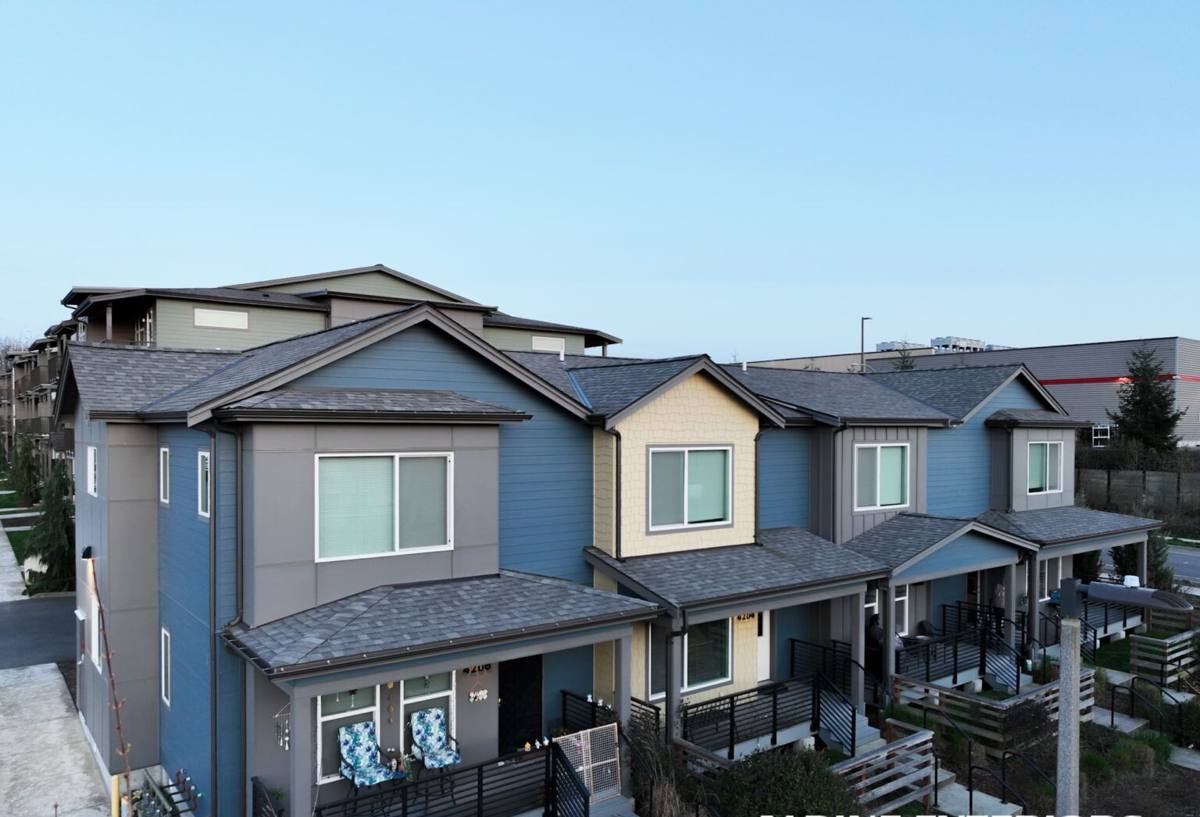
Signs a Sunnyland Home Needs Window Attention
Homes in this neighborhood span a range of ages and styles, from older single-pane originals to more recent replacements that were installed without much attention to flashing. A few signs we see regularly on service calls:
- Fogging or a milky haze between the panes — a sign the seal on a double-pane unit has failed and the gas fill or air gap is compromised
- Soft or discolored trim and siding directly around a window, which usually points to water getting behind the frame rather than a problem with the window itself
- Windows that are hard to open, don't latch fully, or let in a draft you can feel with your hand
- Visible moss or dark streaking on the sill or the wall just below a window, a common sign of poor drainage in this climate
- Noticeably higher heating bills in a home with older aluminum-frame or single-pane windows
Not every one of these means a full replacement. Sometimes it's a resealing or flashing repair. Part of an honest estimate is telling you which one you're actually dealing with.
What a Correct Window Installation Actually Involves
Most window failures we're called to fix in this climate weren't caused by a bad window — they were caused by a rushed or incomplete installation. The window itself is usually the easy part. The details around it are where the job succeeds or fails over time.
Removal and Opening Prep
Once the old window is out, the rough opening gets inspected for rot, soft framing, or existing water damage before anything new goes in. Installing a new window over a compromised opening just hides the problem for a while.
Flashing and Water Management
This is the step that matters most in a wet, salt-exposed climate. Proper flashing at the sill, jambs, and head directs any water that gets past the exterior cladding back out and away from the framing, rather than letting it pool at the sill or track down into the wall cavity. Sill pans and correctly lapped flashing tape are not optional extras here — they're the difference between a window that lasts and one that causes hidden rot behind the wall.
Air Sealing and Insulation
The gap between the window frame and the rough opening gets sealed and insulated correctly — not overpacked with expanding foam, which can bow the frame, and not left with gaps that let in drafts and moisture-laden air.
Setting, Shimming, and Fastening
The window has to be plumb, level, and square before it's fastened, or it won't operate correctly and won't seal evenly against weather. A window that's slightly racked will bind, leak, or wear its hardware unevenly.
Exterior Trim and Sealant
The final exterior seal — trim, caulking, and cladding tie-in — has to be compatible with the siding around it and done with a sealant rated for the kind of sustained wet exposure this area gets, not a generic caulk that will crack and shrink within a couple of seasons.
Choosing Window Materials for a Marine Climate
There's no single "best" window material — it depends on the home, the budget, and how much maintenance you want to take on. Here's how the common options stack up for a Sunnyland home specifically:
| Material | How It Handles This Climate | Maintenance | General Cost Position |
|---|---|---|---|
| Vinyl | Good moisture and salt-air resistance, no painting needed | Low — occasional cleaning | Most affordable |
| Fiberglass | Excellent stability in wet, temperature-swinging conditions; resists warping | Low to moderate | Mid to upper range |
| Wood | Classic look but needs consistent upkeep to resist rot in a wet climate | High — periodic painting/sealing | Mid to upper range |
| Wood-Clad (wood interior, metal or vinyl exterior) | Combines interior wood look with better exterior weather resistance | Moderate | Upper range |
| Aluminum | Prone to condensation and corrosion near salt air unless thermally broken | Moderate | Varies widely |
For most Sunnyland homes, we steer clients toward vinyl or fiberglass for the exterior-facing performance, then let interior finish preferences (including wood-clad options) guide the rest. Actual installed pricing depends heavily on window size, glass package, and how much trim or siding repair the opening needs — a proper walkthrough is the only way to give you real numbers instead of a generic range.
Energy Performance and Local Code
Washington's energy code sets minimum performance standards for replacement windows, and Whatcom County permitting follows that code for most residential window projects. In practical terms, that means attention to U-factor (how well the window resists heat loss) and, on south- and west-facing walls, solar heat gain. Low-E glass coatings and argon or krypton gas fills between panes are standard ways manufacturers hit these targets today, and they make a real difference in a climate where homes rely on steady heating through a long, damp winter.
Bedroom windows also have to meet egress requirements — minimum opening size and a maximum sill height — if they're serving as a required emergency exit. This comes up often in older Sunnyland homes where a bedroom window was never sized to current code; replacement is a good opportunity to correct it.
Our Installation Process
- On-site assessment — we look at each window individually, not just the house as a whole, since age and condition often vary window to window
- Honest recommendation — repair, reseal, or full replacement, based on what we actually find, not a default upsell
- Written estimate — clear line items for materials, labor, and any trim or siding repair the opening needs
- Opening prep and flashing — the step most other jobs shortcut, done fully every time
- Installation and air sealing — set, shimmed, sealed, and fastened to manufacturer spec
- Exterior finish and cleanup — trim, caulking, and site cleanup so the job looks finished, not just functional
- Walkthrough — we show you the operation of each window and answer questions before we consider the job done
Mistakes We See From Rushed Installations
Because Sunnyland's wet, salt-influenced climate is unforgiving of shortcuts, the same handful of mistakes keep showing up when we're called to fix someone else's work:
- Skipping or improperly lapping flashing tape, which lets water track directly into the wall cavity
- Relying on caulk alone to seal a window instead of proper flashing and drainage
- Foaming the entire gap solid, which can bow the frame and cause the window to bind or leak
- Reusing old, deteriorated trim instead of replacing wood that's already showing rot
- Installing a window slightly out of square, which shortens the life of the weatherstripping and hardware
None of these are visible from inside the house when the job is done. They show up eighteen months to a few years later, usually as a soft spot in the trim or a musty smell near the window. Catching them at installation is far cheaper than fixing the water damage afterward.
Why a Local Crew Matters for This Job
Window installation done right depends on understanding the specific conditions of the site — how exposed the wall is to wind-driven rain, how much salt air it sees, how the existing siding and trim are put together. A crew that already works in and around Sunnyland and greater Bellingham has seen how homes here age, which flashing details actually hold up through a wet Whatcom County winter, and which shortcuts cause callbacks. That's not something a crew based somewhere with a different climate picks up quickly, and it's not something you can fully verify from a sales pitch — it comes from doing the work locally, on homes like yours, season after season.
Keeping New Windows Performing Long-Term
A correctly installed window still benefits from basic upkeep, especially in a climate this wet:
- Clean weep holes and drainage tracks each fall so they aren't blocked by debris going into the rainy season
- Check exterior caulking annually and touch up any cracking or shrinkage before it lets water in
- Wipe down hardware and tracks periodically — salt air accelerates corrosion on unprotected metal parts
- Watch for moss buildup on sills and nearby trim, and clear it before it holds moisture against the wood or frame
- Report condensation between panes early — it's a warranty issue, not something that resolves on its own
If you're weighing whether your Sunnyland home needs a window repair, a few replacements, or a full house update, we're happy to take a look and give you a straight answer along with a free, no-pressure estimate — just fill out the form below.