 Bellingham Siding
 Why Sunnyland Homes Put Extra Demands on a Window
Sunnyland sits close enough to Bellingham Bay that salt-laden air is a constant, low-grade stress on anything metal or painted on the outside of a house. Add Whatcom County's long wet season, wind-driven rain off the Salish Sea, and the moss and mildew that thrive under the tree canopy through much of the year, and a window has to do more here than it would in a drier inland climate. It has to seal out moisture from multiple directions, resist corrosion on hardware and fasteners, and keep working through freeze-thaw swings without the frame warping or the seals failing early.
A lot of the housing stock in this part of Bellingham is a mix of older post-war construction and newer infill, which means we run into everything from original single-pane wood sash to aluminum-framed replacements installed decades ago that were never a great match for this climate to begin with. Whatever the starting point, the goal of an energy-efficient window here isn't just a lower heating bill — it's keeping bulk water and humid air out of a wall assembly that's already fighting moss and moisture nine months of the year.
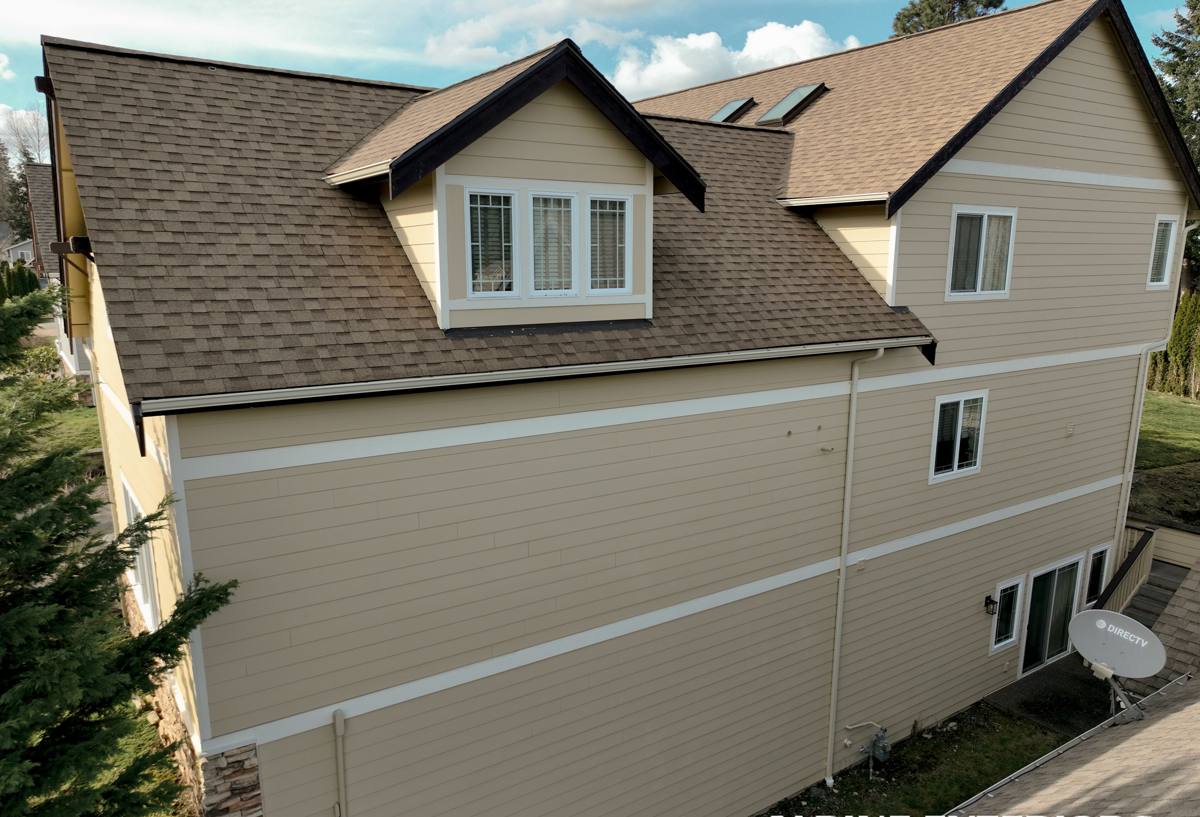
What "Energy-Efficient" Actually Means for This Climate
Energy efficiency in a window comes down to three things working together: the frame material, the glass package, and the quality of the installation. Get one wrong and the other two don't matter much.
Frame Material Trade-Offs
Vinyl, fiberglass, and wood-clad frames all show up in Bellingham homes, and each has a real trade-off worth understanding rather than a "best" answer:
| Frame Type | Strength in This Climate | Trade-Off |
|---|---|---|
| Vinyl | Won't rot or corrode in salt air; good value | Can expand/contract more with temperature swings; color is baked in, not repaintable |
| Fiberglass | Very stable dimensionally, holds paint well, low maintenance | Higher upfront cost than vinyl |
| Wood-clad | Traditional look, good insulator | Cladding seams and end cuts need careful sealing or moisture gets into the wood core |
Glass Packages
Single-pane glass has no place in an energy-efficient install anywhere in Whatcom County, but the difference between a standard double-pane unit and a well-specified one is significant. Look for a low-E coating tuned for our climate (it should cut summer heat gain a little and retain winter heat a lot), an argon or krypton gas fill between the panes, and a warm-edge spacer — the metal or composite strip separating the panes at the edge, which affects both efficiency and how well the seal holds up over years of temperature cycling. Triple-pane glass is worth pricing out on north-facing walls or rooms that are consistently cold, though it adds weight and cost that isn't always justified on every elevation of a house.
Signs a Sunnyland Home's Windows Are Underperforming
Homeowners in this neighborhood usually notice one or more of these before calling us:
- Visible condensation or fogging between the panes — the seal has failed and the gas fill is gone
- Cold drafts near the frame even when the window is fully latched
- Soft or discolored wood trim around the window, often a sign that driving rain has been getting past the flashing
- Moss or dark staining building up on the exterior trim faster than on the rest of the siding
- Difficulty opening, closing, or latching windows — frames have swollen, warped, or the hardware has corroded
- A noticeable difference in room temperature near the window compared to the rest of the house
Any one of these is worth a look. Several together usually mean the window and the wall assembly around it have been dealing with moisture intrusion for a while, not just an aging unit.
What a Correct Installation Actually Involves
The window unit itself gets most of the attention, but in this climate the installation details around it matter just as much for long-term performance.
Flashing and Moisture Management Come First
Given how much wind-driven rain this area sees, the flashing sequence at the sill, jambs, and head of the opening is not optional detail work — it's the difference between a window that stays dry for decades and one that quietly rots the framing behind it. That means a sloped sill pan to shed any water that gets past the exterior seal, proper lapping of house wrap or building paper over the flashing (never under it), and back-dam details at the sill so water can't run backward into the wall cavity. We check the condition of the sheathing and framing at every opening as we go — if there's hidden rot from a prior install, it gets addressed before a new window ever goes in, not covered up.
Full-Frame Replacement vs. Insert Replacement
An insert (or "pocket") replacement fits a new window into the existing frame and is faster and less invasive, but it only makes sense when the existing frame and flashing are still sound. A full-frame replacement removes the old unit down to the rough opening, which costs more and takes longer but is the right call whenever there's evidence of water damage, rot, or a frame that was poorly flashed to begin with — which we see often enough in older Sunnyland homes that it's worth budgeting for as a possibility rather than a surprise.
Our Process, Start to Finish
- On-site assessment — we inspect each opening, check for existing moisture or rot damage, and measure for accurate ordering.
- Product selection — we walk through frame material, glass package, and grille or hardware options based on the home's style and your budget, not a one-size push toward whatever's easiest to install.
- Written estimate — clear scope, product specs, and timeline before any commitment.
- Removal and inspection — old units come out carefully, and we inspect the rough opening and sheathing before anything new goes in.
- Flashing and installation — sill pans, proper lapping, shimming, and air-sealing done to manufacturer spec, not shortcut.
- Interior and exterior finish work — trim, caulking, and touch-up so the job looks finished, not just functional.
- Final walkthrough — we test operation on every window and review care before we leave.
What Affects the Cost of a Window Project Here
There's no single price that applies across a neighborhood with this much variety in home age and window count, but these are the factors that move the number most:
| Factor | Why It Matters |
|---|---|
| Frame material chosen | Vinyl, fiberglass, and wood-clad have different material costs |
| Full-frame vs. insert install | Full-frame takes more labor and often uncovers repair work |
| Number and size of openings | Larger or custom-sized windows cost more per unit |
| Hidden rot or moisture damage | Sheathing or framing repair adds cost but prevents repeat failure |
| Glass package upgrades | Triple-pane or higher-performance low-E coatings add cost per unit |
| Access and site conditions | Second-story or hard-to-reach openings take more time and equipment |
We give homeowners a broad range up front and a firm number after the on-site assessment, so there are no surprises once work starts.
Why a Crew That Already Works This Neighborhood Matters
Sunnyland's mix of home ages means no two properties have quite the same starting point — a 1950s cottage with original wood sash needs a different approach than a home with 1990s aluminum replacements that were never properly flashed. A contractor who's done work throughout this part of Bellingham has already seen the common failure points in this specific building stock and this specific climate, and knows what to check for before it becomes a bigger repair. That local pattern recognition, combined with straightforward answers about trade-offs instead of a sales pitch, is what should set a contractor apart — not just the brand of window on the truck.
Keeping New Windows Performing for the Long Run
Energy-efficient windows still need basic upkeep, especially in a climate that throws salt air, rain, and moss at them year-round:
- Clean weep holes and tracks each season so water drains instead of pooling
- Rinse salt residue off exterior hardware and frames periodically, especially closer to the bay
- Inspect exterior caulking annually and re-seal any cracked or shrunk joints before winter rains set in
- Keep gutters and nearby vegetation clear so water and debris aren't draining directly onto window heads
- Operate locks and hardware through their full range occasionally to catch stiffness or corrosion early
- Watch for early condensation between panes — it's the first sign of a failing seal, not something to wait out
If your Sunnyland home has drafty, foggy, or hard-to-operate windows — or you're planning ahead for a remodel — we're happy to take a look and walk you through honest options for your home and budget. Fill out the form below for a free, no-pressure estimate.