 Bellingham Siding
 Why Sunnyland Roofs Wear Differently
Sunnyland sits close enough to Bellingham Bay that salt-laden air is a constant factor in how roofing materials age here, and it's combined with a rainy season that runs long even by Pacific Northwest standards. Add in the shade from mature trees common throughout the neighborhood's older streets, and you get a moss season that can stretch across most of the year rather than a few weeks in spring. None of this makes Sunnyland unusual for Whatcom County, but it does mean a roof installed without those specific conditions in mind will show problems years before it should.
A correct roof for this area isn't just about picking a shingle color. It's about ventilation that can keep up with sustained moisture, flashing detail that won't corrode prematurely in salt air, and an installation sequence that accounts for how much water this roof will actually see over its lifetime.
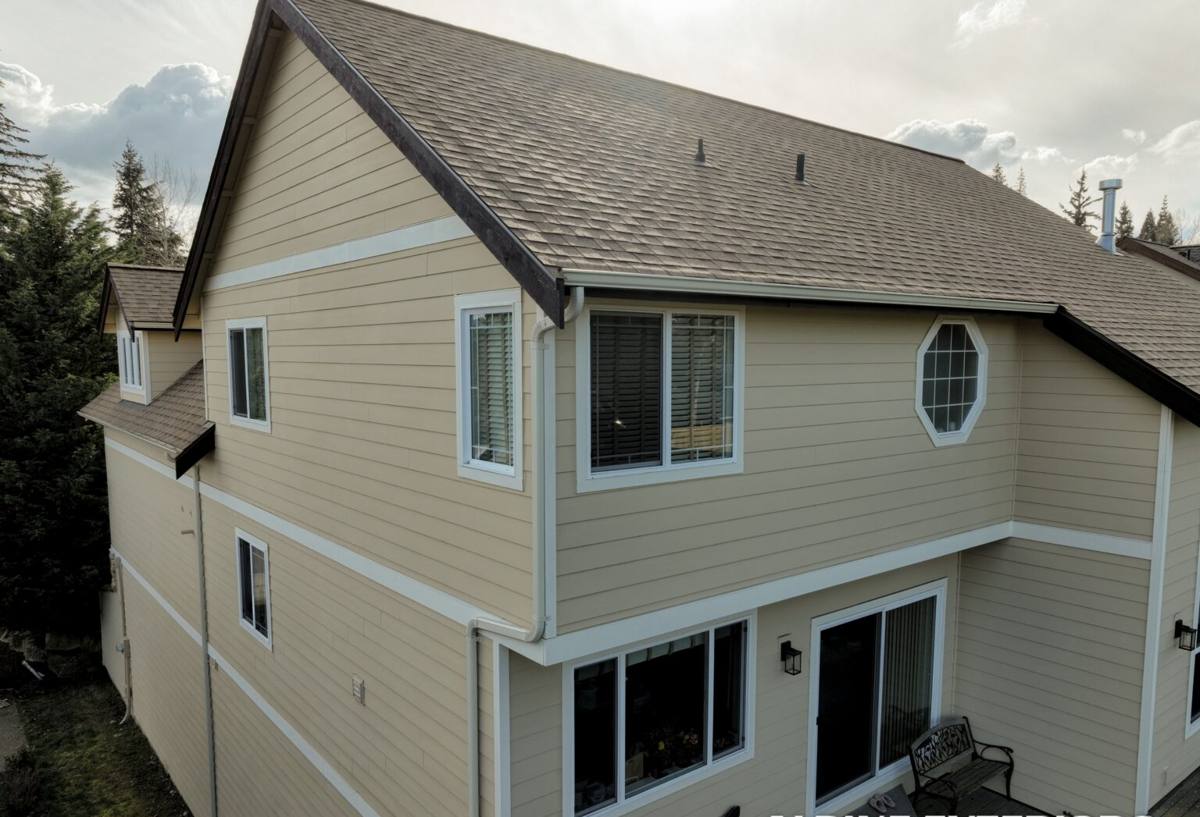
Signs a Sunnyland Home Needs a New Roof, Not Another Repair
Homeowners often ask us to look at a roof expecting a patch job, and sometimes that's the right call. But there's a point where repeated repairs stop making financial sense. Here's what typically tips the scale toward full replacement:
- The roof is at or past the manufacturer's expected service life for its material type
- Granule loss is heavy enough that you can see bare patches of asphalt on multiple shingles, not just one or two
- Moss has worked under the shingle tabs rather than just sitting on the surface
- There's soft decking, sagging ridgelines, or daylight visible through the attic sheathing
- You've had two or more separate leak repairs in the last three years in different spots
- Flashing around chimneys, vents, or valleys is rusted, cracked, or was never properly sealed to begin with
If only one or two of these apply and the roof is otherwise mid-life, a repair or partial re-roof may still make sense. We'll tell you honestly which category your roof falls into rather than defaulting to a full tear-off.
Choosing the Right Material for This Climate
There's no single "best" roofing material for every home, but some perform more predictably than others under Bellingham's combination of salt air, sustained rain, and heavy tree cover. The table below reflects how the common options actually behave here, not just their advertised specs.
| Material | Moisture & Moss Behavior | Typical Lifespan Here | Maintenance Reality |
|---|---|---|---|
| Architectural asphalt shingle | Good drainage profile; benefits from a moss-resistant algae-shield rating | 25-30 years | Occasional soft washing, gutter clearing |
| Standing seam metal | Sheds water and moss very well due to smooth, steep-profile surface | 40-50+ years | Low; check fastener seals over time |
| Cedar shake | Attractive but holds moisture longer, more moss-prone without diligent upkeep | 20-30 years with upkeep | Higher; needs regular treatment and cleaning |
| Synthetic composite shingle | Engineered to resist moisture absorption; performs similarly to metal in moss resistance | 30-50 years | Low to moderate |
We don't push one product line over another as a rule. What we do push is matching the material to the specific roof pitch, tree coverage, and budget of the home in front of us. A steep, sun-exposed roof and a low-slope, heavily shaded one in the same neighborhood can call for different answers.
A Note on Cedar Shake
Cedar has real curb appeal and a long history in this region, but we're upfront with clients about the trade-off: in a climate with this much sustained moisture, cedar needs more consistent maintenance to keep moss and rot at bay than asphalt or metal do. That's not a knock on the product — it's a maintenance commitment worth going in with eyes open about.
What a Correct New Roof Installation Actually Involves
A roof that looks finished from the ground can still be installed wrong underneath. Here's what we consider non-negotiable steps on every full replacement:
Tear-Off and Deck Inspection
We remove the old roofing down to the deck rather than layering over it. This is the only way to actually see the condition of the sheathing — soft spots, water staining, or rot that's been hidden under the old material for years. Any damaged decking gets replaced before anything new goes down.
Underlayment and Ice-and-Water Protection
Given how much sustained rain this region sees, we don't treat underlayment as an afterthought. Self-adhered ice-and-water shield goes in the vulnerable zones — eaves, valleys, and around penetrations — with synthetic underlayment across the rest of the field for a water-resistant layer beneath the shingles themselves.
Flashing Detail
Flashing failures are one of the most common causes of leaks we find on older Sunnyland roofs, especially around chimneys, skylights, and wall-to-roof transitions. In salt-air conditions, the flashing metal itself matters — we use corrosion-resistant materials rather than the cheapest option, because replacing rusted flashing in five years costs more than doing it right the first time.
Ventilation
Poor attic ventilation traps moisture, which shortens the life of the roof from underneath — you won't see it happening until there's a problem. We check intake and exhaust balance as part of every installation and correct it when the existing setup is inadequate, which is common on homes built before current ventilation standards.
Our Installation Process
Homeowners deserve to know what's happening on their roof and when. Our process generally runs like this:
- On-site inspection and honest assessment of whether replacement is actually needed
- Written estimate covering material options, scope, and timeline
- Permitting handled on our end where required
- Delivery and staging of materials, with property protection for landscaping and driveways
- Tear-off, deck inspection and repair, underlayment, flashing, and material installation
- Site cleanup, including magnetic sweep for stray fasteners
- Final walkthrough so you can see the finished work before we consider the job done
Most single-family roof replacements in this size range complete in one to three days depending on weather, roof complexity, and material choice. We build in realistic weather contingency rather than promising a timeline that Bellingham's rain patterns won't actually allow.
Moss Prevention Doesn't End at Installation
A new roof installed correctly will resist moss far better than an old one, but no roof in this climate is moss-proof forever. We install with moss in mind — proper drainage, algae-resistant shingle options where appropriate, and clean flashing lines that don't give moss anywhere to establish. After that, simple habits extend the roof's life: keeping overhanging branches trimmed back, clearing gutters before the fall rains hit, and having the roof looked at every couple of years rather than only when there's a visible problem.
Permits, Warranty, and What to Expect in Writing
Roof replacement in the City of Bellingham and unincorporated Whatcom County typically requires a permit, and we handle that process as part of the job rather than leaving it to the homeowner. Before work starts, you should have a written scope of work, a material and warranty breakdown showing both the manufacturer's product warranty and our workmanship warranty, and a clear payment schedule. If a contractor won't put these in writing before starting, that's worth treating as a red flag regardless of how good the verbal pitch sounds.
Why Local Experience in Sunnyland Matters
A roofing crew that works regularly in this specific part of Bellingham has already seen how tree cover, prevailing wind off the bay, and neighborhood-specific drainage patterns affect roofs here. That's different from general Pacific Northwest experience — Sunnyland's mix of mature landscaping and proximity to the water creates conditions that call for judgment calls a crew only builds by working the area repeatedly. It shows up in small decisions: where extra ice-and-water shield gets placed, how ventilation gets balanced on a shaded roof versus a sun-exposed one, and which flashing details tend to fail first on homes of a certain age in this part of town.
Questions to Ask Before You Hire
- Are you licensed and insured to do roofing work in Washington State, and can you provide proof?
- Will you pull the required permit, or is that left to me?
- What's included in the written estimate — tear-off, deck repair, disposal, cleanup?
- What's the manufacturer's warranty versus your own workmanship warranty, and what voids each?
- How do you handle unexpected deck damage found once tear-off starts?
- Can you walk me through your ventilation plan for this specific roof?
If your roof is showing its age or you're just not sure whether a repair will hold, we're glad to come take an honest look. A free, no-pressure estimate on your Sunnyland home is easy to schedule using the form below.