 Bellingham Siding
 Why Sunnyland's Climate Is Hard on Vertical Siding
Sunnyland sits close enough to Bellingham Bay that salt-laden air is a real factor on exterior materials, not just a coastal talking point. Add in the driving rain that comes off the water through fall and winter, and a siding style with a lot of vertical seams and exposed edges has to be detailed correctly or it will show problems within a few seasons. Whatcom County's long, damp moss season — roughly October through May most years — means anything that holds moisture against a wall or shades a surface from sun and wind will grow moss and algae faster here than it would on the drier east side of the state.
Board and batten is a beautiful style, but it's also one of the least forgiving siding profiles when it comes to installation quality. The narrow battens create dozens of extra seams compared to standard lap siding, and every one of those seams is a potential entry point for water if the assembly underneath isn't right. In a climate like Bellingham's, that's not a small detail — it's the whole job.
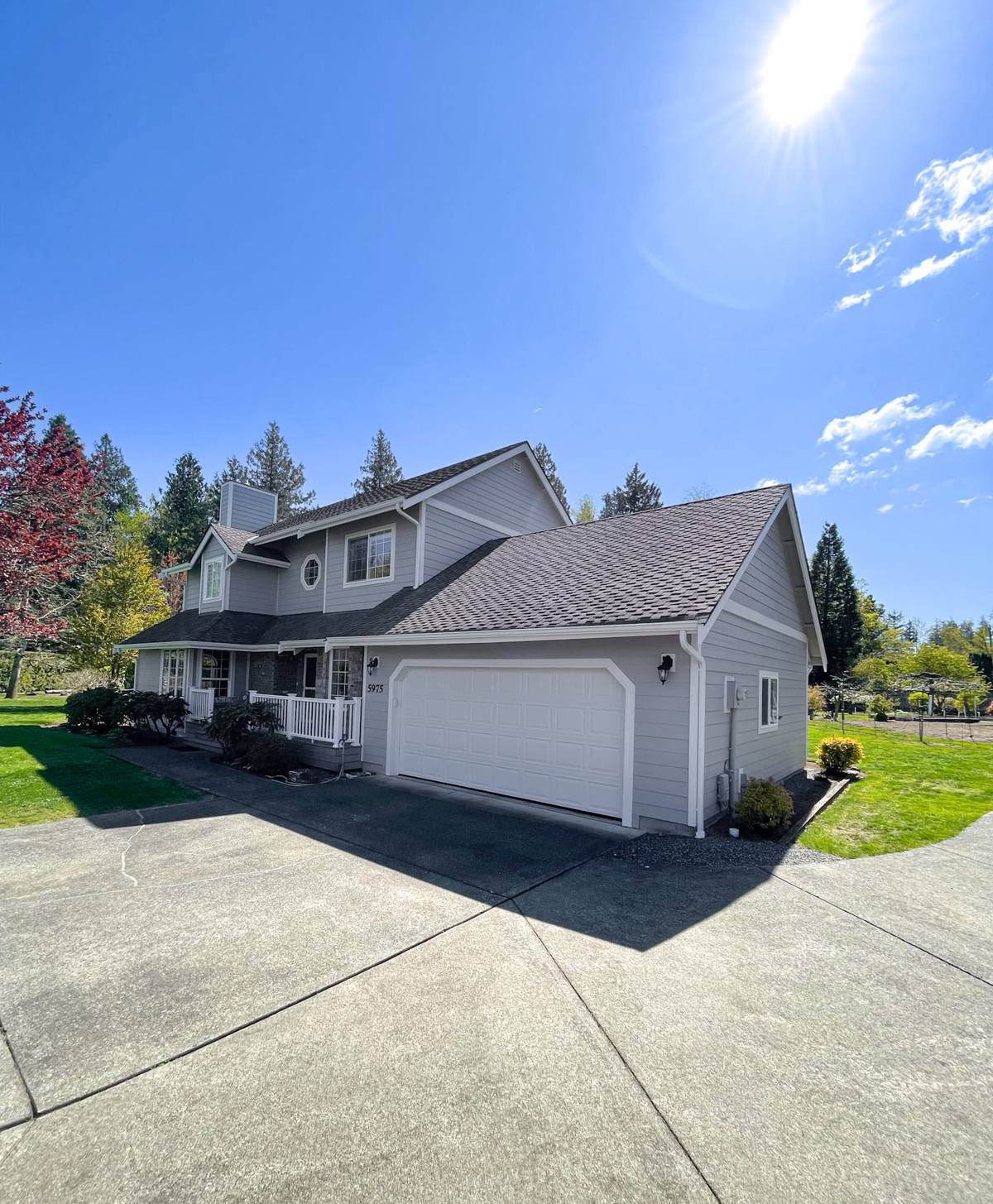
What Board & Batten Siding Is, and Why It Fits Sunnyland's Homes
Board and batten is a vertical siding pattern: wide flat panels installed side by side, with narrower strips — the battens — covering the seams between them. The result is a strong vertical line and a distinct shadow pattern that reads as farmhouse, craftsman, or modern depending on the trim and color choices around it. It's a good match for the mix of older bungalows, remodeled cottages, and newer infill homes you see through Sunnyland, and it pairs well as an accent on gables, entry features, or dormers even on homes that keep lap siding on the main walls.
The style's popularity has also made it a common upsell across several very different materials — fiber cement, engineered wood, primed spruce, and vinyl panel systems all get marketed as "board and batten." They are not equivalent products once you factor in a marine climate, and the material decision matters more here than it would in a drier region.
Where It Works Best on a Sunnyland Home
Board and batten holds up best when it isn't fighting standing water or heavy shade. Gable ends, upper stories, and features with reasonable roof overhangs are natural fits. Ground-level walls that sit close to grade, get minimal sun, or take direct weather off the water need extra attention to flashing and drainage — or, in some cases, a different material approach entirely — to avoid becoming the first place problems show up.
The Material Decision Behind Every Board & Batten Job
Because board and batten has so many seams and exposed edges, the substrate underneath the paint matters more here than on almost any other siding profile. Wood-based products swell and shrink with moisture; that movement stresses caulked joints and paint film exactly where board and batten depends on both to keep water out.
| Material | Moisture Behavior in a Marine Climate | Moss/Algae Resistance | Typical Maintenance |
|---|---|---|---|
| James Hardie fiber cement | Dimensionally stable; doesn't swell, cup, or rot from repeated wetting | Factory ColorPlus finish resists moss/algae growth better than uncoated or field-painted surfaces | Occasional rinse; repaint not required for the life of the finish warranty |
| Primed wood or spruce | Absorbs moisture at end grain and joints; prone to swelling and rot without diligent upkeep | Low — organic material, feeds moss and mildew readily | Repainting and caulk renewal every few years |
| Engineered wood (OSB-based) | Vulnerable to edge swelling if the factory seal is compromised during installation or cutting | Moderate, depends on coating | Periodic inspection of cut edges and seams |
| Vinyl board & batten panel | Doesn't absorb water, but panels expand/contract with temperature and can bow or gap over time | Low to moderate — smooth vinyl still hosts algae in damp, shaded areas | Cleaning to prevent buildup in seams and channels |
This is the core of why we standardized on James Hardie fiber cement and don't install LP SmartSide, Cemplank, Allura, primed spruce, or vinyl. Every one of those alternatives can be installed well and can look good on day one. The difference shows up five, ten, and twenty years in, when a marine climate has had that many wet seasons to work on every seam and joint. Fiber cement's stability under Bellingham's rain and humidity is the specific reason we build board and batten jobs out of it.
What a Correct Board & Batten Installation Actually Involves
Weather-Resistive Barrier and Drainage Plane
Every board and batten wall needs a continuous weather-resistive barrier behind it, and in a climate like Whatcom County's, a drainage gap (rainscreen) between that barrier and the siding is what lets any water that does get past the surface actually drain and dry instead of sitting against the wall sheathing. This is the single biggest factor in whether a board and batten installation lasts.
Batten Spacing and Fastening
Battens have to be fastened into framing or proper blocking, spaced to manufacturer specification, and fastened in a way that allows for the assembly's normal expansion and contraction without splitting the material or backing out the fasteners over time.
Flashing at Windows, Doors, and Penetrations
Every window, door, hose bib, and vent penetration through a board and batten wall needs proper flashing integrated with the weather barrier — installed in the correct shingle-lap order so water is always directed out and down, never into a seam.
Field Joints and Caulking
Where panels meet — at corners, at the bottom of the wall, and at any horizontal joint — the detailing has to shed water on its own, not just rely on caulk. Caulk is a backup, not the primary defense; a job that depends entirely on caulk staying intact for years is a job that will fail early in this climate.
Where We See Board & Batten Problems in Whatcom County Homes
Moss and Algae on Shaded Battens
North-facing walls and battens under tree cover hold moisture longer through Bellingham's moss season, and surfaces without a durable, factory-applied finish pick up growth faster and are harder to keep clean without damaging the paint.
Trapped Moisture Behind Non-Rainscreen Assemblies
Board and batten installed directly against the weather barrier with no drainage gap is the most common cause of hidden rot we run into on older vertical-siding homes in this area — the damage isn't visible until it's already extensive.
Paint and Caulk Failure on the Wrong Substrate
Field-painted wood and engineered wood siding depend entirely on maintaining an intact paint film. Once that film cracks at a seam — which it will, eventually, with wood movement — water gets behind the material and the clock starts on rot, regardless of how well the job was installed originally.
Why We Install Only James Hardie for This Application
James Hardie's fiber cement is engineered specifically for regional climate exposure through its HZ product lines, and the ColorPlus factory finish is baked on under controlled conditions rather than applied on-site — which matters on a profile with this many seams and edges to coat evenly. It's non-combustible, it doesn't expand and contract the way wood-based products do, and the finish is backed by a real transferable warranty rather than depending on how well a field paint job holds up over the years. For a siding style that lives or dies on how well its many joints are protected, that combination is why it's the only material we put on a board and batten wall.
Our Process for a Sunnyland Board & Batten Project
On-Site Assessment
We look at the existing wall assembly, sheathing condition, current drainage (or lack of it), and how much sun and wind exposure each elevation actually gets — Sunnyland's tree cover and lot orientation vary block to block, and that changes the plan.
Tear-Off vs. Overlay Decision
Board and batten over existing siding is sometimes an option, but only when the wall behind it is confirmed dry and sound. Where there's any doubt — especially on older homes without a rainscreen — we recommend tear-off so the weather barrier and drainage plane can be installed correctly rather than covered up.
Installation to Manufacturer Spec
Fastening, spacing, flashing, and joint details all follow James Hardie's published installation requirements, which is also what keeps the product warranty intact.
Final Inspection and Cleanup
We walk the job with the homeowner before we consider it finished, checking seams, corners, and flashing details up close, not just from the ground.
Maintenance in a Marine Climate
Board and batten in fiber cement is low-maintenance, not no-maintenance. A short annual routine keeps it looking right through Bellingham's wet seasons:
- Rinse walls gently once or twice a year, focusing on shaded and north-facing battens where moss gets a head start
- Keep gutters clear so overflow doesn't run down the wall and concentrate water at one section of siding
- Trim back vegetation and tree limbs that keep a wall section damp and shaded longer than the rest of the house
- Check caulked joints at trim and penetrations every couple of years and have any cracked sections redone
- Have any impact damage or fastener issues repaired promptly rather than left through a wet winter
Why a Crew That Already Works Sunnyland Matters
A siding crew that regularly works this part of Bellingham knows which walls in a neighborhood like Sunnyland take the worst of the weather off the bay, which lots hold shade and moisture longest into the season, and how Whatcom County's permitting and inspection process actually runs — not in theory, but from having gone through it recently. That local pattern recognition is what turns a board and batten installation from "looks right on day one" into "still looks right in year fifteen." It's also what lets us give a homeowner a straight answer about tear-off versus overlay, or which elevation of their house actually needs the closer attention, instead of a generic answer that would apply anywhere in the country.
If you're weighing board and batten siding for a home in Sunnyland, we're glad to come take a look and walk you through what your specific walls need. The estimate is free, there's no pressure, and you'll get a straight answer about what a correct job involves before you commit to anything.