 Bellingham Siding
 Why Metal Roofing Makes Sense in Sunnyland
Sunnyland sits close enough to Bellingham Bay that homes here deal with a specific mix of weather: salt-laden air rolling in off the water, long stretches of driving rain through the fall and winter, and shaded, damp yards that keep moss and moisture around longer than it should stick. Add in the mature tree canopy common on Sunnyland's older lots, and you've got a roofing environment that's harder on materials than most people realize until they're dealing with a leak or a moss-choked valley.
Metal roofing holds up well against that combination when it's specified and installed correctly. It sheds water fast, gives moss and algae less to grab onto than a textured shingle surface, and doesn't absorb moisture the way organic roofing materials can. That doesn't mean any metal roof will do the job — the coating, the fastening system, and the underlayment all matter, and Whatcom County's climate has a way of finding the weak point in a roof that was built for a drier region.
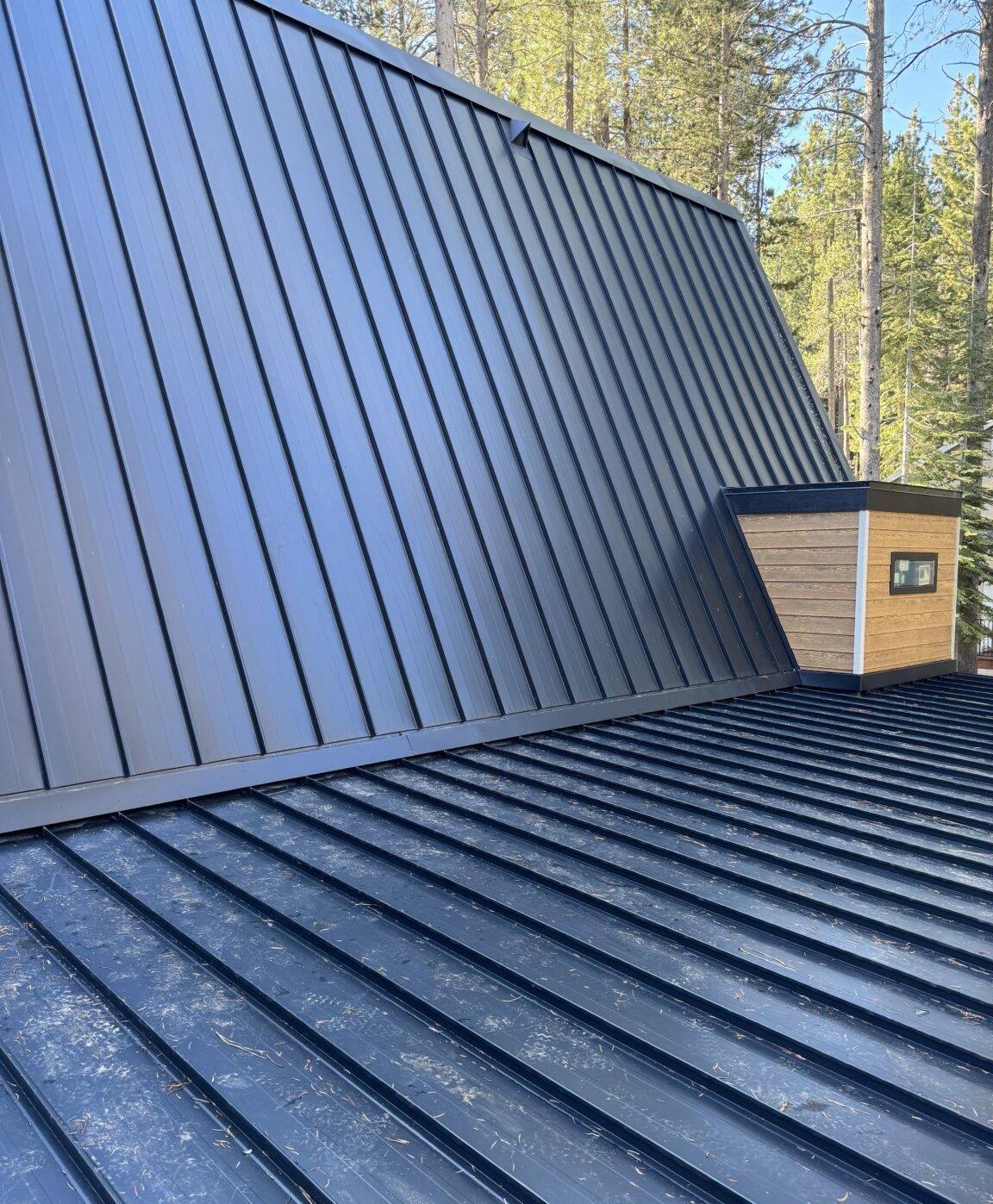
What Bellingham's Climate Actually Does to a Roof
Salt Air and Coastal Moisture
Proximity to the bay means airborne salt is a real factor for Sunnyland homes, even a mile or two inland. Salt-laden moisture accelerates corrosion on unprotected metal fasteners, exposed cut edges, and lower-grade coatings. It's a slow process, but over years it's the difference between a roof that still looks tight at twenty years and one that's showing rust streaks and failed seams at ten.
Driving Rain and Wind-Driven Water
Bellingham doesn't just get rain — it gets rain pushed sideways by wind off the water, which finds its way under laps, around penetrations, and into any seam that wasn't detailed correctly. A roof that performs fine in a straight-down rain event can still leak in a wind-driven storm if the flashing details and panel overlaps weren't built for it.
Moss, Algae, and Shade
Sunnyland's tree cover is part of the neighborhood's character, but it also means shaded roof sections stay damp longer after every rain. Moss spores need moisture and organic debris to take hold — needles, leaf litter, and pollen build up in valleys and behind chimneys and give moss something to root into. On shingle roofs that means periodic treatment and cleaning. Metal roofing doesn't eliminate the debris buildup, but it gives moss far less to grip, which cuts down on the growth that traps moisture against the roof deck.
Metal Roofing Options We Install
Not every metal roofing product is a good match for a wet, shaded, coastal-adjacent lot. Here's how the common options compare for a Sunnyland home:
| Panel Type | Best For | Coastal/Moisture Performance | Trade-offs |
|---|---|---|---|
| Standing seam (concealed fastener) | Most Sunnyland homes, especially shaded or steep-pitch roofs | Excellent — no exposed fasteners to corrode, seams mechanically locked against wind-driven rain | Higher upfront cost, requires experienced crew for correct seaming |
| Exposed-fastener metal panel | Outbuildings, shops, budget-driven projects | Fair — fasteners and washers are the failure point over time, especially in salt air | Lower cost, but gaskets and fasteners need inspection and eventual replacement |
| Stone-coated steel | Homeowners wanting a shake or tile look | Good — coating protects the steel, profile can trap debris in shaded valleys | More surface texture means more debris and moss-cleaning attention |
| Aluminum standing seam | Homes closest to the water or with a documented corrosion history | Very good — naturally corrosion-resistant, doesn't rust | Softer material, more prone to denting from falling branches |
For most Sunnyland properties we're steering people toward standing seam steel or aluminum, specifically because of the concealed fastener system. Exposed fasteners are the first thing to fail in a salt-air, high-rainfall environment, and replacing worn-out gaskets on an exposed-fastener roof isn't a job most homeowners want to repeat every decade.
What a Correct Installation Actually Involves
A metal roof is only as good as what's underneath it and how it's detailed at the edges. This is where a lot of roofs in wetter climates go wrong — not in the panel itself, but in the details around it.
Deck Inspection and Prep
Before any panel goes down, the existing roof deck gets inspected for soft spots, rot, or moisture damage — common on older Sunnyland homes where a prior roof may have been leaking slowly for years without an obvious interior sign. Damaged sheathing gets replaced, not covered over.
Underlayment
We use a high-temperature synthetic or self-adhered underlayment rated for metal roofing, not the standard felt sometimes used under asphalt shingles. In a climate with this much sustained rain, the underlayment is the roof's backup plan if wind ever drives water past a seam, and it needs to actually hold up to that job.
Fastening and Seaming
On standing seam systems, panels are secured with concealed clips that allow the metal to expand and contract with temperature swings without stressing the fasteners. Seams are mechanically locked, not just overlapped, which matters most exactly in the kind of wind-driven rain events Bellingham sees regularly.
Flashing and Penetrations
Chimneys, vents, skylights, and valleys are where most roof leaks actually start, regardless of the roofing material. Flashing gets custom-formed and integrated with the panel system, not just caulked — caulk is a maintenance item, not a waterproofing detail we rely on.
Ventilation
Proper ridge and soffit ventilation keeps the attic space dry and temperature-balanced, which protects the roof deck from the inside and helps prevent condensation issues that are more common in the Pacific Northwest's damp, mild winters than most homeowners expect.
Our Process for Sunnyland Projects
- On-site assessment — we look at pitch, shading, tree exposure, existing deck condition, and any current leak history specific to your property.
- Material recommendation — based on the assessment, not a one-size answer, we'll tell you honestly whether standing seam, aluminum, or another option fits your home and budget.
- Written estimate — clear scope, material specification, and timeline before any work starts.
- Tear-off and deck repair (if needed) — old roofing removed, deck inspected and repaired before anything new goes down.
- Underlayment and flashing installation — the part of the job that determines how the roof performs in a real storm, not just on a dry day.
- Panel installation — seamed and fastened to manufacturer specification for wind and weather exposure in this region.
- Final walkthrough — we go over the completed work with you, including what maintenance (if any) the specific system requires.
What Affects the Cost
Metal roofing costs more upfront than asphalt shingles, but the cost spread within metal roofing itself is significant depending on a few factors:
| Factor | Why It Matters |
|---|---|
| Panel type and material | Standing seam and aluminum cost more than exposed-fastener steel, largely due to labor and material grade |
| Roof complexity | Multiple valleys, dormers, and penetrations (common on older Sunnyland homes) mean more flashing work and labor time |
| Deck condition | Rot or soft sheathing found during tear-off adds repair cost but shouldn't be skipped |
| Pitch and access | Steep roofs or limited access driveways affect staging, safety equipment, and labor time |
| Ventilation upgrades | Adding or correcting ridge/soffit ventilation during the reroof is more cost-effective than doing it later |
We'll walk through these factors specific to your roof during the estimate — there's no honest way to quote a metal roof price without seeing the actual structure first.
Maintenance: What a Metal Roof Actually Needs
One of the appeals of metal roofing in a climate like Bellingham's is how little ongoing attention it needs compared to shingles. Still, "low maintenance" isn't "no maintenance," especially under tree cover:
- Clear debris (needles, leaves, moss fragments) from valleys and behind chimneys once or twice a year
- Keep gutters clear so water isn't backing up against the roof edge
- Do a visual check after major windstorms for lifted flashing or fallen branch damage
- Trim back overhanging branches that keep sections of roof shaded and damp longer than necessary
- Have fasteners and gaskets inspected periodically if the roof uses an exposed-fastener system
- Address any scratch or coating damage promptly to prevent a corrosion starting point
Why Hiring a Crew That Already Works in Sunnyland Matters
Metal roofing performs differently depending on where it's installed. A crew used to installing in a dry, low-wind region can do a technically fine job that still fails here, because they're not accounting for wind-driven rain off the bay, the volume of tree debris in a neighborhood like Sunnyland, or how much moisture the deck and underlayment need to handle through a typical Whatcom County winter. Local installation experience shows up in the details — how flashing is formed around a chimney, how much ventilation is built in, which underlayment gets specified — not in the panel itself.
We work on homes throughout Bellingham and Whatcom County, and Sunnyland's mix of mature trees, coastal proximity, and older housing stock is a pattern we see regularly. That familiarity means fewer surprises during tear-off and a roof detailed for the weather it actually has to survive.
If you're weighing metal roofing for a Sunnyland home, we're glad to take a look and walk you through honest options — no pressure, no pushy sales pitch. Fill out the form below for a free estimate.