 Bellingham Siding
 Building a Deck That Belongs on the Bay
Fairhaven sits close enough to Bellingham Bay that its homes live with a different set of conditions than a deck built inland in Whatcom County. Salt-laden air moves off the water, rain rolls in steadily for months at a time, and shaded, north-facing decks can stay damp long enough to grow moss before summer even arrives. A custom deck built for a Fairhaven home has to be designed around those realities from the framing up, not just finished to look good on a dry afternoon.
This page covers what actually matters when you're building or replacing a deck in this neighborhood: material selection, fastener choice, drainage, and the build process we follow so the deck you get is one that holds up to a genuine Pacific Northwest waterfront climate, not just a generic Whatcom County one.
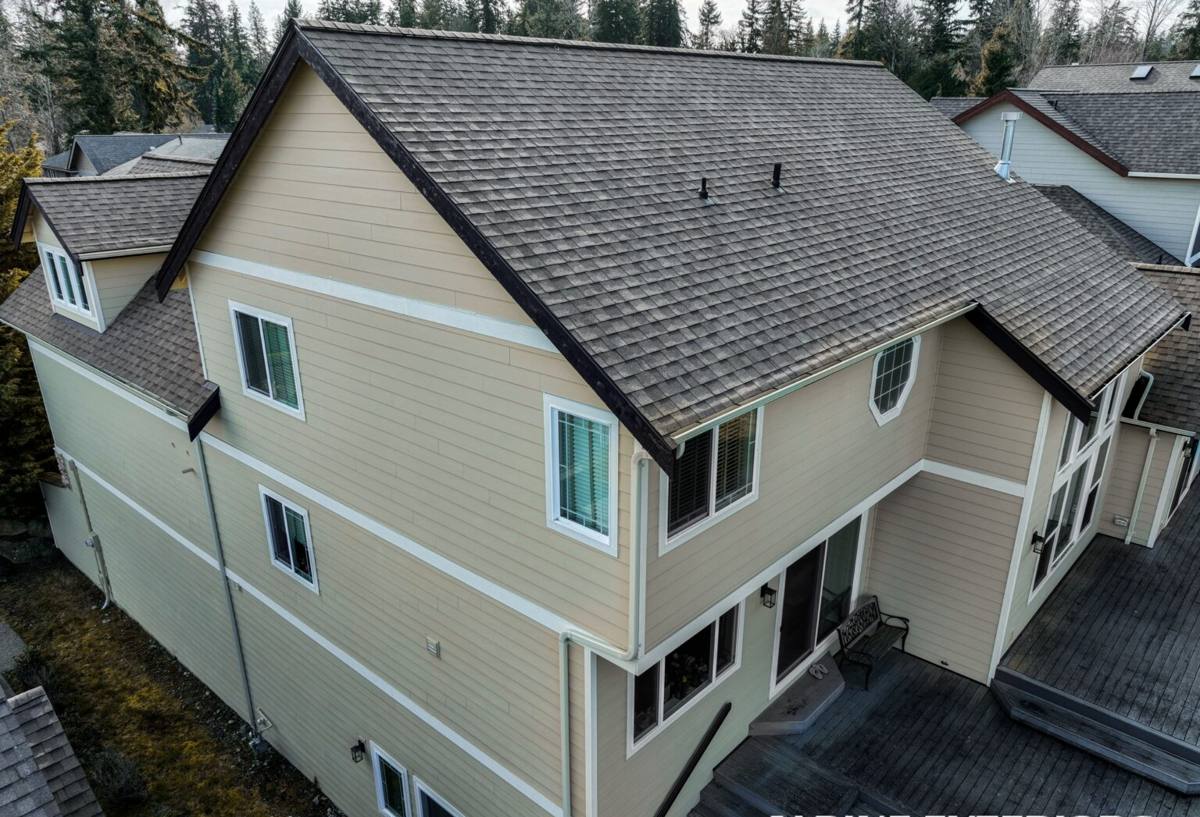
Why Fairhaven's Climate Is Harder on a Deck Than It Looks
Three conditions do most of the damage to decks in this part of Bellingham, and they compound each other over a typical year:
- Salt air: Proximity to the bay means airborne salt settles on metal fasteners, brackets, and framing hardware. Over time this accelerates corrosion in anything that isn't rated for coastal exposure, even hardware that would be perfectly fine a few miles inland.
- Driving rain: Whatcom County's wet season isn't just frequent rain — it's often wind-driven, which pushes moisture up under railings, into end grain, and behind ledger boards where it doesn't dry out quickly.
- A long moss season: Cool, damp, and often shaded conditions from fall through spring give moss and algae months to establish themselves on any decking surface that doesn't drain and dry efficiently. Once moss takes hold, it holds moisture against the board and the problem accelerates.
None of these conditions are dealbreakers for a deck — they're just design inputs. A deck built without accounting for them will look fine for a season or two and then start showing problems: soft spots, streaking, corroded hardware, slick spots underfoot. A deck built with them in mind from day one avoids most of that.
Choosing the Right Decking Material
There's no single "best" decking material for every home — it depends on your budget, how much upkeep you want to do, and how exposed the deck is to sun, shade, and weather. Here's an honest breakdown of the main options we work with for homes in this climate.
| Material | How it handles salt air & rain | Moss resistance | Maintenance |
|---|---|---|---|
| Pressure-treated wood | Good if properly sealed; end grain and fasteners are the weak points | Needs regular cleaning to stay ahead of moss in shaded areas | Annual cleaning and re-sealing recommended |
| Cedar | Naturally resists rot better than most softwoods, but still needs sealing near salt exposure | Still susceptible in damp, shaded spots without upkeep | Periodic sealing; more attention than composite |
| Composite decking | Doesn't absorb moisture the way wood does; performs well with age and salt exposure | Board texture and drainage design still matter — composite isn't moss-proof, just more forgiving | Occasional washing; no sealing or staining |
| PVC/capped polymer | Fully resists moisture absorption; strong option for the wettest, most exposed spots | Smooth, non-porous surface sheds moss more easily | Low; periodic washing |
Wood decking, especially cedar, still has a real place — it's a classic look and a lower upfront cost, and plenty of Fairhaven homes suit it. But we're upfront with clients that in a shaded, salt-air setting, wood decking asks for more consistent maintenance than composite or PVC to look and perform the same over ten-plus years. That's a trade-off, not a flaw in the material — it's about matching the product to how much upkeep you actually want to do.
Railings and Fasteners Matter As Much As the Decking
We see more deck problems start at the hardware than at the boards themselves. In a salt-air environment, standard galvanized fasteners can corrode faster than they would inland, leading to staining, weakened connections, and eventually loose boards. We spec stainless steel or coastal-rated coated fasteners and structural hardware for Fairhaven builds specifically because of the bay's proximity — it costs more upfront and saves you a repair visit down the road.
The Structural Details That Determine How Long a Deck Lasts
A deck's surface gets all the attention, but the framing underneath is what determines whether it's still solid in fifteen years. A few details we treat as non-negotiable on every build:
Ledger Board Flashing
Where the deck attaches to the house is the single most common source of hidden water damage. Proper flashing — installed correctly, not just caulked and hoped for — keeps rain from working its way behind the ledger board and into the house's rim joist. Given how much rain Bellingham sees over a wet season, this detail alone can be the difference between a deck that lasts decades and one that causes rot damage to the home itself.
Footings and Post Bases
Footings need to be sized and set to local frost and soil conditions, and post bases should sit above grade with proper drainage so posts aren't sitting in standing water after a heavy rain. We also use post bases rated for ground contact and moisture exposure rather than letting treated lumber sit directly in wet soil.
Joist Spacing and Board Orientation
Tighter joist spacing and correct board orientation help a deck surface dry faster after rain, which directly reduces how much of a head start moss gets. This is a design decision made at the framing stage, not something you can fix after the fact.
Designing for Drainage and Moss Prevention
Moss doesn't grow because a homeowner failed to clean often enough — it grows because water sits somewhere it shouldn't. Good deck design fights moss before it starts:
- Consistent board gapping so water sheds through rather than pooling on the surface
- A slight slope away from the house so water drains off the deck instead of toward it
- Under-deck airflow so the space beneath the joists can actually dry out between rains
- Material and finish choices matched to how much shade the deck gets — a heavily shaded deck under trees needs a more moss-resistant surface than one in full sun
None of this eliminates the need for occasional cleaning, but it's the difference between washing your deck once a year and fighting a losing battle with green streaks every few weeks through a Bellingham winter.
How We Build a Custom Deck for a Fairhaven Home
Our process is the same whether it's a first deck or a replacement for one that's finally failed:
- On-site assessment: We look at sun and shade exposure, drainage slope, proximity to the bay, and how the deck will connect to your home before recommending materials.
- Design and material selection: We walk through the honest trade-offs between wood, composite, and PVC decking for your specific site and budget — not a one-size answer.
- Permitting: Depending on the size, height, and location of the deck — and whether the lot falls under any shoreline or setback considerations common near the bay — a permit through the City of Bellingham or Whatcom County may be required. We handle that process as part of the job.
- Construction: Proper flashing, footings, and coastal-rated hardware go in first, since these are the details you won't see once the decking is down.
- Final walkthrough: We go over basic care for whatever material you chose, so you know what to expect in year one versus year ten.
Deck Maintenance Checklist for Fairhaven's Climate
Whatever material you choose, a little seasonal attention goes a long way in this climate:
- Rinse or sweep the deck surface periodically through the wet season to clear organic debris before it feeds moss growth
- Check fastener heads and hardware once a year for early signs of corrosion or staining
- Keep gutters and downspouts near the deck clear so runoff isn't draining directly onto or under it
- Re-seal wood or cedar decking on the manufacturer's recommended schedule — don't wait until it looks dry and gray
- Trim back overhanging branches that keep sections of the deck shaded and slow to dry
- Check under-deck ventilation isn't blocked by stored items or overgrown landscaping
Why Local Build Experience Actually Matters Here
A deck built to a generic national standard will meet code. A deck built by a crew that already works in Fairhaven and understands what the bay does to hardware, what a wet Whatcom County winter does to shaded lumber, and how moss actually behaves on different materials will simply last longer and need less from you in between. That's the difference between a contractor who's building a deck and one who's building a deck for this specific place.
We're not going to tell you every deck needs the most expensive material on the table — plenty of Fairhaven homes do beautifully with well-maintained wood decking. What we will do is give you a straight answer on what a given material and design choice will actually mean for you five and ten years out, given exactly where your home sits.
Get a Free, No-Pressure Estimate
If you're planning a new deck or replacing one that's past its prime, we're happy to take a look and walk you through your options — materials, layout, and what it'll take to build something that holds up to Fairhaven's salt air and rain. Fill out the form below for a free estimate.