 Bellingham Siding
 Fairhaven's Siding Problem Isn't Like Most of the Country's
Fairhaven sits close enough to Bellingham Bay that salt-laden air is a daily fact of life on the building envelope, not an occasional event. Add Whatcom County's long wet season, driving rain off the water, and shaded, tree-covered lots that stay damp for weeks at a stretch, and you get a climate that is genuinely hard on exterior siding. Most siding failures we see in this neighborhood aren't dramatic — they're slow. Paint that chalks and fades faster than it should. Butt joints that swell. North-facing walls and fence lines that stay green with moss from November through April. None of that happens overnight, which is exactly why it gets ignored until a full re-side is the only option left.
This page is about one product, in one neighborhood: James Hardie fiber cement siding, installed correctly on Fairhaven homes. We're not going to give you a generic rundown of what fiber cement is — you can find that anywhere. We want to talk about what this specific climate demands from a siding system and an installation crew.
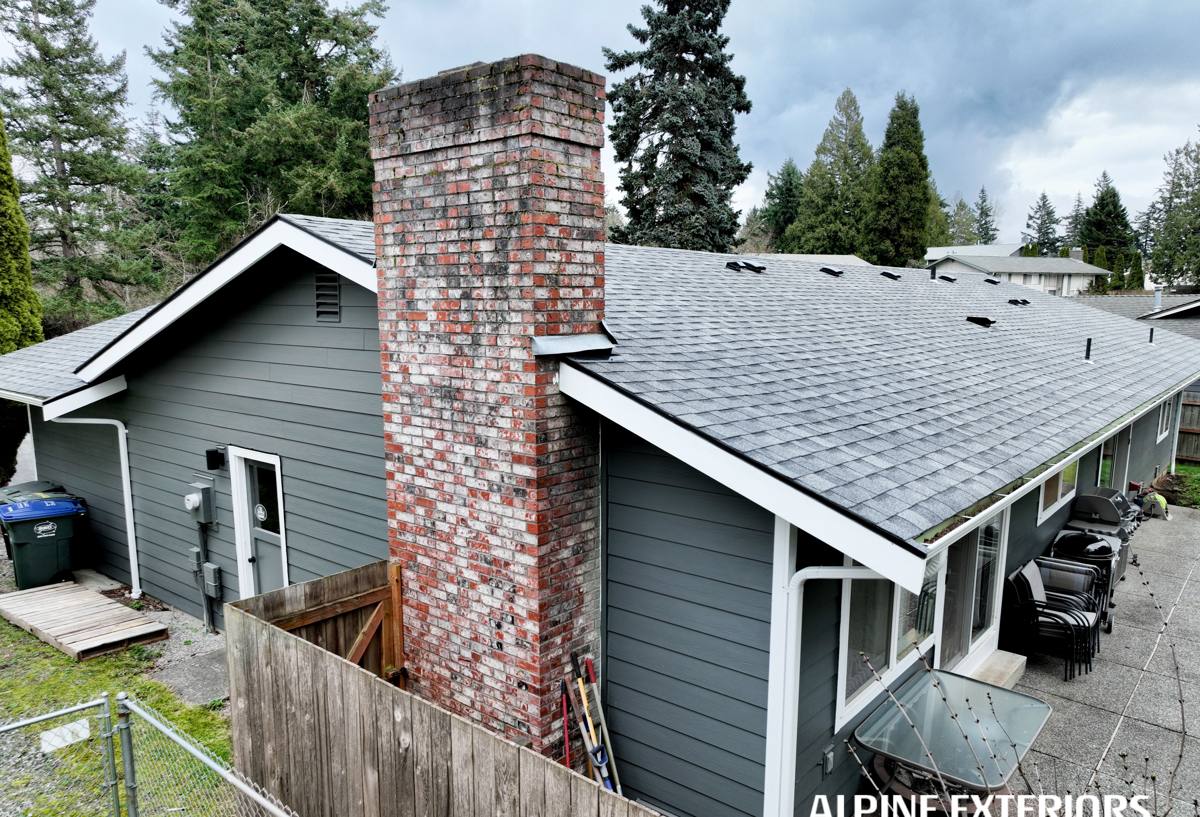
What Salt Air, Rain, and Moss Actually Do to a Wall
Salt Air
Airborne salt is corrosive to metal and slowly degrades many painted surfaces, especially ones that weren't engineered with coastal exposure in mind. Over years, it accelerates fastener corrosion, breaks down cheaper caulks and sealants, and dulls factory finishes that weren't formulated to hold color under UV plus salt exposure. It's a slow chemical process, which is exactly why it's easy to underestimate when you're picking a siding product off a sample board indoors.
Driving Rain
Fairhaven's proximity to open water means wind-driven rain hits walls at an angle, not just straight down. That matters enormously for siding, because most siding doesn't actually need to be "waterproof" — it needs to shed water fast and never trap it. Products and installations that rely on face-sealing (caulking everything shut and hoping) tend to fail here, because driving rain finds every gap eventually. What holds up is a system with proper lap, flashing, and drainage built into the install, not just the material.
Moss and Sustained Moisture
Shaded lots and long stretches of overcast, damp weather let moss, algae, and mildew get a foothold on any surface that stays wet. Wood-based products are the most vulnerable, since organic growth actively feeds on wood fiber and the surrounding coatings. Even non-organic siding needs a surface and installation detail that doesn't hold standing moisture against the wall.
Why We Standardized on James Hardie Fiber Cement
We install James Hardie exclusively — not LP SmartSide, not vinyl, not Cemplank or Allura, not primed spruce or cedar. That's a deliberate professional standard, not a sales pitch, and it comes down to how each of those categories behaves in exactly the conditions Fairhaven throws at a wall year-round.
- It's non-combustible. Fiber cement doesn't burn, which matters more every fire season in the Pacific Northwest and is a real factor in insurance conversations.
- It doesn't feed organic growth. Unlike wood-based products, fiber cement isn't a food source for moss, algae, or mildew — growth can still sit on the surface in a shaded, damp spot, but it isn't degrading the material underneath.
- ColorPlus factory finish. Hardie's factory-baked finish is engineered to hold color and resist fading and chipping far better than field-applied paint, which matters in a UV-and-salt environment where repainting siding every several years is nobody's idea of a good time.
- HardieZone engineering. Hardie manufactures HZ5 product specifically formulated for the wetter, more humid climate zones — the Pacific Northwest included — rather than a single one-size-fits-all formula.
- A real, transferable warranty backed by a manufacturer with decades of fiber cement manufacturing behind it, which carries weight if you sell the home before the siding's service life is up.
We're happy to talk honestly about where LP SmartSide, vinyl, or cedar make sense for other applications — but for Fairhaven's combination of salt exposure, driving rain, and moss pressure, we won't put our name on an installation using them.
What a Correct Fairhaven Installation Actually Involves
Fiber cement siding is only as good as the installation underneath it. Most of the failures we get called out to inspect on older siding jobs — Hardie or otherwise — trace back to installation shortcuts, not the material itself. In a climate like this, a few details matter more than they would somewhere drier:
- Correct clearances. Hardie's specifications call for minimum gaps between the bottom of the siding and roof lines, decks, patios, and grade. Skipping this is one of the most common shortcuts we see, and it's exactly the detail that lets standing moisture wick into the bottom edge of a board.
- A drainage plane behind the siding. A correctly installed weather-resistive barrier and rainscreen gap lets any moisture that does get behind the siding drain and dry out, rather than sitting against the sheathing.
- Proper flashing at every penetration. Windows, doors, hose bibs, light fixtures, vents — every penetration through the siding plane is a potential entry point for driving rain if it isn't flashed correctly.
- Fastener corrosion resistance. In a salt-air environment, fastener choice isn't a minor detail — corroding fasteners lead to streaking and eventually loose boards.
- Correct joint treatment and caulking. Butt joints need to be treated per manufacturer spec, not just butted and caulked over, or they become the first place moisture gets in.
Fiber Cement vs. the Alternatives, for This Climate
| Material | Salt Air Performance | Moss/Moisture Resistance | Long-Term Maintenance |
|---|---|---|---|
| James Hardie Fiber Cement (HZ5) | Engineered for humid coastal zones; factory finish resists fading | Non-organic — doesn't feed growth | Occasional wash; no repainting for the life of the finish |
| Vinyl Siding | Can become brittle and discolored over time; seams are a weak point in driving rain | Non-organic, but seams and J-channels can trap moisture and debris | Low, but panels warp or crack and can't be spot-repaired invisibly |
| LP SmartSide (engineered wood) | Coating can degrade under sustained salt/UV exposure | Wood-based — edge swelling is the classic failure point in wet climates | Coating touch-ups and caulk maintenance needed over time |
| Cedar / Primed Spruce | Natural wood weathers and needs ongoing finish maintenance | Most vulnerable — organic material feeds moss, algae, and rot | Regular refinishing and moisture monitoring required |
Living With Fiber Cement Siding in Fairhaven
One of the appeals of fiber cement in this climate is how little it asks of a homeowner once it's installed correctly. It's not maintenance-free — nothing exposed to Whatcom County weather is — but the maintenance is simple and infrequent rather than constant.
- An annual rinse-down (garden hose is usually enough) keeps salt residue and surface grime from building up, especially on walls facing the water or prevailing wind.
- Shaded, north-facing sections are the most likely spots for moss or algae film — a soft wash keeps it from getting a real foothold.
- Keep gutters clear and downspouts directed away from the wall base; most moisture problems at the bottom of any siding system start with water that had nowhere else to go.
- Trim back vegetation that keeps a wall section shaded and damp — airflow is one of the cheapest defenses against moss.
- Recaulk penetration points (around fixtures, vents, hose bibs) if you notice cracking or gaps, rather than waiting for a leak to show up inside.
Our Process for a Fairhaven Home
Because we work this neighborhood regularly, we already know which orientations tend to take the worst of the driving rain, which lot types hold moisture the longest, and where moss pressure is heaviest. That local pattern recognition shapes the estimate before we ever touch the house.
- On-site assessment. We walk the exterior, check current siding and trim condition, look at clearances, drainage, and any existing moisture damage.
- Written scope and product selection. We spec the correct Hardie product line, profile, and ColorPlus finish for the home, and lay out clearances, flashing, and drainage plane details specific to that structure.
- Installation to manufacturer spec. Fastening, joint treatment, flashing, and clearances are done to Hardie's published installation requirements, not shortcuts.
- Final walkthrough. We review the completed work with you, including the maintenance basics above, before calling the job done.
What to Ask Any Siding Contractor Before You Hire
Whether you call us or someone else, these are the questions that separate a crew that understands this climate from one that's just installing panels:
- Are you a certified or factory-trained James Hardie installer, and can you explain HardieZone product selection for this area?
- What clearance and flashing details will you use at the roofline, deck, and grade?
- Is there a drainage plane or rainscreen behind the siding, or is it face-sealed?
- What fastener type are you using, and is it rated for coastal/salt-air exposure?
- Can you walk me through how butt joints and penetrations will be treated?
- Does the manufacturer warranty stay valid with your installation method, and is it transferable if I sell the home?
Getting Started
If your Fairhaven home's siding is showing chalky paint, moss buildup on shaded walls, swelling at the joints, or you're planning ahead of a sale, it's worth a straightforward look before problems get more expensive to fix. We offer a free, no-pressure estimate — use the form below and we'll take a look at what your home actually needs.