 Bellingham Siding
 Siding That Has to Work in Lynden, Not Just Look Good on Install Day
Lynden sits inland from Bellingham Bay in the Nooksack River valley, but "inland" in Whatcom County still means wet. Marine air pushes up the valley off the Salish Sea, driving rain sideways into west- and south-facing walls, and the low gray stretch from October through April keeps siding damp for days at a time. Add the salt-tinged air that rolls in off the bay and the shaded, moisture-trapping conditions along tree lines and outbuildings common to this farm country, and you get a wall assembly that's under near-constant stress from moisture, not occasional storms.
Homeowners in Lynden don't usually come to us because siding looks bad. They come to us because they've noticed soft spots near the bottom courses, caulk lines that keep failing, or a green-black film creeping up the north wall every winter that pressure washing only knocks back for a season. Those are climate problems, not just cosmetic ones, and they call for a product and an install method built for exactly this kind of weather.
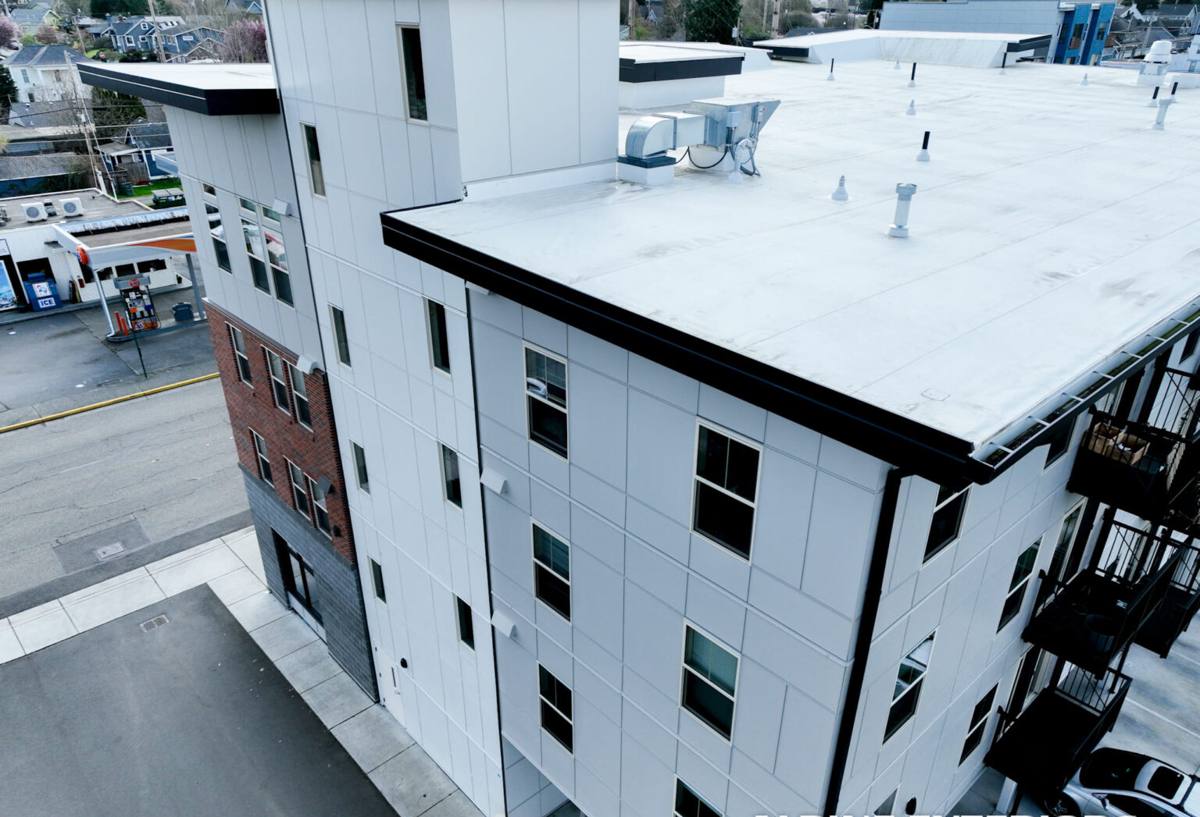
Why We Install Only James Hardie Fiber Cement
We don't carry vinyl, LP SmartSide, Cemplank, Allura, or primed wood siding, and that's a deliberate standard, not an oversight. Vinyl expands and contracts hard in temperature swings and can crack in a cold snap; it also doesn't hold paint, so your color options are locked in forever once it fades. Engineered wood products use wood fiber with a resin coating, which means any breach in that coating — a nail hole, a cut edge, a scrape from a ladder — gives moisture a path into the substrate, and moisture is the one thing Lynden has in steady supply. Primed cedar and spruce look great for a year or two, then need repainting and caulk maintenance on a schedule most homeowners don't want to keep up with.
James Hardie fiber cement is cement, sand, and cellulose fiber — it doesn't rot, it doesn't feed insects, and it's non-combustible. It holds a factory-applied ColorPlus finish that's baked on and warranted separately from the board itself, so you're not repainting every few years to keep water out. For a climate that punishes anything with a weak point, that's the difference between siding that ages gracefully and siding that becomes a recurring repair line item.
What "HZ5" Means and Why It Matters Here
James Hardie engineers its siding by climate zone under its HZ5 (moisture-prone regions) and HZ10 (freeze-prone regions) systems. Western Washington, including Whatcom County, falls under the HZ5 specification — the boards, primers, and installation guidelines are built around near-constant humidity and rain rather than deep freeze cycles. Using the correct HZ-rated product and following Hardie's regional install spec is part of what keeps the manufacturer's warranty valid, and it's part of why product selection alone doesn't guarantee a good result — the installation has to match the climate too.
What a Correct Fiber Cement Job Actually Involves
Fiber cement is only as good as the wall assembly behind it. A rushed install can still trap water even with the best board on the market. On every Lynden project we treat the following as non-negotiable:
- A continuous weather-resistive barrier (housewrap) properly lapped and taped, with no gaps at penetrations
- Correctly flashed windows, doors, and any roof-to-wall intersections, shedding water outward and down
- Manufacturer-specified clearances from grade, roofing, decks, and patios so board bottoms never sit in standing water or splash-back
- Proper fastener type, spacing, and depth — over-driven or wrong-gauge nails void warranty coverage and invite water intrusion
- Factory-cut and factory-primed edges wherever possible, with field cuts sealed per Hardie spec, not left raw
- Correct caulk joints at butt seams and trim, using sealants rated for the exposure, not whatever's left on the truck
Every one of those items is invisible once the job is done and the paint is dry. That's exactly why they matter — nobody notices good flashing until the wall behind bad flashing starts to fail five years later.
Our Process for a Lynden Home
1. Walkthrough and Assessment
We start by walking the exterior with you, checking existing siding condition, moisture staining, soft trim, and any areas where past repairs or additions created flashing shortcuts. This tells us what's driving the current problems, not just what the siding looks like from the driveway.
2. Tear-Off and Substrate Check
Once old siding is off, we inspect sheathing and framing for hidden rot or moisture damage before anything new goes up. Covering a compromised wall with new siding just hides the problem for another few years — we address what we find rather than build over it.
3. Weather Barrier and Flashing
This is the step that actually keeps Lynden's driving rain out of your walls. We install and inspect the water-resistive barrier and flashing details before a single piece of Hardie board goes up.
4. Installation to Spec
Boards, fasteners, and clearances are installed per James Hardie's HZ5 guidelines, keeping the manufacturer warranty intact and the wall assembly built to handle this region's rain load.
5. Finish and Walkthrough
We caulk, touch up per Hardie's paint specifications where needed, clean the site, and walk the finished exterior with you before calling the job done.
Choosing the Right Hardie Product Line
James Hardie makes several product lines, and the right one depends on your home's style and exposure. Here's how the main options compare for a Lynden property:
| Product Line | Best For | Notes for This Climate |
|---|---|---|
| HardiePlank Lap Siding | Traditional and farmhouse-style homes | Most common choice; wide color and texture range, proven track record in wet climates |
| HardiePanel Vertical Siding | Gables, accents, modern facades | Clean vertical lines shed water well when flashed correctly at seams |
| HardieShingle | Craftsman and cottage-style homes | Staggered or straight-edge look without the maintenance of real cedar shingle |
| HardieTrim | Corner boards, fascia, window trim | Pairs with any line above; keeps trim from becoming the weak point in the assembly |
ColorPlus finishes are available across these lines in a range of factory-baked colors, which matters in a climate where a field-painted finish is fighting rain and UV exposure from the day it's applied.
What Drives Cost on a Lynden Project
| Factor | Why It Affects Price |
|---|---|
| Tear-off scope | Removing existing vinyl, wood, or damaged siding adds labor before new install can start |
| Substrate repair | Rotted sheathing or framing found during tear-off needs to be addressed before re-siding |
| Home size and complexity | Gables, dormers, and multiple stories increase cutting, staging, and flashing detail work |
| Product line and texture | Lap, panel, and shingle profiles carry different material and labor costs |
| Trim and accent work | Full HardieTrim packages cost more than reusing sound existing trim |
We give straightforward, itemized estimates rather than a flat number with no explanation, so you know exactly what you're paying for and why.
Keeping Moss and Moisture From Taking Over
Lynden's long wet season is exactly the kind of environment moss and algae thrive in, especially on shaded north- and east-facing walls. Fiber cement resists the rot that moss growth can eventually cause in wood siding, but it still benefits from basic upkeep:
- Rinse siding annually with a garden hose or low-pressure wash — avoid high-pressure washing, which can force water behind boards and joints
- Keep gutters clear so overflow doesn't run down the wall face and feed moss growth
- Trim back vegetation and tree limbs that keep siding shaded and damp longer than necessary
- Recaulk any cracked or gapped joints promptly rather than waiting for the next paint cycle
- Watch for chalky or peeling paint on trim, which signals it's time for a touch-up before moisture gets underneath
Why Hiring a Crew That Already Works in Lynden Matters
Fiber cement installed to spec in a dry climate and fiber cement installed to spec for Whatcom County's rain load aren't the same job, even though the material is identical. A crew that regularly works Lynden and the surrounding Bellingham area already knows how local wind-driven rain behaves against typical wall orientations, how much clearance really holds up against wet grade conditions here, and where past siding jobs in this area tend to fail. That local pattern recognition is what keeps small details — a flashing lap, a clearance gap, a caulk joint — from becoming the reason your siding needs attention again in year six instead of year thirty.
If your Lynden home has siding that's showing its age, or you're planning ahead for a replacement, we'd be glad to take a look and walk you through what we see. Reach out for a free, no-pressure estimate — there's no obligation, just a straight answer about what your home actually needs.