 Bellingham Siding
 Why Lynden Homes Put Windows to the Test
Lynden sits in the Nooksack Valley, close enough to Bellingham Bay and the Salish Sea that Whatcom County's marine air reaches inland, but far enough that the bigger daily story is moisture — long stretches of driving rain, heavy valley humidity, and short winter days that never quite dry a house out. Add wind-driven storms that come off the water and cross the flats with nothing to slow them down, and you get window systems that take on more water exposure than a similar home might see thirty miles inland in a drier climate.
Older farmhouses and mid-century homes around Lynden often still have their original single-pane or early dual-pane aluminum windows. Those units weren't built for the freeze-thaw swings and moss-heavy shade this valley produces, and after a few decades they show it: fogged glass, swollen sashes, drafts you can feel standing near the frame in January. Newer homes aren't immune either — poor flashing or a rushed install on an otherwise good window will let water in no matter what the glass package looks like on paper.
Energy-efficient windows done right solve two problems at once: they cut the heat loss that drives up your winter propane or electric bill, and they keep water out of a wall assembly that's already fighting moss, humidity, and rain more months of the year than not.
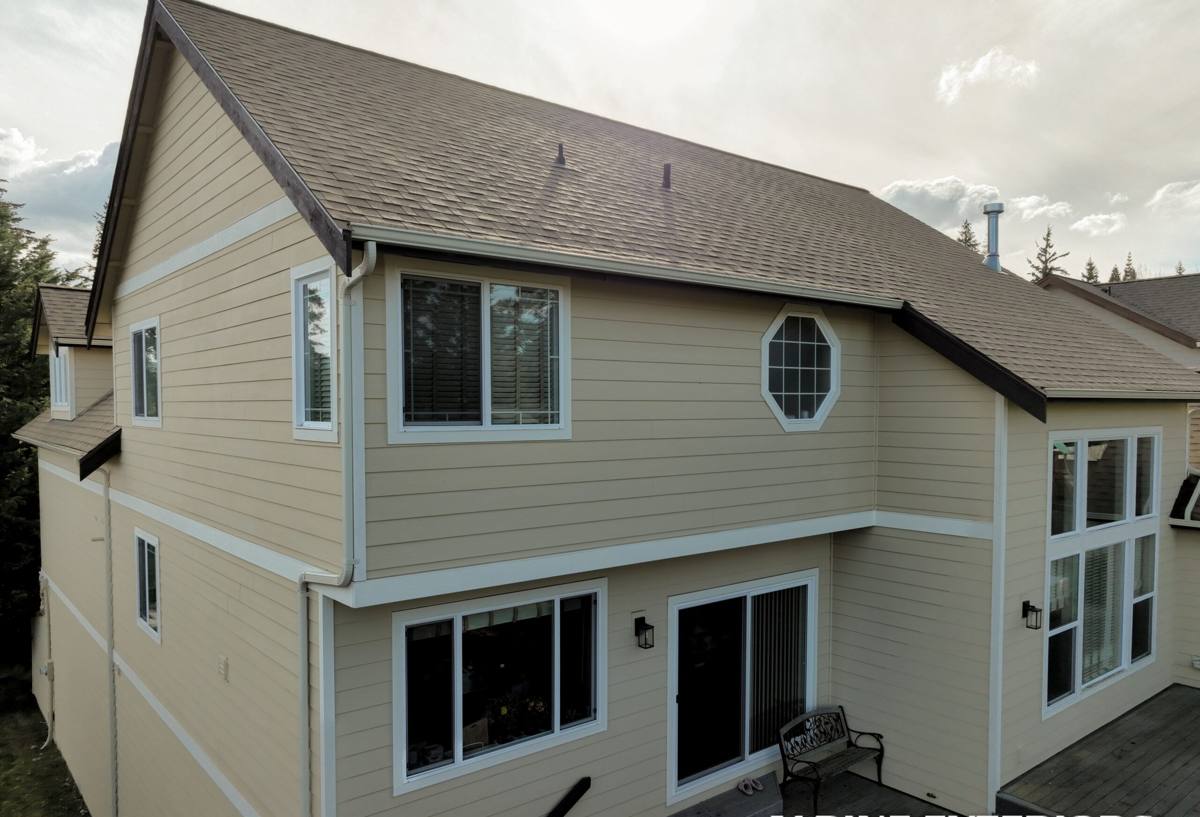
What "Energy-Efficient" Actually Means for a Window
The term gets used loosely in this trade. For a Whatcom County home, it should mean four specific things working together, not just a sticker on the glass.
U-Factor
This measures how much heat the window lets escape — lower is better. In our climate, a low U-factor matters more for comfort near the glass (no cold radiating off the window on a February evening) than it does for dramatic bill savings, but it does both.
Solar Heat Gain Coefficient (SHGC)
This measures how much solar heat passes through the glass. Lynden doesn't get the intense summer sun some parts of the state do, so we're less worried about overheating and more focused on keeping whatever winter sun you get working for you rather than against you. We'll talk through the right SHGC for your home's orientation rather than defaulting to one number for every job.
Air Leakage
A window can have great glass and still leak air around a poorly gasketed sash or a warped frame. In a valley that sees sustained wind-driven rain, air leakage and water intrusion tend to travel together — if air is getting in, water usually isn't far behind.
Frame Material
Vinyl, fiberglass, and wood-clad frames all perform differently under sustained moisture and UV exposure. We'll get into the trade-offs below, but frame choice affects energy performance as much as the glass does, because a frame that swells, shrinks, or cracks over time stops sealing the way it did on day one.
Signs a Lynden Home Needs New Windows
Not every drafty window needs full replacement, and not every old window is a lost cause. Here's what we actually look for during an assessment:
- Condensation or fogging between the panes (a failed seal — this one can't be repaired, only replaced)
- Visible moss or dark staining on the sill or exterior trim, suggesting standing moisture
- Sashes that are difficult to open, stick, or no longer latch flush
- Cold air noticeably moving near the frame on a windy day, even with the window shut
- Soft or discolored wood on interior sills or the wall below the window
- Single-pane glass anywhere in the home — these are almost always worth upgrading for both comfort and moisture control
- Visible gaps, cracked caulk, or daylight around the exterior frame
Window Materials We Work With
| Material | Moisture Performance | Maintenance | Typical Fit |
|---|---|---|---|
| Vinyl | Good — won't rot, handles sustained rain well | Low; occasional cleaning | Most Lynden homes, best value for full-house replacement |
| Fiberglass | Excellent — very stable in wet/dry and hot/cold cycles | Low | Homes wanting the durability upgrade and willing to pay more upfront |
| Wood-clad | Good exterior protection, but interior wood is vulnerable if seals fail | Higher; needs monitoring at joints | Homes prioritizing a traditional wood interior look |
We install all three, but we're upfront that in a climate with this much sustained rain and humidity, we lean toward vinyl and fiberglass for most Lynden projects — not because wood-clad windows are bad products, but because any product with exposed or semi-exposed wood puts more of the long-term performance on the quality of the seal and the homeowner's maintenance schedule than we're comfortable promising on a "set it and forget it" basis.
Our Installation Process
1. On-Site Assessment
We look at each window opening individually — not every window in a house is failing for the same reason. Some may need full replacement, others just better flashing or trim repair. We'll tell you honestly which is which.
2. Removal and Opening Prep
We remove the old unit carefully and inspect the rough opening for hidden water damage before anything new goes in. This is the step that gets skipped on rushed jobs, and it's the one that matters most in a wet climate — installing a new window over a compromised opening just hides the problem behind new trim.
3. Flashing and Moisture Barrier Integration
This is where a window installation is won or lost in Whatcom County. Proper flashing tape, correctly lapped house wrap, and a sloped sill pan direct water away from the opening instead of letting it pool. We treat this step as non-negotiable regardless of how good the window itself is.
4. Setting and Sealing the Window
The unit is leveled, shimmed, and fastened per manufacturer spec, then sealed with exterior-grade sealant rated for sustained wet exposure — not a generic caulk that will crack after one winter of freeze-thaw cycling.
5. Interior Finish and Cleanup
Interior trim is reset or replaced, gaps are insulated, and the site is cleaned before we walk it with you.
Why Flashing Matters More Here Than the Glass Does
Homeowners often ask us to compare glass packages, and we're happy to do that — but the truth is that a mediocre window installed with excellent flashing will outperform a premium window installed with careless flashing, especially in a valley that sees this much driving rain. Water doesn't need a big gap to find its way into a wall; it needs a small one and enough time. Given how many rainy months Lynden gets in a typical year, "enough time" isn't in short supply, which is exactly why we won't cut corners on this step to save an hour on the schedule.
What Affects Window Replacement Cost
Every home is different, so we don't quote sight unseen — but these are the factors that move the number up or down, and understanding them helps you evaluate any estimate you get, from us or anyone else.
| Factor | How It Affects Cost |
|---|---|
| Frame material | Vinyl is typically the most budget-friendly; fiberglass and wood-clad cost more upfront |
| Window size and type | Standard double-hung units cost less than large picture windows, bays, or custom shapes |
| Number of windows | Full-house replacement usually brings a better per-window price than one-off replacements |
| Condition of the opening | Hidden rot or water damage found during removal adds repair time before the new window goes in |
| Access and site conditions | Second-story windows or tricky access add labor time |
As a broad, honest range, most single-window replacements in this region run somewhere in the low-to-mid four figures depending on size and material, with whole-house projects priced per window once we've seen the actual openings. Anyone quoting a firm number without inspecting your windows first is guessing — we'd rather give you an accurate range after a walkthrough than a low number that grows once we're on site.
Why Hire a Crew That Already Works in Lynden
Window installation isn't just a product decision — it's a moisture-management decision specific to the building science of your area. A crew that mostly works drier climates may not think twice about flashing details that are optional there and mandatory here. We work throughout Whatcom County, including Lynden and the surrounding valley, so we're used to sizing every job around sustained rain, valley humidity, and the moss and organic growth that comes with shaded, damp exteriors for a good part of the year. That's not a marketing point — it's just what the job requires if you want the windows to still be performing well a decade from now instead of five years from now.
We're also straightforward about what we won't do: rush a flashing detail, install over a rotted opening without addressing it, or push a product that doesn't suit your home's exposure just because it has a bigger margin. If a window or install approach isn't right for your specific situation, we'll say so and explain the trade-off in plain terms.
If your windows are drafty, fogged, or just older than you'd like to think about, we're glad to take a look and walk you through what we find. Fill out the form below for a free, no-pressure estimate — no obligation, just an honest read on what your home actually needs.