 Bellingham Siding
 Roof Repair Built for Lynden's Climate
Lynden sits in Whatcom County, where roofs deal with a long wet season, driving rain that comes in sideways during winter storms, and a moss season that can stretch nearly year-round on shaded or north-facing slopes. None of that is unusual for this part of Washington, but it does mean a roof here ages differently than one in a drier climate. Small problems that would take years to matter elsewhere can turn into interior leaks in a single wet winter if they're left alone.
We do roof repair work for homeowners in Lynden and the surrounding area, and most of the calls we get fall into a predictable pattern: a roof that's basically sound but has one or two failure points letting water in. Our job is to find those points, fix them correctly, and tell you honestly whether a repair is the right call or whether you're better off planning for a replacement.
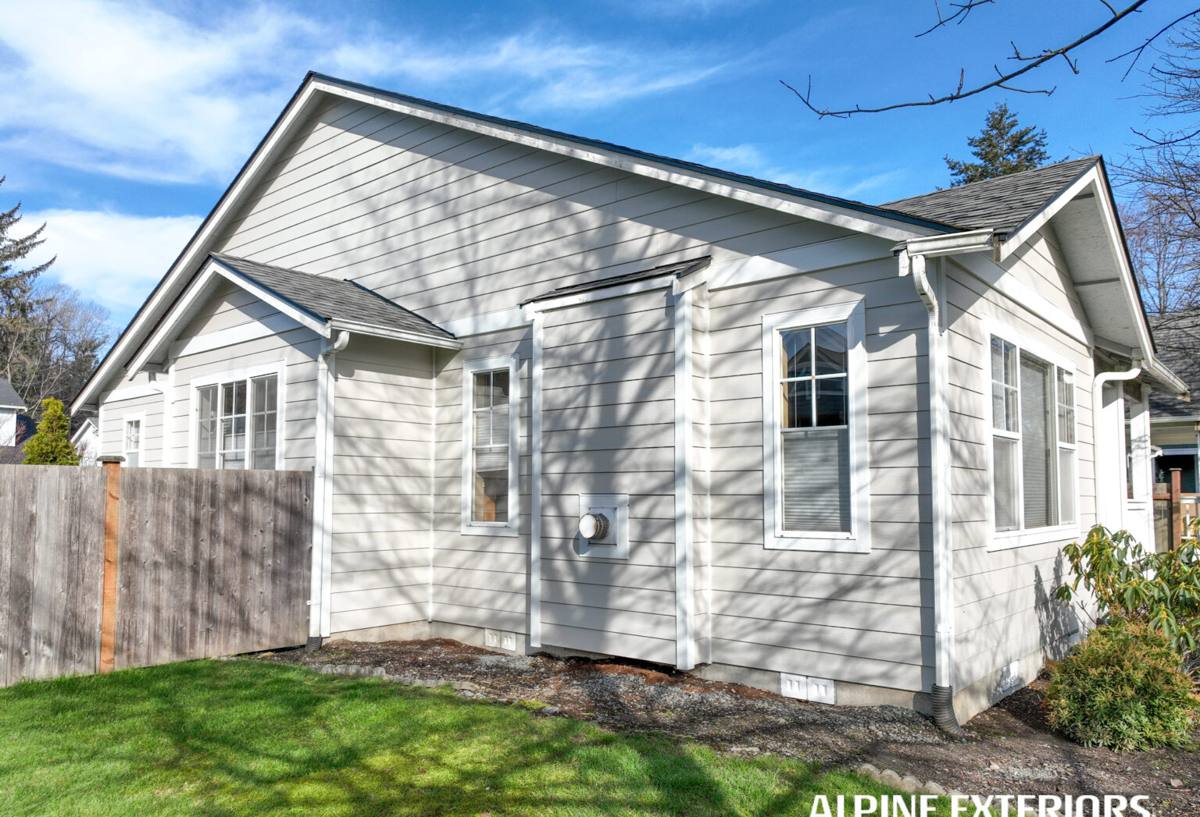
Why Local Roofs Fail Here
The roofs we inspect in Lynden rarely fail because the shingles or panels themselves wore out evenly across the whole roof. They fail at the details — the places where two roof planes meet, where a pipe or vent comes through, where a chimney or skylight interrupts the field, or where the roof meets a wall. Those transition points depend on flashing, sealant, and underlayment doing their job, and in a climate with this much sustained moisture, that's where things give out first.
- Driving rain pushed sideways by wind can work its way under shingles or panels that would shed water fine in a straight downpour
- Prolonged damp conditions keep roofing materials wet longer after each rain event, accelerating wear at seams and fasteners
- Moss and organic growth hold moisture against the roof surface instead of letting it run off
- Freeze-thaw cycles, while less extreme here than inland, still stress cracked sealant and aging flashing
Understanding which of these is actually causing your leak matters, because the fix is different for each one. Patching over a moss problem without addressing the moss just buys you a season or two.
Moss, Algae, and Debris: A Year-Round Concern
Moss is probably the single biggest maintenance issue we see on roofs in this part of Whatcom County. Shaded roof sections, north-facing slopes, and roofs near trees stay damp long after the rest of the roof has dried out, and that's exactly the environment moss needs to establish itself. Once moss takes hold, it doesn't just sit on the surface — it works into shingle tabs and panel seams, lifts edges, and holds water against the roof deck itself. Over a few seasons, that trapped moisture is what turns a cosmetic issue into a structural one.
Debris matters too. Needles, leaves, and small branches collect in valleys and around penetrations, and in a climate that doesn't dry out quickly, that debris stays wet and starts to compost right on your roof. That accelerates material breakdown and can clog the drainage paths that are supposed to move water off the roof and into your gutters.
Regular moss removal and debris clearing isn't cosmetic maintenance — it's one of the most effective ways to extend the life of a roof in this region and to avoid emergency repair calls during the wettest months.
Signs a Repair Is Overdue
Most roof leaks don't announce themselves as a hole in the roof. They show up as smaller signs first, and catching those early is what keeps a repair a repair instead of a full replacement.
- Water stains on interior ceilings or upper walls, especially ones that appear or grow after a heavy rain
- Shingles that are curling, cracking, or visibly bald where granules have worn away
- Moss or dark streaking concentrated on shaded slopes
- Sagging or soft spots you can see or feel when walking the roofline visually from the ground
- Rusted, lifted, or missing flashing around chimneys, skylights, and vent pipes
- Granules collecting in gutters, which signals accelerated shingle wear
- Daylight visible through the roof deck from inside an attic space
If you're seeing any of these, it's worth having someone look before the next storm, not after.
What a Correct Roof Repair Actually Involves
A roof repair done right isn't just sealing the spot where water is currently getting in. Sealant alone rarely holds up long-term in this climate, and if it's covering a bigger underlying issue, the leak just shows up somewhere else next season. We approach repair in a few steps:
1. Find the Real Source
Water travels before it shows up as a stain — a leak visible on a ceiling may originate several feet away at a flashing point or valley. Tracing the actual entry point is the difference between a repair that lasts and one that doesn't.
2. Assess the Deck and Underlayment
If water has been getting in for a while, the roof deck underneath may be softened or the underlayment compromised. Repairing the visible surface without checking what's underneath can leave a hidden problem in place.
3. Replace, Don't Just Patch, Failed Components
Cracked flashing, deteriorated boots around pipe penetrations, and damaged shingles or panel sections get replaced with new material rather than caulked over. Sealant has a place in roofing, but it's a supplement to correct flashing work, not a substitute for it.
4. Match Materials Properly
Repairs should match the existing roofing material as closely as possible in type, weight, and where reasonable, color and age, so the repaired section performs the same as the rest of the roof and doesn't create a new weak point.
5. Confirm Drainage Is Clear
A repair means little if water still can't get off the roof efficiently. We check that valleys, gutters, and downspouts near the repair area are clear and functioning before calling the job done.
Common Roof Repair Types We Handle in Lynden
| Repair Type | Typical Cause | What's Involved |
|---|---|---|
| Flashing repair/replacement | Rusted, lifted, or improperly installed flashing at chimneys, walls, valleys | Remove old flashing, inspect deck, install new flashing with correct overlap and sealant |
| Shingle or panel replacement | Wind damage, granule loss, cracking, moss lifting edges | Remove damaged sections, check deck condition, install matching material |
| Vent boot and penetration repair | Cracked rubber boots around pipes, worn caulking around fixtures | Replace boot/collar, reseal properly, check surrounding shingles |
| Valley repair | Debris buildup, worn valley material, poor original installation | Clear debris, inspect and replace valley lining or metal as needed |
| Moss and organic growth treatment | Shaded roof sections, tree cover, poor airflow | Careful removal, treatment, and recommendations to prevent regrowth |
| Deck repair | Prolonged undetected leak has softened or rotted sheathing | Cut out and replace affected deck sections before re-covering |
Repair or Replace? How We Help You Decide
Not every roof issue means you need a new roof, and we don't push replacement when a repair will genuinely solve the problem. But there's a point where repeated repairs cost more over time than doing the job once. A few factors we weigh with you:
| Factor | Leans Toward Repair | Leans Toward Replacement |
|---|---|---|
| Age of roof | Well within expected service life | At or past the material's typical lifespan |
| Extent of damage | Isolated to one area or component | Spread across multiple roof planes |
| Deck condition | Solid, no rot found | Soft spots or rot discovered in multiple areas |
| Repair history | First or infrequent repair needed | Recurring leaks or repeated patch jobs |
| Material availability | Matching material still available | Original material discontinued, patches will visibly mismatch |
We'll walk the roof, explain what we find in plain terms, and give you our honest read — not the most expensive option by default.
Our Process for Lynden Roof Repair Calls
We keep the process straightforward from first contact to finished repair:
- Initial conversation about what you're seeing — stains, drips, visible damage, or just a roof that's due for a checkup
- On-site inspection of the roof, attic (where accessible), and the areas around any reported leak
- Clear explanation of what we found, what's causing it, and what the repair will involve
- A written estimate before any work begins, with no pressure to upgrade to a full replacement if it isn't needed
- The repair itself, done with matching materials and proper flashing technique, not just surface sealant
- A final check to confirm the fix holds and drainage around the repair is clear
Seasonal Roof Checklist for Lynden Homeowners
Between professional inspections, there's a lot a homeowner can watch for from the ground or with a quick, safe look from a ladder:
- Check gutters after fall leaf-drop and again after winter storms for debris buildup and granule accumulation
- Look at shaded or north-facing roof sections for moss or dark streaking each spring
- Scan interior ceilings, especially top-floor rooms, for new stains after heavy rain events
- Note any missing or visibly lifted shingles after high-wind days
- Have an attic check done if you notice musty smells or visible daylight through the roof deck
- Trim back tree branches that overhang the roof to reduce shade and debris
Why It Matters to Hire a Crew That Already Works in Lynden
Roofing crews who work regularly in Whatcom County know how this specific climate treats a roof over time — which flashing details tend to fail first, which slopes hold moss the longest, and how driving rain off the water finds weak points that a drier-climate crew might not think to check. That familiarity shows up in the quality of a repair, particularly around the flashing and transition details that are the real cause of most leaks in this area.
It also matters for follow-up. A repair should be a repair, not the start of a relationship where you're calling back every year for the same leak. We stand behind the work we do, and because we're local, we're not disappearing after the invoice is paid.
Get a Free, No-Pressure Estimate
If you're dealing with a leak, spotting moss creeping across your roofline, or just want an honest opinion on where your roof stands before the next wet season, we're happy to take a look. Use the form below to request a free estimate — no obligation, no upsell, just a straight answer about what your roof needs.