 Bellingham Siding
 Siding Replacement Built for Sudden Valley's Microclimate
Sudden Valley sits in the wooded hills along Lake Whatcom, southeast of downtown Bellingham, and that setting creates a different set of demands on exterior siding than a home closer to the water or out on open ground. Heavy tree cover, lake humidity, steep and shaded lots, and long stretches of overcast, wet weather all combine to keep siding damp longer than it would stay in a more exposed, sun-drenched location. Add in the driving rain that blows through Whatcom County during fall and winter storms, along with the moisture-laden marine air that moves inland off the Salish Sea across the whole county, and you have a climate that is genuinely hard on the wrong siding material.
We've replaced siding on homes throughout Sudden Valley and the surrounding Lake Whatcom communities long enough to know which failures are predictable and which ones catch homeowners off guard. This page walks through what a correct siding replacement looks like here, what it should cost, and why the crew doing the work matters as much as the material going on the wall.
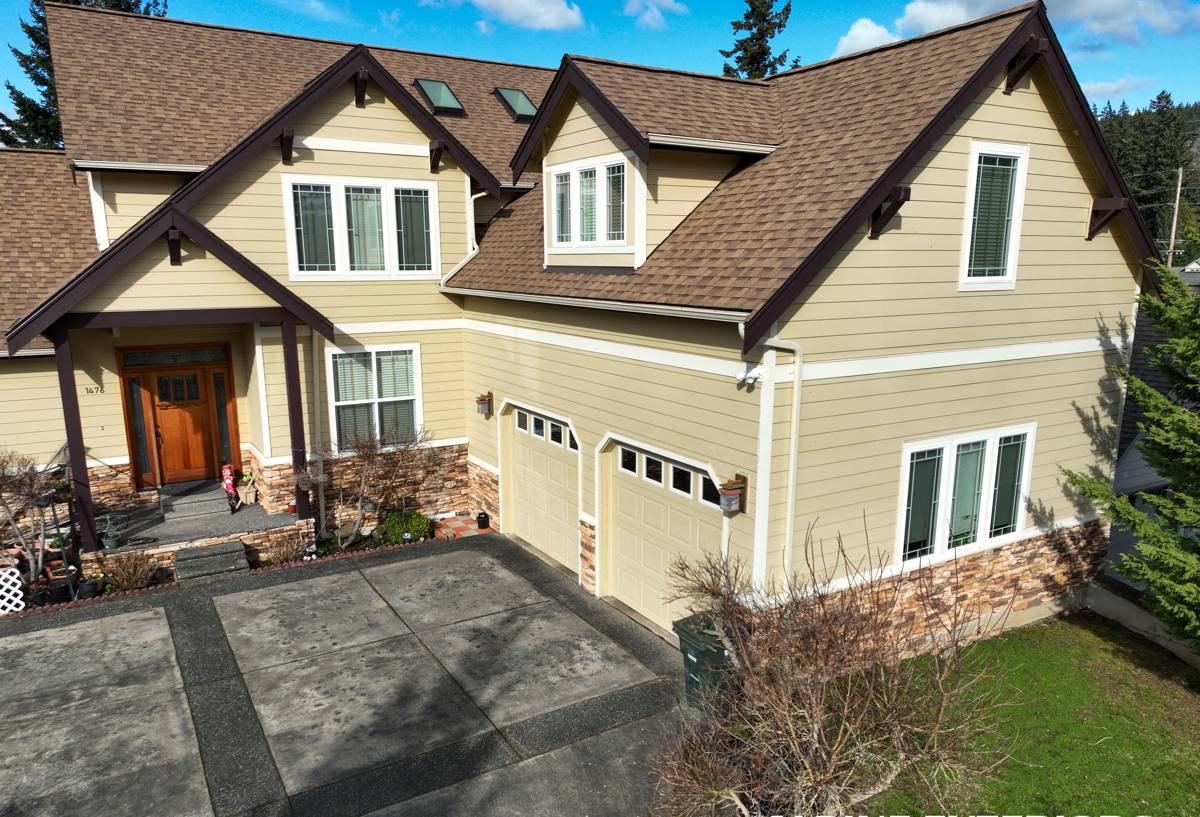
Why This Climate Wears Siding Out Faster Than People Expect
Shade, Lake Moisture, and a Long Moss Season
Dense fir and cedar canopy is one of the defining features of Sudden Valley properties, and it's a double-edged sword. Trees are a big part of why people love living there, but they also block direct sun from reaching large sections of exterior wall for most of the day. Without sun exposure to dry siding out between rain events, moisture sits against the surface far longer than on an open lot. That extended dampness is exactly what moss, algae, and lichen need to take hold, and once organic growth establishes itself on a wall, it holds even more moisture against the surface underneath it.
Wind-Driven Rain and Repeated Wet-Dry Cycles
Whatcom County's weather pattern isn't just wet — it's wet with wind behind it. Storms moving through the region regularly drive rain sideways into exterior walls rather than straight down, which pushes water into laps, seams, and trim joints that a calmer rain would never reach. Siding, flashing, and caulking all get tested by that combination more than most homeowners realize, and it's usually the details around windows, corners, and butt joints that fail first, long before the field of the siding itself gives out.
The practical result of shade plus wind-driven rain plus a long moss season is that siding material and installation quality matter more here than they would in a drier, sunnier climate. A product or installation that would hold up fine for twenty years in eastern Washington can show real problems in half that time on a shaded Sudden Valley lot if it isn't suited to this kind of exposure.
Signs a Sudden Valley Home Needs Siding Replacement, Not Just Repair
Not every siding problem calls for a full tear-off. But there's a point where patching becomes a waste of money because the underlying material or water barrier is compromised. Watch for these signs:
- Soft, spongy, or crumbling spots when you press on the siding, especially near the bottom of walls and around window sills
- Persistent moss or algae staining that comes back within a season or two of cleaning
- Visible cracking, splitting, or buckling boards, particularly on shaded north- and west-facing walls
- Paint that won't hold — bubbling, peeling, or needing repainting every few years instead of every decade or more
- Warping or gapping at the seams and corners where boards meet
- Any sign of moisture, staining, or soft drywall on interior walls that back up to exterior siding
- Siding that's original to a home built decades ago and has never been replaced or had its water-resistive barrier inspected
If you're only seeing one or two of these on a small section of wall, spot repair or repainting may still be reasonable. Widespread moisture damage, soft sheathing, or failure at multiple wall planes usually means the smarter long-term move is a full replacement done correctly, rather than repeated patch jobs on a system that's already compromised.
Why We Install James Hardie Fiber Cement Here — and Nothing Else
We only install James Hardie fiber cement siding. We don't install vinyl, LP SmartSide, or other engineered wood or cement-board alternatives, and in a climate like Sudden Valley's, that's not a brand preference — it's a material decision.
Fiber cement is made from sand, cement, and cellulose fibers. It doesn't have an organic wood component for moisture to feed on, so it doesn't rot the way engineered wood products can if water gets behind it or sits against a seam too long. It's also non-combustible, which is a meaningful benefit on heavily wooded lots where wildfire risk in the Pacific Northwest has become a bigger part of insurance and building conversations in recent years. James Hardie's HardieZone system includes products engineered specifically for wetter, more humid climates like ours, and the factory-applied ColorPlus finish is baked on under controlled conditions rather than field-painted, which gives it better resistance to the kind of paint failure that shows up on shaded, damp walls.
None of that means fiber cement is maintenance-free — moss and algae can still grow on any exterior surface, including Hardie siding, if organic debris and shade let it. But it means the material itself isn't the failure point the way it can be with wood-based or vinyl alternatives. That's the trade-off that matters most in a climate like this one, and it's why we standardized on Hardie rather than offering multiple product lines.
What a Correct Siding Replacement Actually Involves
Tear-Off and What's Underneath
A real siding replacement starts with removing the old siding down to the sheathing, not installing new boards over the old ones. That step matters everywhere, but it matters more on a shaded, moisture-prone lot, because it's the only point where we can actually see the condition of the wall behind the siding. Soft or delaminated sheathing, rot around window openings, and a water-resistive barrier that's torn, sagging, or missing entirely are common finds on older homes here, and none of them are visible until the old siding comes off.
Water-Resistive Barrier and Flashing Details
Given how much wind-driven rain this area sees, the water-resistive barrier and flashing details are arguably more important than the siding itself. Every window, door, and penetration needs to be properly flashed and integrated with the barrier so that any water that does get past the siding sheds back out instead of finding its way into the wall cavity. This is the step that gets rushed or skipped on lower-quality jobs, and it's usually where problems show up first — sometimes years after the siding itself looks fine.
Installation to Manufacturer Specification
James Hardie siding is only as good as the installation behind it. That means correct fastener type, spacing, and placement; proper clearance from grade, roofing, and decks so the bottom edge of the siding never sits in standing water or snow load; and butt joints and corners sealed and flashed the way the manufacturer specifies. Skipping these details doesn't just risk cosmetic problems — it can void the manufacturer's warranty, which is supposed to be one of the main reasons to choose Hardie in the first place.
Our Process for a Sudden Valley Siding Replacement
- On-site assessment. We walk the exterior, check the current siding and any accessible sheathing, and talk through what we're seeing given the lot's shade and drainage pattern.
- Written estimate. You get a clear scope of work and price before anything is scheduled — no vague allowances that turn into surprise change orders.
- Tear-off and inspection. Old siding comes off, and any damaged sheathing or framing is identified and addressed before anything new goes on.
- Water-resistive barrier and flashing. New barrier and flashing are installed at every window, door, and penetration point.
- Hardie installation. Siding, trim, and corners go on to manufacturer spec, with attention to clearances and joint placement suited to a shaded, wet-climate lot.
- Final walkthrough. We go over the finished work with you before calling the job complete.
What Siding Replacement Costs — and What Drives the Price
Every home is different, but the factors below are what typically move the price up or down on a Sudden Valley project. We'll give you an exact number after seeing the house — broad ranges without an inspection aren't useful to you.
| Cost Factor | Why It Matters |
|---|---|
| Amount of sheathing/framing repair needed | Rot found during tear-off on older or long-neglected homes adds material and labor before new siding can go on |
| Home size and wall complexity | Multiple stories, dormers, and cut-up wall planes take more time and material than a simple rectangular footprint |
| Access and site conditions | Steep, wooded, or tight lots common in Sudden Valley can affect staging, scaffolding, and material delivery |
| Siding profile chosen | Lap width, shingle-style panels, and trim details all carry different material and labor costs |
| Existing damage discovered | Water intrusion around windows or at grade level often isn't visible until old siding is removed |
Why Hiring a Crew That Already Works in Sudden Valley Matters
A crew that's worked this specific area knows what shaded, lake-adjacent lots tend to hide behind old siding before they ever pull the first board. They know how to sequence a tear-off around narrow or steep driveways, how much extra attention the water-resistive barrier needs on a wall that rarely sees direct sun, and where moss and moisture problems typically start on homes in this kind of setting. That local pattern recognition doesn't replace a proper inspection of your specific house, but it does mean fewer surprises and a crew that isn't guessing at how this climate behaves.
It also matters that the crew is a manufacturer-installed one, not a general contractor subbing the work out to whoever's available. Consistency in who's actually fastening the boards, flashing the windows, and finishing the details is a big part of whether a siding job holds up for its intended lifespan or starts showing problems in five years instead of twenty-five.
Caring for Your Siding After Replacement
Correctly installed Hardie siding is low-maintenance, but "low" isn't "zero," especially under tree cover. A periodic gentle wash to remove moss, pollen, and organic debris before it builds up will do more for your siding's long-term appearance than almost anything else. Keeping gutters clear and trimming back branches that hold shade and moisture directly against a wall also go a long way. Beyond that, an occasional visual check around windows, corners, and the bottom edge of the siding — the same spots that take the most water — is enough to catch most issues early, long before they become a repair, let alone another full replacement.
If your Sudden Valley home is showing signs of siding failure, or you'd simply like an honest read on how much life is left in what's on the walls now, we're happy to take a look. Reach out for a free, no-pressure estimate using the form below.