 Bellingham Siding
 Why York-Area Homes Put Extra Stress on Windows
Homes in York and the surrounding Bellingham area sit close enough to the water and the weather patterns rolling off it that windows take a beating most drier inland climates never see. Salt-laden air off the Puget Sound corridor accelerates corrosion on hardware, fasteners, and lower-quality frame components. Driving rain, pushed sideways by wind rather than falling straight down, tests every seal, flange, and flashing detail around a window opening. And Whatcom County's long moss season keeps siding, trim, and window perimeters damp for weeks at a stretch, which is exactly the condition mold and rot need to get started.
None of that means windows in this neighborhood fail faster because the climate is unusually harsh — it means the margin for error in the installation is smaller. A window that would perform fine in a mild, dry climate with a mediocre installation can start showing problems here in a handful of seasons instead of decades. That's the lens we use for every York job: the product matters, but the install is what actually determines whether a window earns out its energy-efficiency claims.
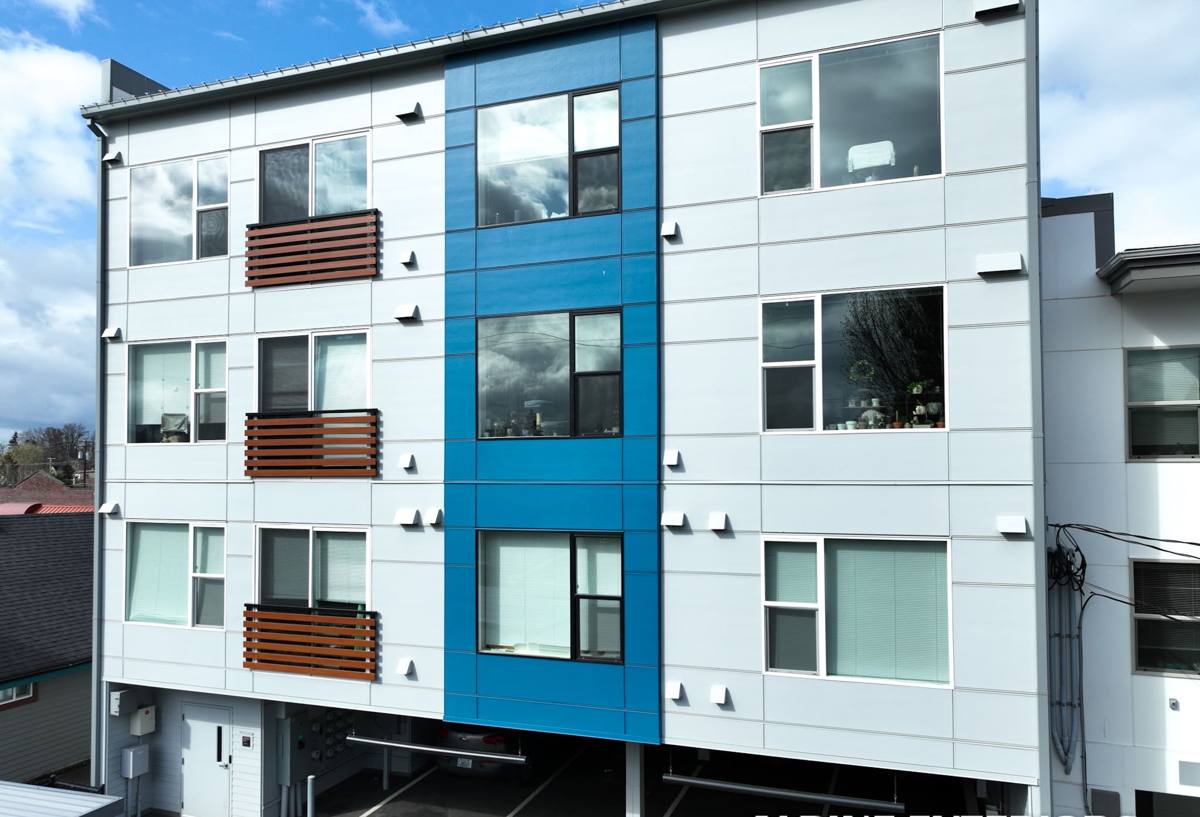
What "Energy-Efficient" Actually Means Here
Energy-efficient windows get marketed with a lot of numbers, and homeowners are usually told to just trust the label. In a marine climate like Bellingham's, a few of those numbers matter more than others:
- U-factor — how well the window resists heat loss. Lower is better, and it matters year-round here since our winters are damp and cool rather than brutally cold, so consistent heat retention counts more than peak insulation.
- Air infiltration rating — how much air leaks through the frame and sash under wind pressure. With driving rain often riding on wind gusts, a window with a poor air infiltration rating is also a window more likely to let water intrude.
- Solar heat gain coefficient (SHGC) — less critical here than in sunnier climates, but still worth matching to the home's orientation, especially on west-facing rooms that catch afternoon light.
- Frame material behavior in moisture — how the frame material handles sustained dampness over a moss-season winter, not just how it looks the day it's installed.
A window can carry a strong energy rating on paper and still underperform in York if the glass package or frame material isn't suited to sustained coastal moisture exposure. We size the spec to the exposure of each wall, not just the house as a whole — a windward-facing bedroom window and a sheltered interior courtyard window don't need identical specs.
What a Correct Installation Actually Involves
Most window failures we get called out to fix in this area aren't product failures — they're installation shortcuts that let water find a path behind the frame. A correct job, done right the first time, involves several steps that are easy to skip and hard to notice once trim is back on:
Removal and Opening Inspection
Old windows come out carefully so we can actually see the condition of the framing, sheathing, and any existing flashing underneath. This is the point where hidden moisture damage from years of marginal sealing shows up — and it needs to be dealt with before a new window goes in, not covered over.
Sill Pan and Flashing
A sloped sill pan gives any water that gets past the sash a way out instead of a place to pool. Flashing tape integrates with the home's water-resistive barrier in the correct shingle-lap order — house wrap over the top flange, never under it — so water sheds down and out rather than behind the siding.
Air Sealing and Insulation
The gap between the new frame and the rough opening gets filled with a proper low-expansion insulating foam or backer rod and sealant, not just packed with fiberglass. This is a big piece of the actual energy performance — a well-rated window installed with a poorly sealed gap loses much of its efficiency advantage.
Exterior Sealant and Trim
Sealant beads at the right joints (and deliberately left open at others, like the bottom of the sill, to allow drainage) make the difference between a window that sheds water and one that traps it against the frame.
Signs Your Current Windows Are Costing You Money
Homeowners in York often ask us how to tell if it's time to replace windows versus just re-caulking or repairing what's there. A few reliable signs it's worth a real evaluation:
- Visible condensation between the panes of a double- or triple-pane unit — this means the seal has failed and the insulating gas is gone; it can't be repaired, only replaced.
- Persistent moss, algae, or dark staining at the sill or lower corners that comes back within weeks of cleaning — a sign water is getting behind the trim, not just sitting on top of it.
- Noticeable draft or cold spot near the frame on a windy day, even with the window fully latched.
- Wood trim or sill that feels soft, spongy, or shows paint bubbling — early rot indicators that get worse fast in a wet climate if left alone.
- Difficulty opening, closing, or latching — frames can shift slightly as wood components absorb and release moisture seasonally.
Comparing Common Window Styles for This Climate
Style choice affects weather performance as much as looks. Here's how the styles we install most often in this area stack up for wind and rain exposure:
| Style | Weather Performance | Best Use |
|---|---|---|
| Casement | Compresses against the frame when closed, generally strongest seal against driving rain and wind | Walls with direct wind/rain exposure |
| Double-Hung | Good performance with quality weatherstripping; two operable sashes to maintain | Traditional look, easy cleaning from inside |
| Sliding | Adequate but relies heavily on track seals staying clean and intact | Wide openings, patio-adjacent rooms |
| Awning | Seals similarly to casement; can stay cracked open in light rain | Bathrooms, basements, ventilation in wet weather |
| Fixed/Picture | No moving parts to seal, best air-tightness of any style | Non-operable views, paired with operable units nearby |
We don't push one style across an entire house. Most York homes end up with a mix — casements or awnings on the exposed sides, and double-hung or picture windows where exposure is lighter and the look matters more.
Our Process, Start to Finish
- Free on-site evaluation — we look at each opening individually, note exposure direction, existing damage, and current window condition rather than quoting off a phone call.
- Written estimate with clear specs — frame material, glass package, and style recommendations tied to what each wall actually faces, with pricing broken out so you can see where the money goes.
- Scheduled installation — we work around weather windows deliberately in this area rather than forcing an install during a heavy rain system.
- Removal, inspection, and any needed repair — if we find moisture damage behind an old window, we flag it and address it before closing the wall back up, not after.
- Installation with full flashing and sealing detail — sill pan, house wrap integration, insulation, and sealant done in the correct order every time.
- Final walkthrough — every window operated, checked, and cleaned before we consider the job done.
Why Hiring a Crew That Already Works in York Matters
A lot of window problems in this part of Whatcom County trace back to installers who do most of their work in drier climates and treat coastal Washington like any other job site. The flashing sequence, the sealant choice, the decision to leave a weep path open at the sill — these aren't generic best practices, they're responses to specific local conditions. A crew that regularly works York-area homes has already seen how the salt air, wind-driven rain, and moss season play out on real installations over multiple winters, not just in a training manual.
That familiarity also shows up in smaller ways: knowing which frame finishes hold up against salt exposure without chalking or pitting early, recognizing early-stage moisture damage during a walkthrough before it becomes a bigger repair, and setting homeowner expectations honestly about how often trim and sealant should be inspected in this climate versus a drier one.
What Drives Cost on a Window Project
| Factor | Why It Matters |
|---|---|
| Frame material | Vinyl, fiberglass, and clad-wood carry different upfront costs and different long-term maintenance in a wet, salty climate |
| Glass package | Double-pane vs. triple-pane, low-E coatings, and gas fill all shift both performance and price |
| Opening condition | Hidden rot or out-of-square framing found during removal adds repair scope beyond the window itself |
| Number and size of openings | Larger units and full-house replacements have different per-window economics than a handful of replacements |
| Exposure and style mix | High-exposure walls may call for a step up in style or sealing detail versus sheltered walls |
Broad ranges vary widely project to project — we'd rather give you a real number from an on-site look than a ballpark that doesn't hold up once we see the actual openings.
A Simple Maintenance Checklist for Homeowners
- Rinse sills and tracks a few times a year to clear salt residue and debris before it holds moisture against the frame.
- Check and refresh exterior caulk lines annually, especially after a hard winter — sealant does wear out faster in this climate than in drier regions.
- Keep gutters and downspouts clear so roof runoff isn't sheeting directly down onto window heads.
- Watch for moss or algae buildup at the sill or lower corners and clean it promptly rather than letting it establish.
- Operate every window at least seasonally, even ones you rarely open, so hardware and weatherstripping don't seize or compress unevenly.
If your York-area home has windows that are drafty, fogged between the panes, or just due for an honest evaluation, we're glad to take a look. There's a form below for a free, no-pressure estimate — we'll walk the openings, tell you what we actually see, and give you a straight answer on what makes sense for your home.