 Bellingham Siding
 Decking in Blaine Has to Deal With Water From Two Directions
Blaine sits right on the water at the top of Whatcom County, which means decks here take a beating that inland Bellingham decks don't. There's salt-laden air coming off the Strait of Georgia and Semiahmoo Bay, driving rain that comes in sideways during winter storms, and a moss and algae season that can stretch from October well into May. Any deck material has to survive all three at once, not just one.
Composite decking handles this combination better than wood in most cases, but "composite" isn't one product — the board quality, the substructure underneath it, and the way it's installed all determine whether a deck in Blaine lasts twenty-plus years or starts showing problems in five. This page is about what a composite deck actually needs to hold up here, not a generic sales pitch for the material.
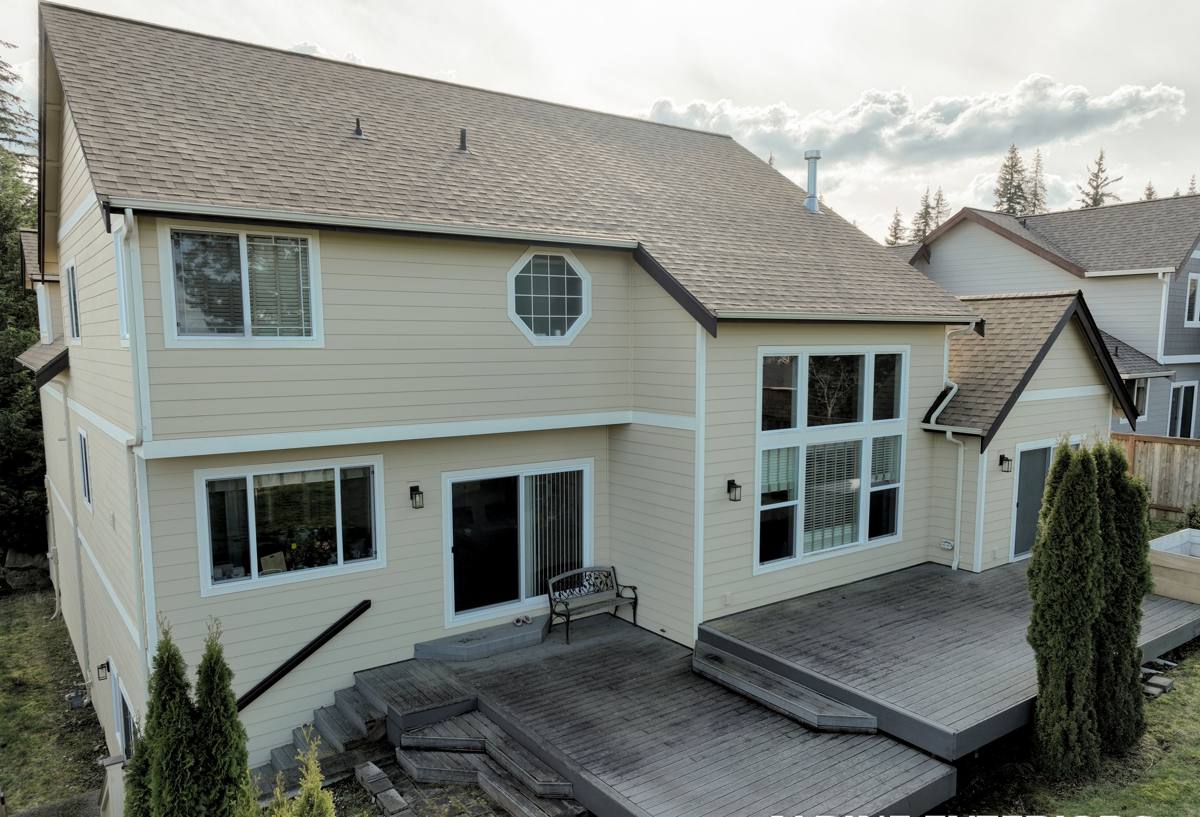
What Salt Air, Rain, and Moss Actually Do to a Deck
Salt Air
Salt in the air settles on every exposed surface, including fasteners, railing brackets, and any exposed metal hardware. Standard zinc-coated screws and brackets corrode faster this close to saltwater than they would even a few miles inland. This is a hardware problem more than a decking-board problem, but it's often overlooked.
Driving Rain
Wind-driven rain gets pushed sideways and upward under railings, around post bases, and into any gap in flashing or ledger connections. A deck that's fine in a light straight-down rain can still take on water at the house connection when storms roll in off the water.
Moss and Algae
Extended damp, shaded conditions are exactly what moss and algae need to establish. On a deck surface this shows up as slick green or black growth, usually starting on the north side or under furniture, planters, and anywhere airflow is blocked.
Why Composite Makes Sense for This Climate — With Caveats
Composite decking, particularly capped composite, resists moisture absorption far better than wood, which means less swelling, splintering, and rot. It doesn't need annual staining or sealing. That's a real advantage in a climate where wood decks in this area often need refinishing every one to two years just to keep up with the moss and gray weathering.
The caveat: composite boards still need the right substructure, the right fasteners, and correct spacing to perform as advertised. A composite deck built on an undersized or poorly ventilated frame will trap moisture underneath just as badly as a wood deck would — the board itself being low-maintenance doesn't fix a bad foundation.
Composite vs. Other Decking Materials for Blaine Conditions
| Material | Moisture Resistance | Maintenance | Moss Resistance | Typical Lifespan Here |
|---|---|---|---|---|
| Pressure-treated wood | Absorbs moisture, prone to warping near water | Annual cleaning and re-staining | Low — porous surface holds moss | 10-15 years |
| Cedar | Better than PT wood but still absorbs water | Regular sealing to prevent graying and rot | Low to moderate | 15-20 years |
| Uncapped composite | Moderate — core can still absorb some moisture | Low, occasional washing | Moderate | 15-20 years |
| Capped composite | High — polymer shell blocks moisture | Low, occasional washing | High | 25-30+ years |
What a Correct Composite Deck Build Involves Here
The Substructure
Joist spacing matters more with composite than with wood — most composite boards require tighter joist spacing (commonly 16 inches on center, sometimes less at stair treads or angled installs) to prevent flexing over time. We frame to the board manufacturer's specification, not to whatever spacing happens to be convenient.
Ventilation Underneath
A deck built low to the ground or over a patio without adequate airflow underneath traps moisture, which speeds up moss growth on the underside of boards and accelerates corrosion on fasteners and brackets. We build in ventilation gaps and, where the deck height allows, keep the underside clear of joist-level debris that holds water.
Fasteners and Hardware
This close to the water, we use stainless steel or coated fasteners rated for coastal exposure rather than standard-grade hardware. It costs a little more up front and saves the homeowner from rust streaks and failing brackets years down the line.
Flashing at the House Connection
The ledger board connection — where the deck ties into the house — is the single most common point of water intrusion on any deck. We flash this joint properly with a ledger flashing that directs water out and away from the house framing, which matters even more here given how much wind-driven rain Blaine gets off the water.
Choosing the Right Board for This Location
We generally steer homeowners toward capped composite boards for anything near the water in Blaine. The polymer cap sheds moisture and resists staining, mold, and salt residue far better than uncapped composite or wood. Uncapped composite still has a place on some budgets and some applications, but we're upfront that it will show wear faster in this specific environment.
Color and finish also matter more here than people expect. Darker boards absorb more heat, which can help boards dry faster after rain, but they also show salt residue and dust more visibly. Lighter and mid-tone woodgrain finishes tend to hide the fine white salt film that builds up on deck surfaces near the water between cleanings.
Railings, Stairs, and Trim
Railing posts and connections are another place where salt air causes problems that show up years later — bolts rusting inside post sleeves, aluminum railing corroding at welds, or cable rail hardware seizing up. We use hardware rated for coastal or marine-grade exposure on railing systems, and we check that post bases are properly flashed so water doesn't pool around the base connection.
Stair stringers and treads take extra wear from foot traffic carrying moisture and debris, so we pay particular attention to fastening and drainage at stairs, where standing water is most likely to collect.
Our Process for a Blaine Composite Deck Project
- Site visit and assessment — we look at sun and shade exposure, wind direction, existing structure condition, and drainage before recommending anything.
- Material selection — we walk through board options and hardware grade based on your specific exposure to wind, rain, and salt air.
- Permitting — decking work in Whatcom County and the City of Blaine may require permits depending on size, height, and attachment to the house; we handle this so it's not on you to figure out.
- Demo and substructure work — if replacing an existing deck, we inspect the ledger and framing for hidden rot before building on top of it.
- Installation — framing, decking, railing, and stairs built to spec with fasteners and flashing appropriate to a coastal climate.
- Final walkthrough — we go over basic maintenance and answer questions before we consider the job done.
Maintaining a Composite Deck in a Moss-Heavy Climate
Composite decking cuts down maintenance significantly compared to wood, but "low-maintenance" isn't "no-maintenance," especially with a moss season this long. A little seasonal upkeep goes a long way toward keeping the deck looking and performing the way it should.
- Sweep debris off the deck regularly, especially in fall when leaves and organic matter build up fastest
- Wash the surface with a soft-bristle brush and mild soap and water a couple of times a year, more often on shaded sections
- Avoid pressure washing directly into board grooves or fastener points — it can force water where it shouldn't go
- Keep planters, furniture, and rugs moved periodically so moisture and shade don't sit in one spot long enough for moss to take hold
- Check railing hardware and post bases once a year for early signs of rust or loosening
- Clear gutters and downspouts near the deck so runoff isn't draining directly onto the deck surface
Why It Matters That We Already Work in Blaine
A crew that mostly works inland doesn't always think about salt exposure, wind-driven rain angles, or how close a property sits to tidal influence when specifying hardware and board type. We work throughout Whatcom County, including Blaine's waterfront and near-waterfront properties, so the framing spacing, fastener grade, and drainage details we build in aren't guesswork — they're based on what actually holds up in this specific stretch of coastline versus what fails early.
We also know the practical side: what Blaine and Whatcom County permitting typically expects for deck projects, how wind exposure near the water affects railing and post specs, and which parts of a build are worth spending a little more on up front because redoing them later means tearing out finished decking.
Cost Factors for a Composite Deck in Blaine
| Factor | Why It Affects Cost |
|---|---|
| Board tier (uncapped vs. capped composite) | Capped boards cost more per square foot but need less long-term upkeep |
| Deck size and shape | More cuts, angles, and stairs add labor time |
| Substructure condition | Replacing rotted or undersized framing adds cost but is not optional if it's compromised |
| Railing type | Composite, aluminum, and cable rail systems vary widely in material and install cost |
| Height and access | Elevated decks and stairs require additional structural support and labor |
| Hardware grade | Coastal-rated fasteners and brackets cost more than standard-grade hardware |
We give an honest range once we've seen the site and talked through what you actually want — anyone quoting a firm number without seeing the property is guessing.
If you're planning a composite deck in Blaine, we're happy to take a look and walk you through what your specific site needs — no pressure, no obligation. Fill out the form below for a free estimate.