 Bellingham Siding
 Building a Deck That Holds Up in Blaine's Marine Climate
Blaine sits right on the water, and that changes what a deck needs to survive compared to a deck built twenty miles inland. Between the salt-laden air coming off Semiahmoo Bay and Drayton Harbor, the near-constant winter rain, and a moss season that can stretch from October into April, a deck here is under a different kind of stress than one built in a drier, inland part of Whatcom County. We build custom decks for homes along this stretch of the coast, and the design choices we make - material selection, fastener type, drainage detail, framing protection - are chosen specifically for this environment, not just pulled from a standard build sheet.
A deck that looks fine going in can start showing problems within two or three winters if those details get skipped. This page walks through what actually matters for a custom deck in Blaine: the material tradeoffs, the structural work most homeowners never see, and the process we follow from the first estimate to the final walkthrough.
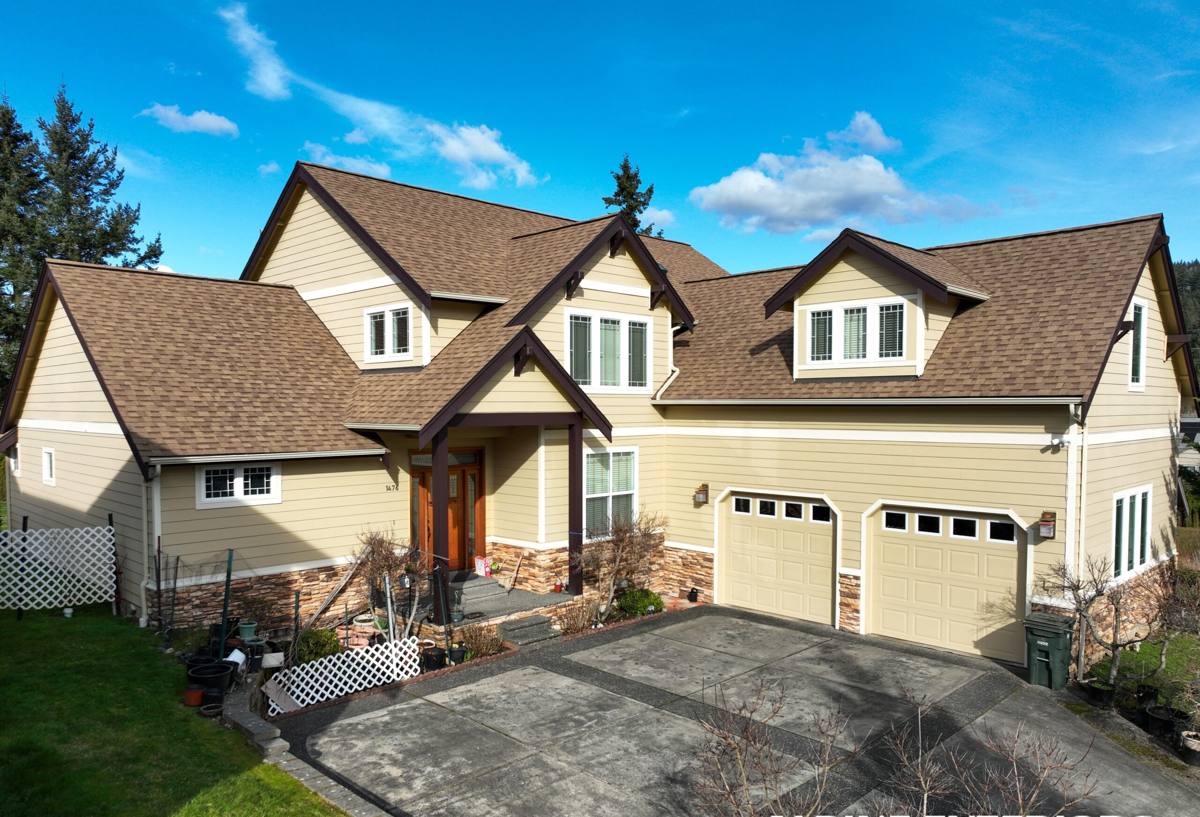
What Salt Air and Moss Season Do to an Unprotected Deck
Salt air accelerates corrosion on any exposed metal - fasteners, joist hangers, railing hardware - well beyond what you'd see in a typical inland Washington town. Cheaper or uncoated hardware can start rusting and staining the wood or composite around it within a couple of seasons, long before the decking itself is worn out.
Driving rain off the water finds every gap in flashing and every seam that wasn't sealed correctly. Water that gets behind a ledger board or pools on a joist top has nowhere to dry out quickly in our climate, which is exactly the setup that leads to rot in framing lumber that's supposed to last decades.
Moss and algae growth is its own maintenance problem. On any north-facing or shaded section of decking, moss builds a moisture-holding layer that keeps the surface wet longer after every rain, which speeds up wood decay and makes boards slick and unsafe underfoot. A deck design that ignores drainage and airflow is fighting moss season instead of working with it.
Choosing the Right Decking Material for a Blaine Property
There's no single "best" decking material - the right choice depends on how much maintenance you want to do, your budget, and how exposed the deck is to salt spray and standing moisture. We walk every homeowner through these tradeoffs honestly rather than pushing whichever product has the best margin.
| Material | Coastal Performance | Maintenance | Typical Lifespan |
|---|---|---|---|
| Pressure-treated fir/pine | Good if sealed regularly; vulnerable if coating lapses | Re-stain/seal every 1-2 years | 15-20 years with upkeep |
| Cedar | Naturally rot- and insect-resistant; still needs UV/moisture protection near salt air | Periodic oil or stain, more attentive near the water | 20-25 years with care |
| Composite decking | Excellent - doesn't absorb moisture or rot; handles salt exposure well | Occasional washing, no sealing/staining | 25-30+ years, per manufacturer warranty |
| PVC decking | Very good moisture resistance; some products can show more expansion/contraction in temperature swings | Low - washing only | 25-30+ years, per manufacturer warranty |
Composite and PVC decking have become popular choices for homes closest to the water simply because they take moisture and salt exposure out of the equation for the walking surface. That said, plenty of homeowners still prefer the look and feel of real wood, and cedar or treated fir can absolutely last if it's maintained on a schedule. Our job is to size up your specific site - sun exposure, wind direction, how sheltered the deck is - and give you a straight answer on what will actually hold up there, not a generic recommendation.
Railing and Fastener Choices Matter Just as Much
The decking surface gets most of the attention, but railing systems and fasteners are just as exposed to salt air. We favor stainless steel or coated fasteners rated for coastal/marine exposure over standard galvanized hardware, and we're selective about railing materials that won't pit or streak within a few years of exposure near the water.
The Structural Work Nobody Sees
A deck's surface material gets the attention, but the framing underneath is what determines whether it's still safe in fifteen years. This is where corners get cut on a lot of budget builds, and it's the part we won't compromise on.
Ledger Board Flashing
The ledger board - where the deck attaches to the house - is the single most common failure point on any deck, coastal or not. Without proper flashing and a water-resistant barrier between the ledger and the house rim joist, rain works its way behind the board over time and rots both the ledger and the framing it's attached to. We flash every ledger connection correctly, every time, because a deck is only as strong as this one joint.
Joist Protection and Airflow
Joist tops take on standing water from rain that gets through gaps in the decking above. We use joist tape or an equivalent protective barrier on framing lumber, and we design in enough airflow underneath the deck so moisture can actually dry out between storms instead of sitting there through an entire wet season.
Footings and Post Bases
Footings need to be sized and set to local frost and soil conditions, and post bases should keep wood posts elevated off concrete so they're not sitting in a puddle after every rain. We set footings to depth, not to whatever's fastest, and we use post bases designed to keep water away from end grain, which is where rot starts fastest.
Our Process From Estimate to Final Walkthrough
We keep the process straightforward because most homeowners just want to know what's happening and when.
- On-site assessment: We look at your specific location - sun exposure, wind and rain direction, drainage slope, existing structure if it's a rebuild - and talk through what you actually want to use the space for.
- Material and design walkthrough: We go over decking, railing, and structural options with honest pros and cons for your site, not a one-size-fits-all pitch.
- Written estimate: A clear scope and price, so there are no surprises once work starts.
- Permitting: We handle the permit process where required, including any structural details the local jurisdiction wants documented.
- Build: Footings and framing first, inspected before decking goes down, then decking, railing, and finish details.
- Final walkthrough: We go over the finished deck with you, including what maintenance it needs and on what schedule.
Permits and Local Considerations
Custom decks attached to a house, or built above a certain height, typically require a building permit in Whatcom County and within Blaine city limits - the exact threshold and setback requirements depend on your specific property and jurisdiction. We handle that process as part of the job rather than leaving it for the homeowner to sort out, and we design footings and framing to meet inspection requirements the first time, not after a callback.
If your property is close to a property line, a bluff, or shoreline-adjacent, there can be additional setback or environmental review considerations. We flag anything like that during the initial assessment so it's addressed in the design instead of becoming a delay later.
Maintenance Checklist for Blaine Homeowners
Whatever material you choose, a few habits go a long way toward getting the full lifespan out of your deck in this climate:
- Sweep leaves and debris off the deck surface regularly, especially in fall - trapped organic matter holds moisture and feeds moss growth
- Wash the surface at least once a year to remove salt residue, algae, and moss before it takes hold
- Check railing hardware and fasteners annually for early rust or corrosion, especially anything closest to the water side of the house
- Keep gutters and downspouts clear so roof runoff isn't dumping extra water onto or near the deck
- Re-seal or re-stain wood decking on schedule - don't wait until the finish has visibly failed
- Watch the ledger board area at the house connection for any staining, soft spots, or gaps in caulking
- Keep vegetation trimmed back so airflow under and around the deck isn't blocked
Why a Local Bellingham-Area Crew Matters
A crew that already works this part of Whatcom County knows what a deck is actually up against here - the salt exposure off the bay, the length of the wet season, and how moss behaves on a shaded north side versus a sun-exposed south side. That's not something you get from a general contractor who mostly builds inland and treats every job the same way. We've made the material and framing calls above specifically because of what we see happen to decks in this climate over time, not from a manufacturer's brochure.
Working locally also means we're not disappearing after the final payment. If a question comes up two years down the road about maintenance, hardware, or a spot that needs attention, you're calling a crew that's still in the area and built the deck in the first place.
Get a Straight Answer on Your Deck Project
If you're planning a new deck or replacing one that's showing its age, we're happy to come take a look and give you an honest read on what your site needs. There's no pressure and no obligation - just a straightforward estimate based on your property. Use the form below to get started.