 Bellingham Siding
 Why Decks in Blaine Wear Out Faster Than the National Average
Blaine sits at the top corner of Whatcom County, wedged between Semiahmoo Bay, Drayton Harbor, and the Canadian border. That location is part of what makes it a great place to have a deck — and part of what makes decks here fail faster than the same structure would in a drier, inland climate. Salt-laden air off the water accelerates corrosion on fasteners, hardware, and any metal flashing that isn't rated for it. Driving rain, often pushed sideways by wind coming off the strait, finds its way into joints and seams that would stay dry in a calmer climate. And Blaine's long, damp shoulder seasons give moss and algae months at a time to colonize any decking surface that doesn't drain and dry quickly.
None of that means a deck in Blaine is doomed. It means the deck has to be built, and rebuilt, with those specific stresses in mind — not with a generic approach pulled from a warmer, drier region.
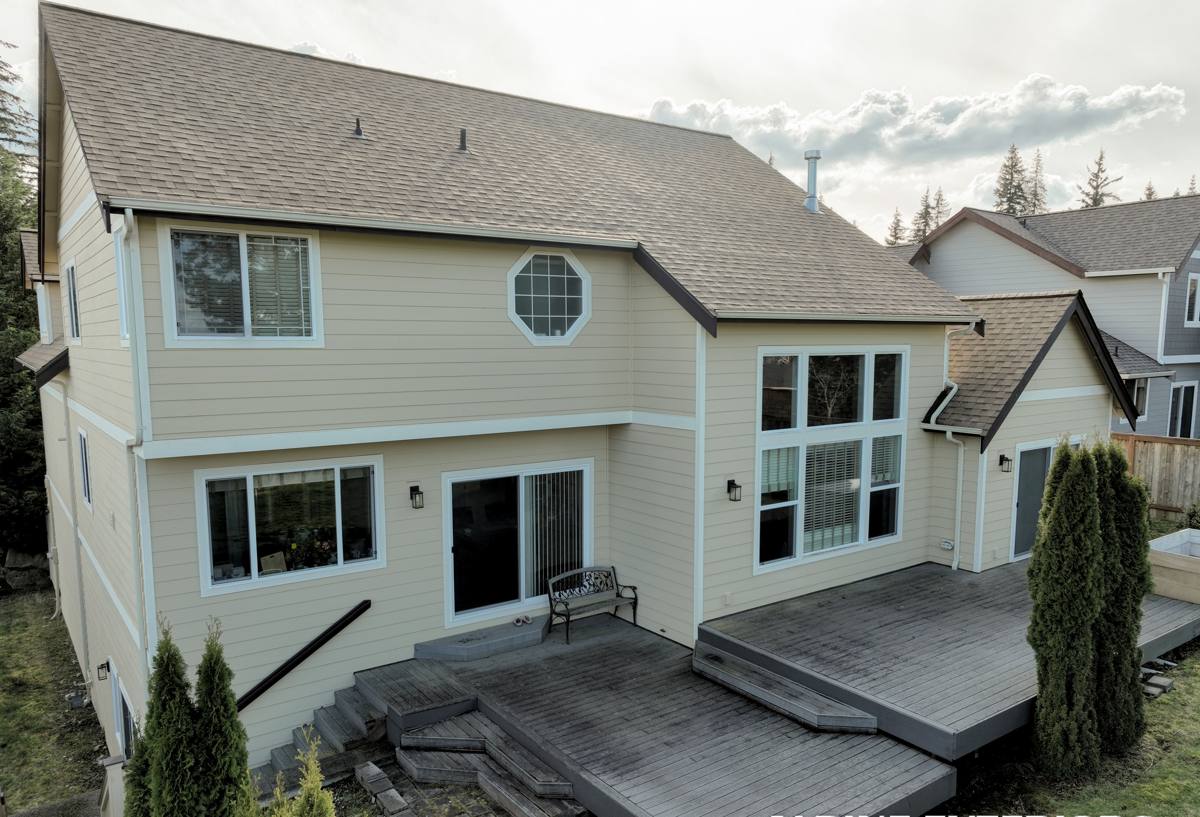
Signs a Blaine Deck Needs Replacement, Not Just Repair
Homeowners often call us wanting a few boards swapped, and sometimes that's all it takes. But there's a point where patching a deck costs more over time than replacing it correctly. Some signs that you're past the repair stage:
- Soft, spongy spots in the decking that go beyond a single board
- Rust streaks bleeding out from fasteners or brackets — a sign the hardware itself is corroding, not just staining
- The ledger board (where the deck attaches to the house) shows soft wood, gaps, or water staining on the siding above it
- Persistent green or black growth that returns within weeks of cleaning, even on a properly pitched deck
- Posts or footings that feel loose, or visible movement when the deck is loaded with weight
- Structural framing (joists, beams) that's cracked, split, or has lost its crown
If what you're seeing is limited to surface boards and the frame underneath is sound, repair can make sense. If the framing, ledger connection, or footings are compromised, replacement is the honest recommendation — patching over a bad substructure just delays a bigger problem.
What a Correct Deck Replacement Actually Involves
The Substructure Comes First
The part of a deck nobody sees is the part that determines how long it lasts. Footings need to be sized and set below frost depth and bear on solid ground — not resting on a deck block sitting on soft, wet soil, which is common on older Blaine decks built before current code expectations. Posts, beams, and joists need to be rated for the actual span and load, with hardware matched to the treated lumber being used (standard fasteners corrode fast against modern treated wood, and even faster in salt air).
Ledger and Flashing — the Single Biggest Failure Point
Most rotten decks we tear out failed at the ledger connection, where the deck meets the house. If that joint isn't flashed correctly — with proper step flashing and a membrane that sheds water away from the house framing — driving rain works its way behind the siding over years, not weeks. It's slow, quiet damage that's expensive to find until the deck itself starts to sag. Correct flashing at this joint isn't optional; it's the difference between a deck that lasts and one that rots the house behind it.
Decking Surface
The visible boards get the least of our attention during planning, precisely because they're the easiest part to get right once the structure underneath is sound. What matters here is drainage — gaps sized to let water and debris through rather than pool on top — and choosing a material suited to a climate that stays damp for months at a stretch.
Choosing a Decking Material for Blaine's Climate
There's no single "best" decking material — there's a best material for a given budget, maintenance appetite, and exposure. Here's how the common options actually compare for a coastal Whatcom County property:
| Material | Moss/Algae Resistance | Maintenance | Typical Lifespan | Notes for Blaine |
|---|---|---|---|---|
| Pressure-treated wood | Low — needs regular cleaning | Annual cleaning, periodic sealing | 10–15 years | Lowest upfront cost; requires the most upkeep in a damp climate |
| Cedar | Moderate | Sealing every 1–2 years | 15–20 years | Natural look; still needs consistent maintenance to resist moss in shaded, damp spots |
| Composite decking | High | Occasional washing | 25–30 years | Best balance of low upkeep and appearance for coastal exposure |
| PVC/capped decking | Highest | Minimal — soap and water | 25–30+ years | Fully moisture-resistant surface; premium cost, best for high-exposure or heavily shaded decks |
We install all of the above and will give you a straight opinion on which fits your specific deck — its sun exposure, proximity to the water, and how much upkeep you actually want to do. A shaded, north-facing deck near Drayton Harbor is a different maintenance conversation than a sunny, open deck a few blocks inland.
Fasteners and Hardware
Whatever decking material you choose, the hardware matters just as much. In a salt-air environment, we use fasteners and structural connectors rated for coastal or treated-lumber exposure — not standard interior-grade hardware that will rust and stain the deck within a couple of seasons.
Our Deck Replacement Process
- On-site assessment — we check the framing, footings, and ledger connection, not just the surface boards, so the estimate reflects what's actually needed
- Full removal — old decking, and any framing that doesn't pass inspection, comes out; we don't build a new deck on top of a compromised structure
- Substructure rebuild — footings, posts, beams, and joists sized correctly for the deck's actual use and span
- Ledger flashing — proper step flashing and membrane at the house connection, the single most important waterproofing detail on the whole project
- Decking installation — boards installed with correct gapping for drainage and airflow underneath
- Final walkthrough — we go over the finished deck with you, including what maintenance it actually needs going forward
Cost Factors in a Blaine Deck Replacement
Every deck is different, so we don't quote a number until we've seen the site, but the main variables that move the price are consistent:
- Deck size and shape (multiple levels, angles, or built-in features cost more than a simple rectangle)
- Condition of the existing substructure — how much of the framing and footings need full replacement versus reuse
- Decking material chosen (pressure-treated wood is the lowest upfront cost; PVC/capped composite is the highest)
- Railing type and code requirements, especially on elevated decks
- Site access — decks close to the water or on sloped lots can add labor time
- Permitting, which is typically required for structural deck replacement in Whatcom County
As a rough starting range, straightforward pressure-treated replacements tend to sit at the lower end of the market, while larger composite or PVC decks with railing upgrades run meaningfully higher. We'll walk you through where your project falls once we've seen it in person.
Why Hiring a Crew That Already Works in Blaine Matters
Deck-building rules of thumb that work fine in a drier part of the state don't always hold up on the water in Whatcom County. A crew that regularly works Blaine and the surrounding coastal communities already knows to spec corrosion-resistant hardware as standard, not an upsell; already builds ledger flashing details for driving, wind-blown rain rather than straight-down rain; and already accounts for moss and algae growth patterns tied to specific sun and shade exposures along the bay. That local pattern recognition shows up in fewer callbacks and a deck that's still solid well past the point a generic build would be showing problems.
Keeping a New Deck in Good Shape
A correctly built deck still needs some ongoing attention, especially in a climate like this one. A simple annual routine goes a long way:
- Sweep debris out of the gaps between boards before it holds moisture against the wood
- Rinse or wash the surface at least once a year to knock back early moss and algae growth
- Check railing connections and stair stringers for movement each spring
- Reseal wood or cedar decking on the schedule appropriate to the product — composite and PVC don't need this step
- Keep gutters and downspouts near the deck clear so runoff isn't draining directly onto or under it
If you're in Blaine and your deck is showing soft spots, rust stains, or persistent moss no amount of cleaning fixes, it's worth having someone look at the framing before you spend more money patching the surface. We're happy to come take a look, tell you honestly whether repair or replacement makes sense, and put together a free, no-pressure estimate for the work.