 Bellingham Siding
 Roof Repair Built for Blaine's Coastal Climate
Blaine sits right on the water at the northern edge of Whatcom County, and that location shapes everything about how a roof ages here. Salt-laden air off the shoreline works its way into fasteners, flashing, and exposed metal year-round. Add in driving rain that comes sideways off the water during winter storms, and a moss season that can stretch from late fall through early summer, and you have a climate that is genuinely harder on a roof than most inland parts of the county. A repair that would hold up fine in a drier, more sheltered location can fail within a season or two in Blaine if it isn't done with this environment in mind.
We work on roofs throughout Whatcom County, but Blaine homes get a specific kind of attention because of that combination of salt exposure, wind-driven rain, and prolonged dampness. This page is about roof repair specifically for Blaine — what local homes actually need, what a correct repair involves, and how to tell when a patch job is the right call versus when it's time to talk about something bigger.
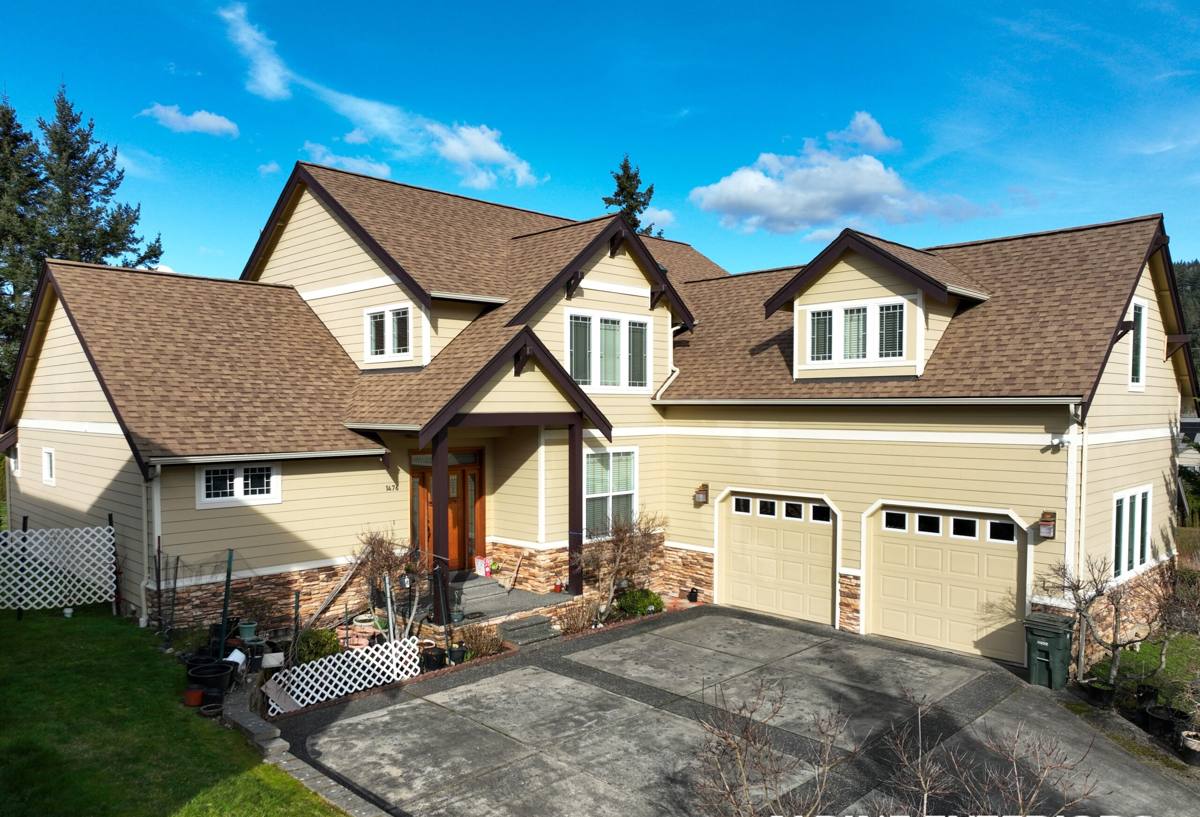
Why Blaine Roofs Wear Differently
Three climate factors do most of the damage to roofs in this area, and they tend to compound each other rather than act alone.
Salt Air and Corrosion
Airborne salt accelerates corrosion on any exposed metal — flashing, drip edge, nail heads, gutter fasteners, and vent stacks. Once corrosion starts on flashing, it doesn't stay cosmetic for long. Pitted or thinning flashing loses its ability to shed water at the exact points where a roof is already most vulnerable: chimneys, valleys, skylights, and wall-to-roof transitions.
Wind-Driven Rain
Rain that falls straight down is one problem. Rain that gets pushed sideways under shingle tabs and around flashing edges is a different, more serious problem. Blaine's exposure to weather coming off the water means wind-driven rain is common, and it finds any gap that a calmer climate would never expose. This is why repairs here need to account for wind uplift and lateral water intrusion, not just straight vertical drainage.
A Long Moss Season
Cool, damp conditions for much of the year create ideal growing conditions for moss and algae, especially on north-facing slopes and shaded sections of roof. Moss holds moisture against the shingle surface far longer than open air would, which speeds up granule loss and can lift shingle edges enough to let water underneath. In Whatcom County, moss isn't a once-a-decade cleanup — for many Blaine homes it's an ongoing maintenance item that directly affects how long a roof repair lasts.
Common Problems We Find on Blaine Roofs
- Corroded or lifted flashing around chimneys, skylights, and wall intersections
- Moss and algae buildup on shaded or north-facing slopes
- Granule loss from shingles aged by salt exposure and prolonged moisture
- Gutter and downspout backups that push water under the roof edge instead of away from it
- Nail pops and fastener corrosion that loosen shingles in high wind
- Soft or discolored decking at valleys and eaves where water has been sitting longest
- Deteriorated pipe boots and vent seals that crack and shrink over time
Most of these show up first as small, isolated issues. Caught early, they're straightforward repairs. Left alone through a wet Whatcom County winter, they turn into decking damage, interior leaks, and insulation problems — which is a much more expensive conversation.
What a Correct Roof Repair Actually Involves
Real Diagnosis, Not Guesswork
A leak's entry point is often several feet away from where the water actually shows up inside the house, because water travels along decking and framing before it drips. A correct repair starts with tracing the problem to its actual source — checking flashing, valleys, penetrations, and the surrounding shingle field — rather than just patching the spot where a stain appeared on the ceiling.
Matching Materials, Not Just Covering the Spot
Shingles fade and wear unevenly over time, and a patch using the wrong profile, weight, or color will stand out and, more importantly, may not seal properly against the surrounding material. We match existing shingle type and, where possible, color and exposure so the repair integrates into the roof plane instead of sitting on top of it as an obvious add-on.
Flashing and Underlayment Done Right
Given how hard salt air is on exposed metal in Blaine, flashing repairs need corrosion-resistant materials and proper step-and-counter technique — not just a bead of sealant over the old piece. Underlayment at the repair area also gets replaced, not reused, since old underlayment that's already been wet and dried repeatedly has lost most of its water-shedding ability.
Fasteners and Sealants Rated for the Exposure
Standard fasteners corrode faster in coastal air. We use corrosion-resistant fasteners and sealants rated for the kind of sustained moisture and salt exposure Blaine roofs deal with, rather than whatever is cheapest at general building-supply pricing. It costs a little more up front and saves a callback in two years.
Repair or Replace? How We Help You Decide
Not every roof problem in Blaine needs a full replacement, and not every roof is a good candidate for another round of patching. The honest answer depends on the roof's age, how widespread the damage is, and how much of the deck underneath is still sound. Here's the general framework we use when we're standing on the roof:
| Factor | Favors Repair | Favors Replacement |
|---|---|---|
| Roof age | Under 15 years, or well within expected lifespan for the material | Near or past the material's typical service life |
| Damage extent | Isolated to one section, flashing point, or slope | Spread across multiple slopes or the whole roof |
| Decking condition | Solid, dry decking under the damaged area | Soft, delaminated, or repeatedly wet decking |
| Granule loss | Localized wear near the problem area | Widespread granule loss across most shingles |
| Moss/algae history | First occurrence, manageable with cleaning | Recurring, heavy growth that's already compromised shingle edges |
| Prior repairs | First or second repair on this roof | Multiple past patches in different areas |
When a roof lands mostly in the "favors repair" column, we repair it — we don't upsell a replacement a homeowner doesn't need yet. When it lands mostly in the other column, we'll say so plainly and explain why, including the cost of continuing to patch a roof that's genuinely at the end of its service life.
Our Roof Repair Process
- On-site inspection. We get on the roof (not just look from the ground) and check the problem area plus the surrounding field, flashing, and penetrations.
- Interior check when relevant. If there's an active leak, we look at attic space and interior ceiling lines to trace the water's actual path.
- Honest assessment. We explain what's actually wrong, what it will take to fix it correctly, and whether repair or replacement makes more sense.
- Written estimate. Clear scope of work and a price range before anything is touched — no surprise add-ons mid-job.
- The repair itself. Damaged shingles, decking, or flashing removed; underlying structure checked and dried out if needed; new materials matched and installed with corrosion-resistant fasteners and sealants.
- Cleanup and final check. Site cleaned, repair area inspected for a tight seal, and we walk you through what was done.
Moss, Algae, and Living With a Long Wet Season
Because moss is such a recurring issue for roofs in this part of Whatcom County, a one-time repair without a maintenance plan often just buys a homeowner a year or two before the same growth returns. Where it makes sense, we talk through options like gentle moss removal (never pressure-washing shingles, which strips granules and shortens shingle life), zinc or copper strips at the ridge to slow regrowth on future rain events, and keeping tree cover trimmed back so more of the roof gets sun and airflow. None of these are one-time fixes — they're part of an ongoing rhythm that coastal Whatcom County homes need, similar to how gutters need regular clearing here more than in drier inland climates.
Signs Your Blaine Roof Needs Repair Now
- Water stains or discoloration on interior ceilings, especially after a windy rainstorm
- Visible moss clumps or dark algae streaking on shingles
- Shingles that look curled, cracked, or missing granules in patches
- Rust streaks below flashing or vent stacks
- Sagging or soft spots noticeable when walking the attic
- Gutters overflowing or pulling away from the fascia
- Daylight visible through the roof deck from inside the attic
Any one of these on its own may still be a manageable repair. Several at once, or any sign of interior water damage, means it's worth having someone look sooner rather than later — small roof problems in this climate don't stay small for long.
Why Hiring a Crew That Already Works in Blaine Matters
A roofer based well inland, unfamiliar with coastal exposure, may default to standard materials and techniques that hold up fine in a drier microclimate but underperform here. Knowing to spec corrosion-resistant fasteners as a default, to plan flashing details for wind-driven rain rather than just vertical runoff, and to expect a longer, more active moss season all come from working roofs in this specific area repeatedly — not from a general roofing checklist. That familiarity shows up in fewer callbacks and repairs that actually hold through a full Whatcom County winter.
What Repair Costs Depend On
Every roof and every repair is different, so we won't quote a number without seeing the roof, but the broad range for a typical isolated repair — a section of flashing, a patch of shingles, a leak trace-and-fix — usually falls somewhere between a few hundred dollars and a couple thousand, depending on the factors below. More extensive damage naturally runs higher.
| Cost Factor | Why It Matters |
|---|---|
| Size of the affected area | A single flashing point costs far less to fix than a full slope |
| Decking condition | Rotted or soft decking adds material and labor beyond the surface repair |
| Roof pitch and access | Steep or hard-to-access roofs take longer and require more safety setup |
| Material match | Matching an older or discontinued shingle style can add sourcing time |
| Extent of moss/algae damage | Heavier growth often means more shingles need replacing, not just cleaning |
If your Blaine home has a roof issue — a stain that showed up after the last storm, moss that's gotten out of hand, or flashing that's starting to look rough — we're glad to come take a look and give you a straight answer about what it needs. The estimate is free, there's no pressure to book anything on the spot, and you can reach us through the form below.