 Bellingham Siding
 Siding Installation in Blaine: Built for a Waterfront Climate
Blaine sits at the far northwest corner of Whatcom County, right on the Strait of Georgia and a short drive from the Canadian border. Homes here take a different kind of weather beating than houses further inland around Bellingham. The siding on a Blaine home isn't just dealing with rain — it's dealing with salt-laden air coming off the water, wind-driven moisture that gets pushed sideways into wall assemblies, and a moss and algae season that runs most of the year thanks to persistent damp and shade. Siding installation in this area has to be planned around those specific stresses, not just installed the same way it would be anywhere else in Western Washington.
We install James Hardie fiber cement siding exclusively, and Blaine is one of the areas where that decision matters the most. Salt air and constant moisture are exactly the conditions that expose the weaknesses in other siding materials — and exactly the conditions Hardie's product lines were engineered to handle.
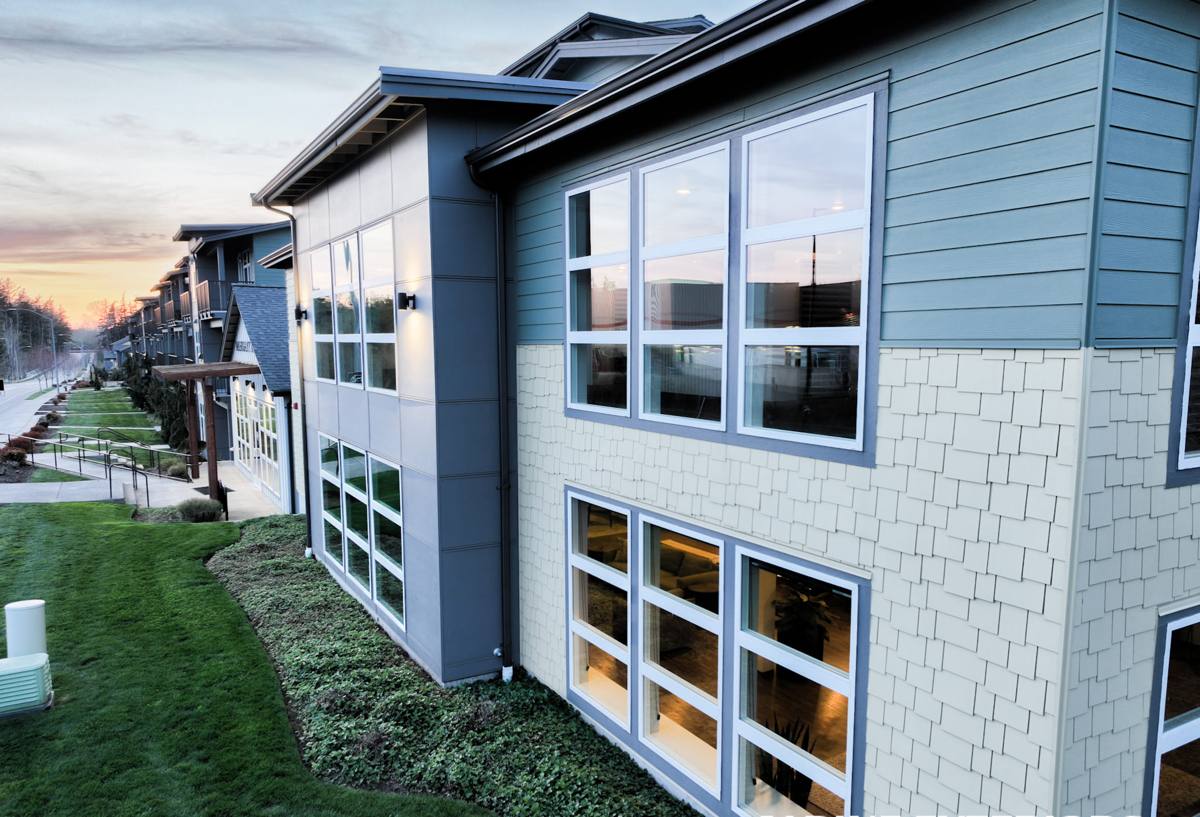
What Blaine's Climate Actually Does to Siding
Salt Air and Coastal Exposure
Properties close to the water or with a direct line to the Strait get airborne salt on every surface, siding included. Salt is corrosive to fasteners and hardware, and it accelerates the breakdown of finishes that aren't formulated to resist it. Over years, that shows up as fastener staining, premature fading, and coatings that chalk or peel faster than the manufacturer's stated lifespan.
Driving Rain
Blaine's exposure to wind off the water means rain doesn't just fall straight down — it gets driven horizontally into siding, trim, and butt joints. That puts real pressure on flashing details, caulking, and the water-resistive barrier behind the siding. A siding job that looks fine on a calm day can still fail during a wind-driven storm if the water management underneath wasn't done correctly.
Moss, Algae, and Prolonged Dampness
Shaded north walls and areas near mature trees or dense landscaping stay damp for extended stretches, which is exactly what moss and algae need to establish. Some siding materials absorb moisture into the substrate itself, which lets organic growth take hold and slowly degrade the material from the surface inward. Others simply hold moisture on the surface longer than they should because of poor drainage behind the panels.
Why We Only Install James Hardie in This Area
Fiber cement is not moisture-permeable the way wood-based or engineered-wood products are, and it's non-combustible, which matters given Whatcom County's dry-season wildfire risk in surrounding areas even though Blaine itself is coastal. Hardie's ColorPlus factory finish is baked on and warrantied against fading and chipping, which holds up better against salt exposure than field-applied paint that has to be reapplied and maintained by the homeowner. For a location like Blaine, where the material is fighting salt, wind, and moisture simultaneously, we don't think it makes sense to install anything else.
That's also why we don't install vinyl, LP SmartSide, primed spruce, cedar, or other fiber cement alternatives like Cemplank or Allura. Each of those products has legitimate uses elsewhere, but in a coastal, high-moisture environment like Blaine, they carry maintenance burdens or moisture vulnerabilities that we're not willing to put our name behind.
What a Correct Installation Involves
The siding material is only part of the job. In an area like Blaine, the installation details are what actually determine whether the wall assembly holds up over the following decades.
- Proper weather-resistive barrier installation with correctly lapped and taped seams
- Rainscreen or drainage gap behind the siding so any moisture that gets past the cladding can drain and dry instead of sitting against the substrate
- Correct flashing at every window, door, and roofline penetration, installed to shed water outward, not trap it
- Fastener placement and spacing per James Hardie's published installation instructions — this is what keeps the warranty valid
- Proper clearance between the bottom of the siding and grade, decks, or roof lines to avoid wicking moisture
- Correctly caulked and sealed joints at trim, corners, and butt seams, using products rated for the exposure
- Ventilation detailing that doesn't trap moisture inside the wall cavity
Skipping or rushing any one of these steps is how a siding job that looks good on installation day ends up with moisture problems five or ten years later — and in a coastal environment those problems tend to show up faster than they would inland.
Our Process for a Blaine Siding Installation
1. On-Site Assessment
We look at the home's exposure — how close it is to open water or prevailing wind, how much shade and dampness the walls get, and the condition of the existing siding, sheathing, and any water damage already present. This tells us what's driving the replacement and what needs extra attention during installation.
2. Product and Line Selection
James Hardie offers different product lines and, in some regions, climate-specific HZ formulations. We help homeowners choose the panel style, texture, and color that fit the home and hold up to the specific exposure that property has.
3. Tear-Off and Substrate Inspection
Once the old siding is off, we check the sheathing and framing underneath for rot or moisture damage before anything new goes on. Covering up existing damage with new siding just hides the problem — it doesn't fix it.
4. Water Management Installation
This is the step that matters most for long-term performance: weather-resistive barrier, drainage plane, and flashing, all installed before a single piece of siding goes up.
5. Siding Installation to Manufacturer Spec
Fastening, spacing, and joint treatment follow James Hardie's installation requirements exactly, which is also what keeps the manufacturer's warranty intact.
6. Final Walkthrough
We go over the finished work with the homeowner, including basic care guidance for a coastal property — what to expect from the ColorPlus finish over time and what routine maintenance (if any) is worth doing.
Why It Matters to Hire a Crew That Already Works This Area
A crew that mostly works inland Bellingham neighborhoods may not think twice about drainage gaps or flashing redundancy, because inland homes don't punish shortcuts as quickly. In Blaine, they do. A crew that regularly works this stretch of Whatcom County knows to plan for wind-driven rain on exposed elevations, to pay closer attention to shaded walls where moss takes hold, and to treat salt exposure as a real factor in fastener and finish choices — not an afterthought. That local familiarity shows up in fewer callbacks and a siding job that's still performing well a decade in.
Cost Factors for Siding Installation in Blaine
Every home is different, but a few factors tend to move the price of a siding installation project in this area more than others.
| Factor | Why It Affects Cost |
|---|---|
| Home size and wall complexity | More corners, dormers, and trim details mean more labor and material cuts |
| Existing substrate condition | Rot or moisture damage found during tear-off requires repair before new siding goes on |
| Siding profile and finish selection | Lap width, texture, and color affect material cost |
| Water management upgrades | Adding or upgrading a drainage plane behind the siding adds labor but improves long-term performance |
| Trim and accessory work | Window and door trim, fascia, and corner boards are often replaced alongside siding |
| Access and site conditions | Multi-story walls, tight lot lines, or landscaping obstacles affect labor time |
We don't publish blanket pricing because these variables change too much from home to home, but we walk every property in person and give a clear, itemized estimate before any work starts.
Signs Your Blaine Home May Need Siding Replaced Soon
- Persistent moss or algae growth that returns quickly after cleaning
- Soft spots, bubbling, or visible warping in the siding material
- Paint or finish that's peeling, chalking, or fading unevenly, especially on walls facing the water or prevailing wind
- Visible gaps at seams, corners, or trim where caulking has failed
- Rust staining around fasteners
- Any signs of moisture or discoloration on interior walls that back up to exterior siding
If a home in Blaine is showing any of these signs, it's worth having someone look at the wall assembly, not just the surface material, since the underlying water management is usually the real issue.
If you're weighing a siding project for a home in Blaine, we're happy to walk the property, take a real look at the exposure and existing conditions, and put together a straightforward estimate — no pressure, no obligation. Use the form below to get started.