 Bellingham Siding
 Composite Decking Built for Fairhaven's Marine Climate
Fairhaven sits close enough to Bellingham Bay that salt-laden air, wind-driven rain, and long stretches of overcast, damp weather are simply part of owning a home here. That combination is hard on outdoor structures in general, and it's especially hard on wood decks. Composite decking has become the go-to answer for homeowners in this part of Whatcom County who want a deck that holds up to the marine environment without the annual maintenance grind that wood demands.
But "composite decking" isn't a single product with one installation method. Board composition, substructure requirements, and drainage details all matter, and getting them wrong in a climate like Fairhaven's shows up fast — as staining, board movement, soft spots in the framing, or slick, moss-covered walking surfaces by the second winter. This page covers what a composite deck actually needs to perform well in Fairhaven specifically, what a correct installation involves, and how our process addresses the local conditions.
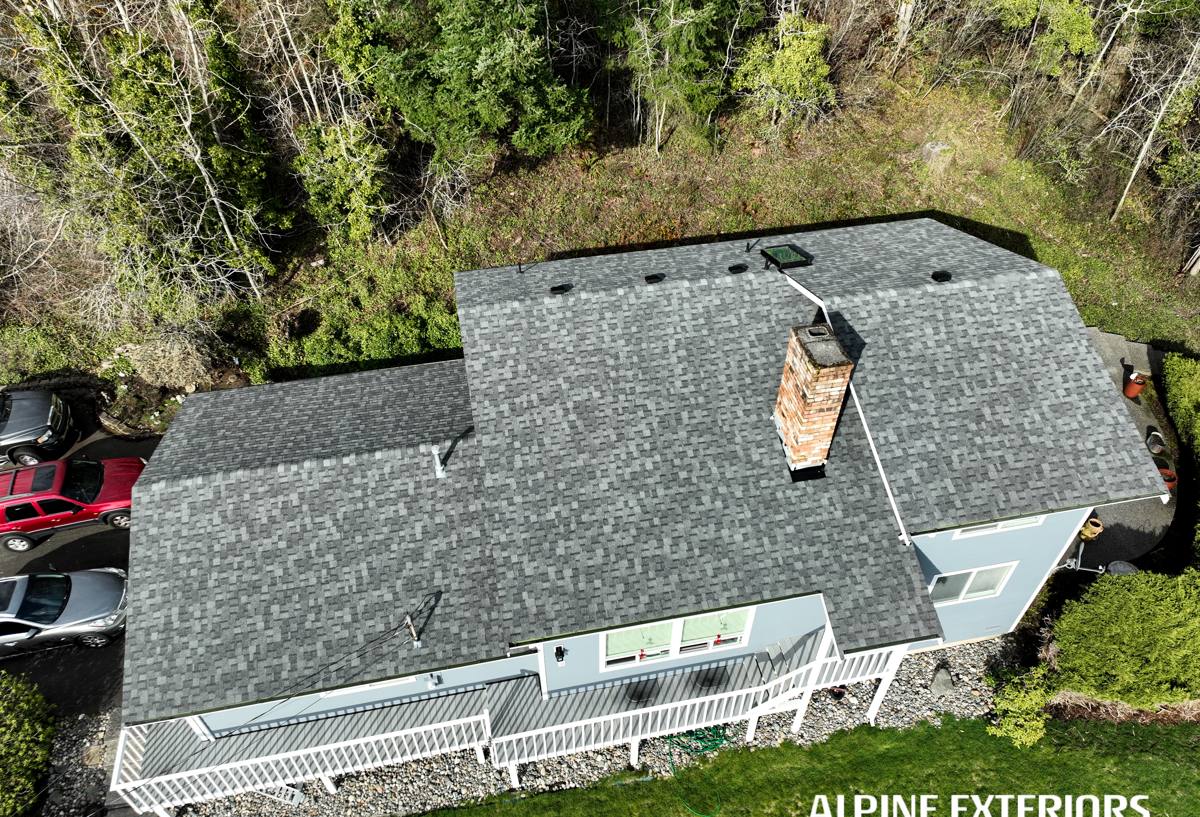
Why Fairhaven's Conditions Are Tougher on Decks Than Inland Bellingham
Fairhaven's proximity to the water changes the math on outdoor construction in a few concrete ways:
- Salt air accelerates corrosion. Fasteners, joist hangers, and structural screws that would last decades inland can start showing rust and pitting years sooner this close to the bay.
- Driving rain finds gaps. Wind off the water pushes rain sideways and underneath deck boards, not just straight down, which means drainage and flashing details matter more than they would in a sheltered inland yard.
- Long moss season means longer surface dampness. Northwest Washington's wet season stretches for months, and shaded or north-facing decks in Fairhaven can stay damp for days after a storm, which is exactly the condition moss and algae need to establish.
- Tree cover adds organic debris. Many Fairhaven lots have mature trees nearby, and needles, leaves, and pollen collect in board gaps and against ledger boards, holding moisture against the structure.
None of this means composite decking is a bad fit for Fairhaven — it means the details of the build have to account for these conditions instead of following a generic install checklist.
What a Correct Composite Deck Build Includes
Substructure First
The composite boards are the part homeowners see, but the framing underneath is what determines whether the deck lasts. In a marine climate, we treat the substructure as the priority, not an afterthought:
- Pressure-treated or naturally rot-resistant framing, sized and spaced according to the decking manufacturer's span requirements — composite boards typically need tighter joist spacing than wood, especially at angles or on stairs.
- Corrosion-resistant fasteners and hardware rated for coastal or treated-lumber contact, not standard interior-grade hardware.
- Joist tape or a flashing membrane on top of the framing to keep moisture from wicking into the wood over time.
- Proper ledger board flashing where the deck attaches to the house, so water is directed away from the wall assembly rather than trapped behind it.
Drainage and Airflow Underneath
A composite deck that sits low to the ground or over a fully enclosed space needs a way for moisture to escape. In Fairhaven's damp season, a deck with no ventilation underneath will trap humidity against the framing even if the surface boards themselves are moisture-proof. We plan for cross-ventilation or a drainage system underneath low decks, and we grade the ground below to shed water rather than pool it.
Board Selection for a Salt-Air Environment
Not all composite boards perform the same way near the water. We look at:
- Capped composite vs. uncapped. Fully capped boards (a polymer shell around a wood-composite core) resist moisture absorption and staining far better than uncapped composite, which matters more here than in a dry inland climate.
- Fade and mold resistance ratings. Manufacturers publish warranty terms specifically for staining and mold — worth checking against Fairhaven's damp, shaded conditions rather than assuming a generic warranty applies evenly everywhere.
- Surface texture. A brushed or grooved texture sheds water and resists slickness better than a smooth, glossy board, which matters on a deck that stays damp for extended periods.
Composite vs. Wood in Fairhaven: An Honest Comparison
We install both, and each has a legitimate place. The table below reflects how each performs specifically under Fairhaven's salt air, rain, and moss conditions — not a generic comparison.
| Factor | Composite Decking | Wood Decking |
|---|---|---|
| Moisture absorption | Low (capped boards resist water uptake) | Higher; requires sealing/staining on a regular cycle |
| Moss and algae resistance | Better on textured, capped boards; still needs periodic cleaning | More porous surface holds moisture, moss establishes faster |
| Maintenance routine | Periodic washing; no staining or sealing | Annual or biannual cleaning, sanding, sealing/staining |
| Upfront cost | Higher material cost | Lower material cost |
| Long-term cost | Lower over a 15-20 year span due to reduced upkeep | Higher cumulative cost from repeat maintenance |
| Appearance over time | Consistent color if capped and manufacturer-rated for fade resistance | Natural look but graying/weathering without upkeep |
| Structural framing needs | Same coastal-rated framing standards apply regardless of surface material | Same coastal-rated framing standards apply regardless of surface material |
The honest takeaway: composite costs more up front, but in a climate that punishes wood's maintenance schedule the way Bellingham Bay's air does, most Fairhaven homeowners find the lower-upkeep tradeoff worth it over the life of the deck.
Our Installation Process
1. On-Site Assessment
We walk the property, check sun and shade exposure, look at existing drainage patterns, and note any tree cover or wind exposure specific to the lot. A deck on a shaded, tree-lined Fairhaven property needs different ventilation planning than one with open bay-facing exposure.
2. Framing and Structural Work
We build or reinforce the substructure to current code and to the decking manufacturer's engineering specs, using corrosion-resistant hardware throughout. This is the step that's easiest to shortcut and most expensive to fix later, so we don't rush it.
3. Drainage and Flashing Details
Ledger flashing, joist protection, and underdeck drainage (where applicable) go in before a single composite board is installed. These details are invisible once the deck is finished, but they're what determines whether the structure is still sound in fifteen years.
4. Composite Board Installation
Boards are installed with manufacturer-specified fastening systems (hidden clips, color-matched screws, or both depending on the product), with expansion gaps sized correctly for temperature swings and proper spacing to allow water to drain through rather than pool on the surface.
5. Finish Details
Fascia, stair treads, railing integration, and picture-frame border trim (if selected) are finished to match the board system, with attention to any transitions where water runoff needs to be directed away from the house.
Maintenance Reality Check for a Fairhaven Deck
Composite decking is lower-maintenance than wood, not maintenance-free. Given the local conditions, here's what actually keeps a composite deck performing well:
- Sweep off leaves, needles, and debris regularly, especially in fall and through the wet season — trapped organic matter is what feeds moss and mildew growth.
- Wash the deck surface periodically with a soft-bristle brush and mild soap or a composite-safe cleaner to remove pollen film and early moss growth before it takes hold.
- Check underdeck ventilation isn't blocked by stored items, planters, or overgrown landscaping.
- Inspect fasteners and railing hardware annually for early signs of corrosion, particularly in the first few years after install.
- Avoid pressure-washing at close range or high PSI directly into board seams, which can force water into fastening systems.
Why Local Installation Experience Matters
A composite deck built to a generic national spec sheet can still fail early in a coastal Whatcom County climate if the crew installing it hasn't accounted for what salt air, driving rain, and moss season actually do to fasteners, framing, and board seams over time. Crews who work Fairhaven and the surrounding Bellingham area regularly know which details get skipped on cheaper installs — inadequate joist spacing, missing flashing, fasteners rated for indoor use — and where those shortcuts show up first: soft framing near the ledger board, rust streaks around screw heads, or moss colonizing shaded low spots within the first couple of wet seasons.
We don't install a product or use a technique we wouldn't stand behind for our own property in this same climate. That means being upfront when a lower-tier board or a stripped-down framing approach isn't going to hold up here, even if it's cheaper to install today.
Pre-Estimate Checklist
Before we come out, it helps to know the answers to a few questions — they shape both the design and the budget conversation:
- Is this a new deck, or a replacement of an existing wood or composite structure?
- Roughly how large an area are you looking to cover?
- Is the site shaded, tree-covered, or fairly open to sun and wind?
- Do you need railing, stairs, or integration with an existing patio or entry door?
- Any known drainage issues on the property already (standing water, soggy ground near the foundation)?
Get a Straightforward Estimate
If you're weighing a new composite deck or a replacement in Fairhaven, we're glad to come take a look, walk the site with you, and give you a straightforward assessment of what the job actually needs — no pressure, no inflated scope. Use the form below to request a free estimate and we'll get back to you to schedule a time that works.