 Bellingham Siding
 Custom Decks in Lynden: Built for the Weather We Actually Get
Lynden sits far enough inland from Bellingham Bay that homeowners sometimes assume they're spared the worst of the coastal weather. In practice, the difference is smaller than people think. Driving rain off the Nooksack valley, long stretches of overcast damp in fall and winter, and a moss season that can run six months or more all put real stress on outdoor structures. A deck built with a generic, one-size-fits-all approach tends to show its age fast here: soft spots near the house band board, black streaking on horizontal surfaces, and fastener corrosion that shows up as rust stains before anyone notices the actual hardware failing underneath.
We build and repair custom decks for homes throughout Lynden and the surrounding Whatcom County farmland and residential areas. This page covers what we've learned building decks that actually hold up here, not a generic national checklist.
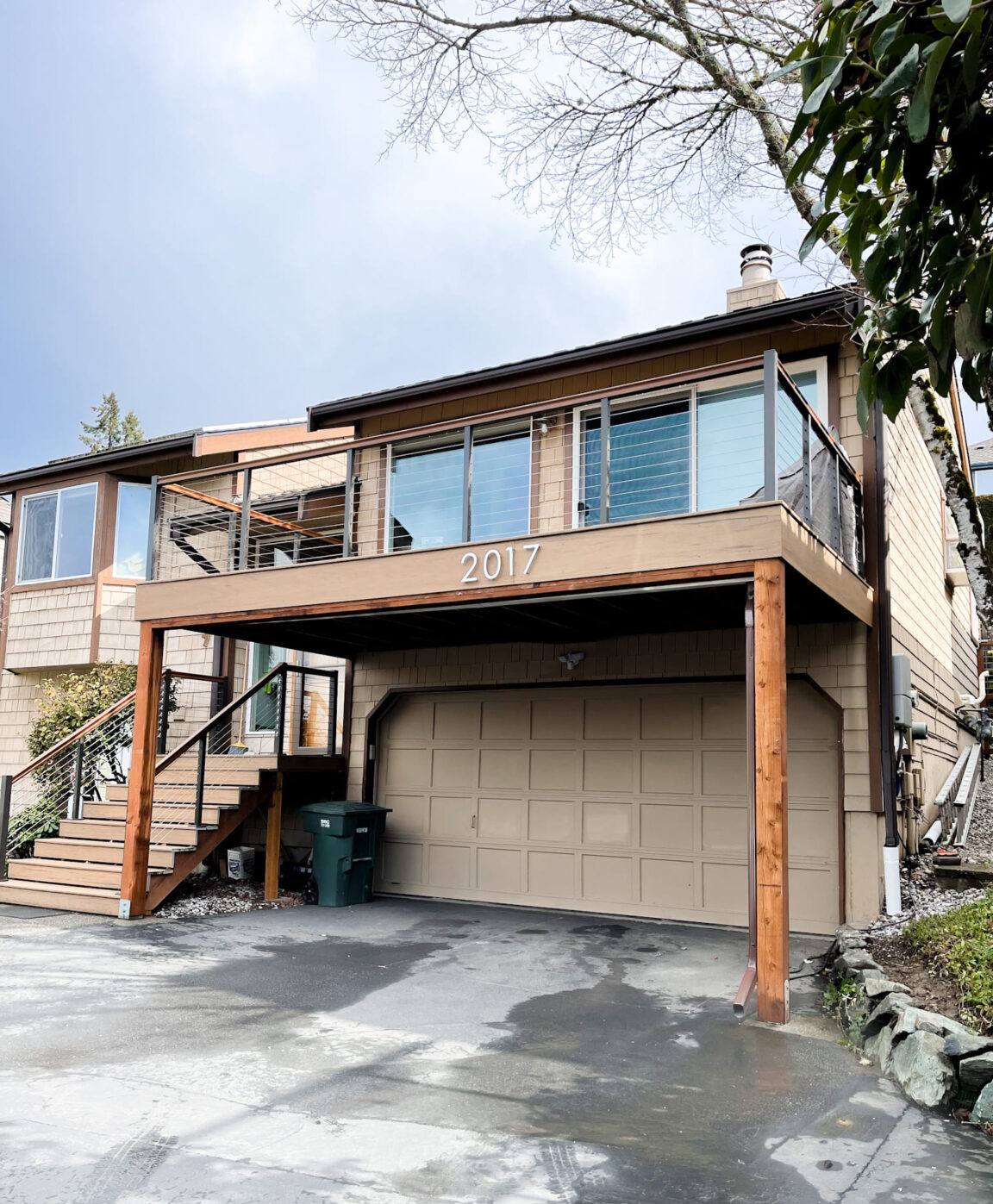
What Lynden's Climate Does to a Deck
Whatcom County's marine-influenced climate means decks rarely dry out completely between rain events for months at a time. That has specific consequences for deck construction, and it's worth understanding them before you decide on materials or layout.
Moisture That Doesn't Leave
Wood framing and decking that stay damp for extended periods are far more prone to rot, especially at joints, ledger connections, and anywhere water can pool instead of shed. In Lynden's climate, a deck with poor drainage detailing can stay wet for days after a storm passes, which accelerates decay in untreated or poorly sealed wood far beyond what the same design would experience in a drier region.
Moss and Algae Growth
The long moss season in this part of Washington isn't just cosmetic. Moss and algae hold moisture against decking boards and railings, and on smooth-sawn or poorly ventilated surfaces they can make a deck genuinely slippery underfoot for months at a time. Boards with tight, low-airflow spacing or that sit close to grade tend to grow moss faster and shed it less easily than a deck designed with proper ventilation and drainage from the start.
Fastener and Hardware Corrosion
Persistent dampness, combined with the mild salt influence carried inland on weather systems off the Salish Sea, accelerates corrosion on fasteners and connectors that aren't rated for it. Standard interior-grade screws or under-spec joist hangers can start rusting within a couple of seasons, and once a fastener corrodes it loses holding strength long before it looks obviously bad from a casual glance.
Freeze-Thaw Stress
Lynden gets more frost events than areas right on the water, and Whatcom County winters bring the occasional hard freeze. Water that's worked its way into a crack or a poorly sealed joint can freeze, expand, and widen that damage. Over several winters this is how small maintenance issues on an aging deck turn into structural ones.
What a Correctly Built Deck Looks Like Here
None of this means you need to over-engineer a simple deck. It means a handful of details matter more in Lynden than they would in a dry climate, and skipping them is where most deck problems we get called out to repair actually started.
- Ledger board flashing that fully sheds water away from the house rim joist, not just a bead of caulk
- Joist hangers, screws, and structural hardware rated for exterior or coastal exposure, not standard interior-grade fasteners
- Decking spaced and oriented to allow real airflow underneath, so boards can actually dry between rain events
- Footings and post bases set to account for local frost depth, not the minimum allowed on paper
- Positive drainage across the deck surface and away from the foundation, so water doesn't pool against the house
- A gap between the lowest framing members and grade that keeps soil moisture and vegetation from wicking directly into the wood
Get these right and the visible material on top — composite, cedar, or treated lumber — has a real chance of lasting its full expected lifespan. Get them wrong and even a premium decking product will fail early, because the problem was never the surface board, it was what's underneath it.
Choosing Materials for a Whatcom County Deck
There's no single "best" decking material for Lynden. Each option handles moisture, moss, and maintenance differently, and the right call depends on your budget, how much upkeep you want to do, and how the deck is used.
| Material | How it handles our climate | Maintenance | Typical lifespan here |
|---|---|---|---|
| Pressure-treated lumber | Good rot resistance when properly sealed; needs re-sealing to keep shedding moisture | Annual cleaning and re-sealing recommended | 15-20 years with upkeep |
| Cedar | Naturally moisture- and insect-resistant; still needs finish maintenance to resist graying and moss | Periodic cleaning, re-staining every few years | 15-25 years with upkeep |
| Composite decking | Doesn't rot, resists moisture absorption, but still needs cleaning to keep moss and algae off the surface | Occasional washing, no sealing or staining | 25-30+ years, varies by product warranty |
| PVC decking | Fully moisture-resistant surface material, performs well in persistently damp conditions | Occasional washing | 25-30+ years, varies by product warranty |
We'll walk through these trade-offs with you honestly, including where a lower-maintenance material costs more up front but saves you seasonal upkeep over the life of the deck. We're not going to steer you toward whatever's easiest for us to install — we'll tell you what fits your house, your budget, and how much time you actually want to spend maintaining a deck.
Railings, Fasteners, and the Details That Get Skipped
Railings and hardware take the brunt of Whatcom County's damp climate because they're exposed on all sides and get less airflow than an open deck surface. We spec corrosion-resistant fasteners and connectors as standard practice on every deck we build here, not as an upgrade option, because we've seen what standard hardware looks like after a few wet Lynden winters.
Railing Material Considerations
Wood railings need the same finish maintenance as wood decking to keep moisture out of the joints and end grain, which is often where rot starts first. Metal and composite railing systems reduce that maintenance burden but should still be checked periodically where they connect to the deck frame, since that's where water tends to collect if flashing or sealant details weren't done right.
Stairs and Grade-Level Transitions
Stair stringers and any part of the deck close to grade are the areas most exposed to splashback, standing water, and soil moisture. We pay particular attention to these zones — proper stringer coating, adequate clearance from grade, and drainage that routes water away rather than letting it pool at the base of the stairs.
Our Process for a Lynden Deck Project
Every property is different, but the general sequence for a custom deck build looks like this:
- On-site assessment of your yard, grade, drainage patterns, and how the deck will connect to your house
- Design discussion covering layout, size, materials, and railing style based on how you'll actually use the space
- A written estimate that lays out material choices and costs plainly, with trade-offs explained rather than buried in fine print
- Permitting where required — Whatcom County and the City of Lynden have specific requirements depending on deck height, size, and attachment to the structure
- Footings, framing, and ledger flashing installed to standards suited for our climate, not just code minimums
- Decking, railings, and stairs installed with attention to drainage, airflow, and fastener quality throughout
- Final walkthrough so you understand what maintenance the deck will need and when
We don't skip the permitting step even when it adds time to a project. An unpermitted deck attached to your home can create real problems later — at resale, at insurance claim time, or if the structure is ever inspected — and Lynden's permitting requirements exist partly because of exactly the frost and drainage issues we've described above.
Repairing an Existing Deck vs. Replacing It
Not every deck problem means starting over. If the framing and footings are sound and the issues are limited to surface boards, railings, or isolated soft spots, targeted repair can extend the life of a deck for a fraction of replacement cost. The deciding factor is almost always the substructure: if joists, ledger connections, or footings show rot or corrosion, patching the surface on top just delays a bigger repair and can mask a safety issue.
Signs It's Time for a Full Rebuild
- Soft or spongy spots in the decking that extend to the framing below, not just the surface board
- Visible rust or corrosion on structural fasteners and hangers
- Railings that feel loose or move when pushed, which often points to a post connection issue rather than a cosmetic one
- Persistent moss or algae growth in the same spots every year despite cleaning, suggesting a drainage problem underneath
- Ledger board separation or gapping where the deck meets the house
We'll give you an honest read on which category your deck falls into before we ever recommend a full replacement. A straightforward repair that solves the actual problem is a better outcome for you than an oversold rebuild.
Why Local Experience with Lynden Properties Matters
A crew that mostly works dry-climate jobs, or that treats every region the same, will often build to generic code minimums and call it done. Whatcom County's combination of persistent rain, long moss season, occasional hard freezes, and mild salt exposure inland from the bay means the margin for error on flashing, fastener choice, and drainage detailing is smaller than it looks. We work on homes throughout Lynden and the wider Bellingham area regularly, which means we're not guessing at how a deck will hold up here — we're building to what we've actually seen fail and what's held up over time in this specific climate.
That local familiarity also shows up in smaller ways: knowing which Whatcom County and City of Lynden permitting requirements apply to a given deck size or height, understanding how a property's grade and drainage typically behaves after a heavy fall storm, and building in the ventilation and drainage details that matter most for our specific moss and rain patterns rather than a generic national template.
Get a Free Estimate for Your Lynden Deck
Whether you're planning a new custom deck, replacing an aging one, or trying to figure out if your current deck needs repair or a full rebuild, we're happy to take a look and give you a straight answer. Reach out for a free, no-pressure estimate — we'll walk your property, talk through material and layout options suited to Lynden's climate, and put together a clear written quote using the form below.