 Bellingham Siding
 Why Sudden Valley Puts Extra Stress on Windows
Sudden Valley sits back in the hills above Lake Whatcom, and that setting cuts both ways. The tree canopy and lake proximity are why people live there, but they also create one of the tougher window environments in Whatcom County. Homes tucked under mature fir and cedar stay shaded most of the day, which means less sun to dry out a window frame after rain and more standing moisture on sills, tracks, and trim. Add in the marine climate that blankets the whole Bellingham area — humid air, driving winter rain, and a moss season that can stretch nine months of the year — and you've got conditions that will find every weak point in a window system over time.
We see the pattern a lot: a window that looks fine from the driveway but has a soft sill underneath, a fogged pane from a failed seal, or moss creeping into the exterior trim joints. None of that is unusual for the neighborhood. It's just what happens when a house sits in shade and dampness for decades without windows built or installed to handle it.
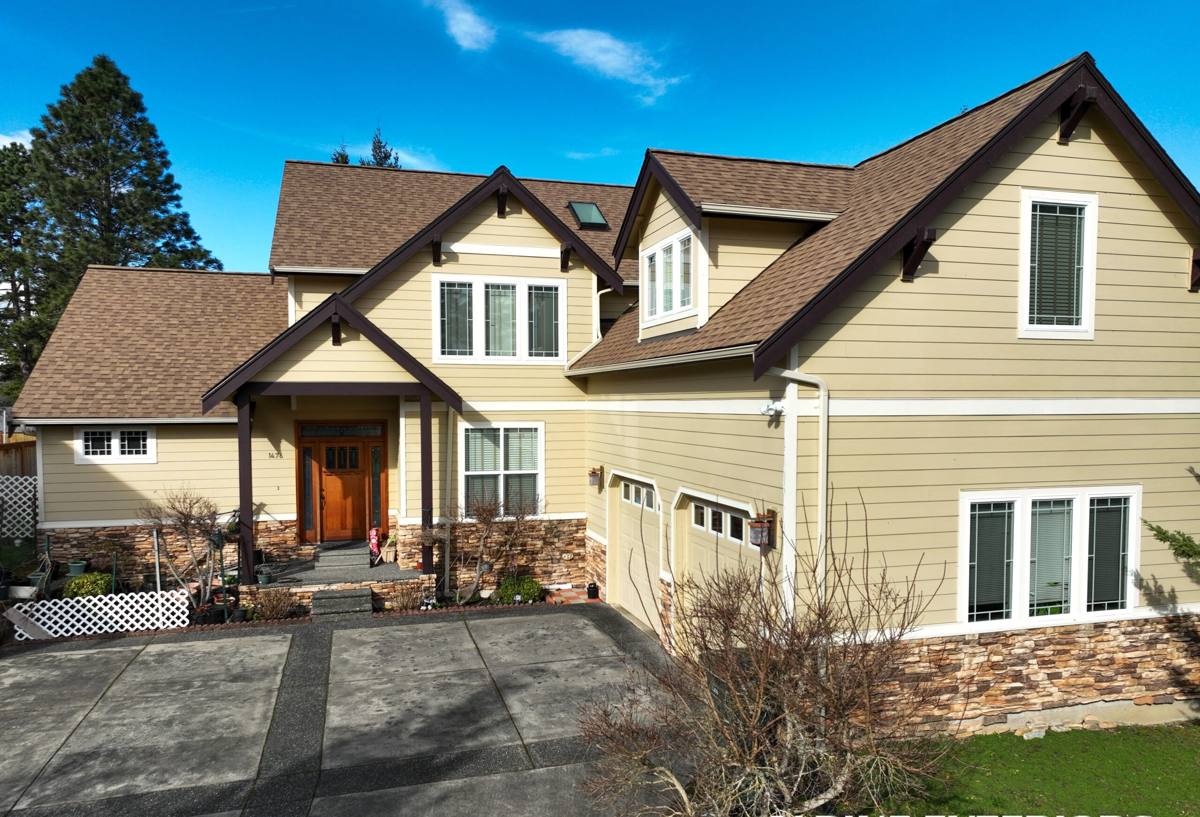
What "Custom" Actually Means for Sudden Valley Homes
A lot of homes in Sudden Valley were built in the 1970s and 80s as cabin-style or A-frame construction, with rough openings that don't match today's standard window sizes. Newer homes built in the community are more conventional, but even those can have settled or slightly out-of-square openings after 30-plus years of freeze-thaw cycles and moisture exposure. That's what "custom" really means here — it's not a marketing word, it's a practical necessity. Off-the-shelf sizing doesn't work when the opening itself is an inch out of square or a nonstandard shape left over from an older build.
Custom windows are built to the actual measured opening, not the other way around. That matters more than people expect, because a window that's forced to fit an opening it wasn't built for is the single most common cause of early flashing and seal failures we run into on service calls.
Full-Frame vs. Insert Replacement
There are two ways to replace a window, and the right call depends on the condition of what's already there, not personal preference:
- Insert (pocket) replacement — the new window fits inside the existing frame. Faster and less invasive, but only appropriate when the old frame is dry, square, and structurally sound.
- Full-frame replacement — the old frame is removed down to the rough opening, exposing the sheathing and framing underneath. Slower and more disruptive, but it's the only option that lets us actually see and fix hidden rot or old flashing mistakes.
On a shaded, moisture-prone lot, we lean toward inspecting for full-frame replacement more often than we would on a dry, open lot elsewhere in Bellingham — because there's a higher chance the frame has been quietly absorbing water for years.
What a Correct Window Installation Actually Involves
Windows fail because of installation details, far more often than because of the window itself. On a job in this kind of climate, we treat these steps as non-negotiable, not optional add-ons:
- Remove the old window and inspect the rough opening for rot, soft wood, or old water staining before anything new goes in
- Install a sloped sill pan so any water that does get past the window drains back outside instead of pooling
- Apply flashing tape and house wrap integration in the correct shingle-lap order — top layer over the one below, so water always sheds downward and outward
- Use a backer rod and quality sealant at the exterior joint, sized correctly for the gap — too thin a bead fails within a few seasons
- Shim and fasten the unit square and plumb, checking for racking before final fastening
- Insulate the gap between the frame and rough opening with a low-expansion foam or fiberglass — never left empty, never overfilled
- Finish exterior trim and caulking in a way that sheds water rather than trapping it against wood
Skip any one of those steps and you can still get a window that looks good on installation day. The problem shows up two, five, or ten years later as a soft spot under the sill or a stain creeping up the interior drywall — usually right after a wet fall and winter, which Whatcom County has no shortage of.
Choosing the Right Window for a Shaded, Wet Lot
Material choice matters more in Sudden Valley than it does in a drier, sunnier part of town, because the frame spends more time damp and less time drying out.
| Material | How It Handles Moisture & Shade | Maintenance |
|---|---|---|
| Vinyl | Won't rot; performs well in damp, shaded conditions | Low — occasional cleaning, no painting |
| Fiberglass | Dimensionally stable, resists moisture and swelling well | Low — very durable, higher upfront cost |
| Wood-clad | Attractive but exterior cladding can trap moisture at joints if not detailed well | Higher — requires monitoring at seams and paint/finish upkeep |
| Aluminum | Durable but conducts cold; can condense heavily in shaded, humid spots | Low, but condensation issues are common in this climate |
We don't refuse to install any of these outright — it comes down to matching the material to the specific wall, orientation, and how much sun and airflow that spot actually gets. A window on a shaded north wall under heavy tree cover is a different decision than one on a lake-facing wall that gets afternoon sun. We'll walk through that with you rather than defaulting to one product for every opening.
Glass Package Matters as Much as Frame Material
Double-pane, argon-filled, Low-E glass is close to standard now, and for good reason in this climate — it cuts down on the interior condensation that's common in older single-pane or early dual-pane windows once fall humidity sets in. On heavily shaded elevations where a window rarely sees direct sun, a Low-E coating tuned for heat retention (rather than heat rejection) usually makes more sense than it would on a south-facing wall.
Our Process, Start to Finish
- On-site evaluation — we look at the actual openings, check for rot or moisture damage, and note anything specific to how your lot sits relative to shade, drainage, and wind exposure.
- Measurement and product selection — openings are measured precisely for custom manufacturing; we go over material and glass options based on what that wall of the house actually deals with.
- Written quote — a clear scope and price before any commitment, including whether we expect insert or full-frame replacement.
- Install day — old windows removed, openings inspected and repaired if needed, new units installed with proper flashing and sealing, work area cleaned up as we go.
- Final walkthrough — we check operation, seals, and finish work with you before calling the job done.
We don't add pressure tactics or "today only" pricing to that process. It's a straightforward evaluation, an honest quote, and a job done right the first time.
Mistakes We Commonly Find on Older Sudden Valley Windows
Because we've worked on homes throughout the community, certain problems show up again and again:
- Caulk used as the only water barrier, with no flashing tape behind it — fine for a year or two, then it cracks and water gets behind the trim
- Moss and organic buildup packed into exterior trim joints, holding moisture against the wood far longer than open air would
- Foam insulation gaps around the frame that let cold, damp air infiltrate even though the window itself looks intact
- Failed insulated glass seals showing up as fog or moisture between the panes — a sign the unit needs replacing, not just recaulking
None of these are things a homeowner should feel bad about missing — they're not visible from inside the house until they've been a problem for a while. It's exactly why a proper inspection before replacement matters more than picking a window off a showroom floor.
What This Typically Costs
Pricing depends on window size, material, glass package, and whether the job is an insert replacement or full-frame with repair work. As a broad guide for planning purposes:
| Factor | Impact on Cost |
|---|---|
| Insert vs. full-frame replacement | Full-frame costs more due to added labor and possible framing repair |
| Frame material (vinyl vs. fiberglass vs. wood-clad) | Vinyl is typically the most economical; fiberglass and wood-clad run higher |
| Number and size of openings | Larger or custom-shaped windows cost more to manufacture and install |
| Hidden rot or framing damage | Adds labor and material cost, only known once the old window is out |
We won't quote a number without seeing the actual openings — anyone who does is guessing. What we can tell you honestly is that homes with heavy shade and moisture exposure, like much of Sudden Valley, are more likely to need full-frame replacement on at least a few windows, simply because of how long moisture has had to work on the framing.
Why It Matters to Hire a Crew That Already Works This Neighborhood
Sudden Valley isn't like every neighborhood in Whatcom County. The lots, tree cover, and building styles create a specific set of problems, and a crew that's worked there before knows to check for them before they become a surprise mid-job. That includes knowing which older construction styles tend to have nonstandard openings, understanding how shade and drainage on a given lot affect a window's long-term performance, and being familiar with any community guidelines around exterior appearance that a private, HOA-governed neighborhood like this one typically has. It's worth confirming any such requirements with the community directly before work begins — we're glad to work within them once you know what they are.
None of that replaces a careful, in-person look at your specific house. But it does mean fewer surprises, a more accurate quote up front, and a job that accounts for the realities of the site instead of treating it like a generic install.
If you're dealing with foggy glass, soft sills, drafts, or just windows that are past their useful life, we're happy to come take a look. The estimate is free, there's no pressure, and you'll get a straight answer about what your home actually needs — use the form below to get started.