 Bellingham Siding
 Why York Homes Need Windows Built for This Exact Climate
York sits close enough to the water and the weather patterns that roll off Bellingham Bay that window performance here is a different conversation than it would be inland. Salt-laden air accelerates corrosion on hardware and fasteners that aren't rated for it. Driving rain — the sideways kind that Whatcom County gets several months a year — finds every gap in flashing and trim that a calmer climate would never expose. And the long stretch of gray, damp months creates ideal conditions for moss and algae to take hold on sills, cladding, and anywhere water sits instead of shedding. A window that's fine in a dry inland town can fail years early here if it wasn't chosen and installed with this environment in mind.
That's the starting point for every custom window job we do in York: not "what's the cheapest option that fits the hole," but "what will actually hold up to another twenty Bellingham winters."
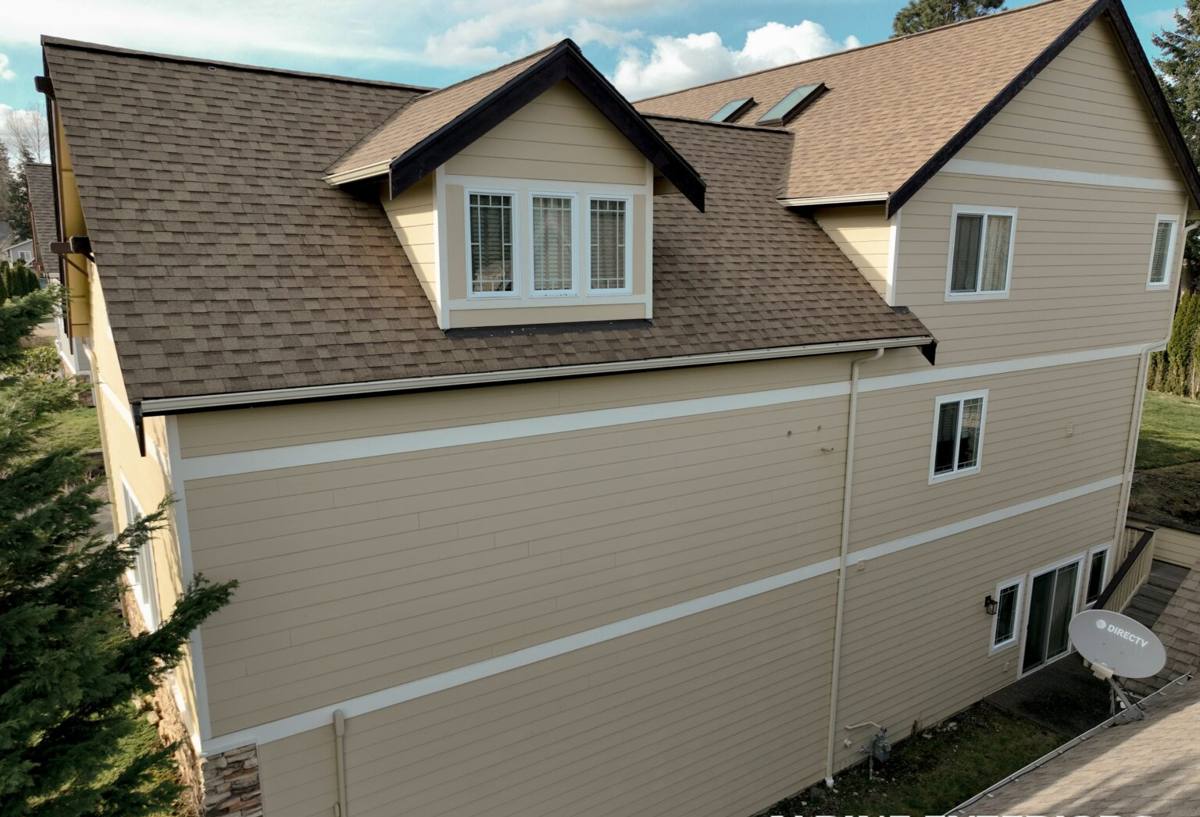
What "Custom" Actually Means on a York Window Job
Custom doesn't mean expensive or unusual-looking. It means the window is specified and built to match the actual opening, the actual wall assembly, and the actual exposure of your specific house — instead of forcing a stock size into a rough opening and packing the gaps with foam and hope.
Matching Openings on Older and Mixed-Era Homes
York, like a lot of established Bellingham neighborhoods, has a mix of home ages and construction styles. Older houses often have openings that don't match today's standard sizes, settled framing that's slightly out of square, or original trim details worth preserving. A custom approach means we measure the actual opening, account for any settling or square issues, and either order a true custom size or select the closest standard size and detail the frame properly — rather than trimming down the opening in a way that compromises the structure or the weatherproofing.
Matching Exposure, Not Just Style
A window on the side of the house that takes the brunt of driving rain and salt air needs different flashing, sealant, and sometimes material choices than a sheltered window under a deep eave on the same house. Custom work accounts for that instead of treating every opening on the house the same.
Material Choices That Actually Hold Up Here
We install a range of materials, and the right one depends on budget, exposure, and how the home is trimmed. Here's how the common options stack up specifically for a coastal Whatcom County setting:
| Material | Coastal/Moisture Performance | Maintenance | Typical Fit |
|---|---|---|---|
| Vinyl | Good — won't rot or corrode; seams and hardware quality vary by manufacturer | Low | Most homes, best value |
| Fiberglass | Excellent — very stable in wet/dry cycling and temperature swings | Low | Higher-exposure walls, long-term owners |
| Wood (unclad) | Poor without diligent upkeep — absorbs moisture, needs repainting/sealing | High | Historic character where owner accepts upkeep |
| Aluminum-clad wood | Good exterior protection, but clad seams and sill details are sensitive to installation quality | Medium | Wood interior look with better exterior durability |
We're candid about the trade-offs of each. Wood gives a look some homeowners want, but in a climate with this much sustained moisture and moss growth, it demands a maintenance schedule that many owners underestimate when they buy it. That's a maintenance-burden conversation, not a knock on the material — it's simply what unclad wood requires here.
What a Correct Installation Actually Involves
Most window failures we get called out to repair in this area aren't the window itself — they're the installation around it. Here's what we treat as non-negotiable on every job:
- Remove old window and inspect the rough opening framing for rot or moisture damage before anything new goes in
- Install proper flashing at the sill, jambs, and head — sequenced so water sheds outward at every layer, not just caulked over
- Use sill pan flashing to catch and redirect any water that gets past the primary seal
- Set the window level, plumb, and square, then confirm it operates smoothly before final fastening
- Insulate the gap between frame and rough opening — not overpacked, which can bow the frame
- Seal and trim the exterior with materials rated for sustained wet exposure
- Test operation and drainage before calling the job done
Skip any one of these steps and you can end up with a window that looks fine for a season or two, then starts showing water staining, soft trim, or fogging between panes once the region's wet months put real pressure on it.
Our Process for a York Window Project
We keep the process straightforward and try to minimize disruption, since most window jobs happen while you're still living in the house.
- On-site assessment — we look at each opening, note exposure differences around the house, and check for any signs of existing moisture or rot that need addressing before new windows go in.
- Material and style selection — we walk through options based on your budget, the home's style, and how exposed each wall is to wind-driven rain.
- Measurement and ordering — precise measurements are taken for each opening individually; we don't assume every window on the house is the same size, even when they look similar.
- Installation — old windows come out, openings are inspected and repaired if needed, new windows go in with full flashing and sealing detail.
- Final check — every window is tested for smooth operation, tight seal, and proper drainage before we consider the job finished.
Moss, Algae, and Long-Term Moisture Management
Bellingham's extended damp season means moss and algae aren't just a roof problem — they show up on window sills, trim, and cladding wherever water sits instead of draining away. A well-detailed window install accounts for this from the start:
- Sills sloped correctly so standing water drains rather than pools
- Drainage/weep paths kept clear and unobstructed on operable windows
- Trim and sealant materials chosen for sustained wet exposure, not just appearance
- Gaps and joints sealed in a way that sheds water instead of trapping it against the frame
None of this eliminates the need for periodic cleaning — moss will still try to establish itself on a shaded, damp sill over a wet winter — but correct detailing means it's a surface cleaning job instead of a sign of trapped moisture doing damage behind the trim.
Signs Your Current Windows Are Already Struggling
If you're not sure whether replacement is worth considering yet, a few signs are worth taking seriously in this climate:
- Fogging or moisture between panes on double- or triple-glazed units, which usually means a failed seal
- Soft, discolored, or swelling trim and sills, especially on walls that catch the prevailing rain
- Persistent moss or algae buildup that returns quickly after cleaning
- Windows that are difficult to open, close, or lock — often a sign the frame has shifted or swollen
- Noticeable drafts or a cold spot near the window on windy, rainy days
Any one of these on its own might just need a repair. Several of them together, especially on an older window, usually mean the unit and its installation have reached the end of what's worth patching.
What Drives Cost on a Custom Window Job
We won't quote a number without seeing the openings, but these are the factors that actually move the price on a York job:
| Factor | Why It Matters |
|---|---|
| Material | Vinyl, fiberglass, and clad-wood carry different unit costs and long-term durability |
| Opening condition | Rot or framing repair discovered during removal adds labor before the new window goes in |
| Exposure | High-exposure walls may warrant upgraded flashing, sealant, or hardware |
| Custom vs. near-standard sizing | True custom sizes cost more than a close-fit standard size detailed properly |
| Number of openings | Doing the whole house at once is typically more efficient per-window than one-off replacements |
The honest answer is that a single accurately-installed window, done right, usually costs more up front than a quick swap — but a rushed installation that fails in a few years costs far more once you count the repair and redo.
Why Local Experience in This Area Matters
A crew that regularly works Bellingham and Whatcom County neighborhoods like York already knows what this climate does to a window installation over time — which exposures need extra flashing attention, how fast moss establishes on a poorly-sloped sill, and which material choices hold up versus which ones look good for the first year and then start showing wear. That's the kind of judgment that only comes from working this specific coastline and weather pattern job after job, not from a general install checklist written for a different climate.
If you're weighing a window project for your York home — whether it's a full-house replacement or a few problem windows — we're glad to take a look and give you a straight, no-pressure estimate using the form below.