 Bellingham Siding
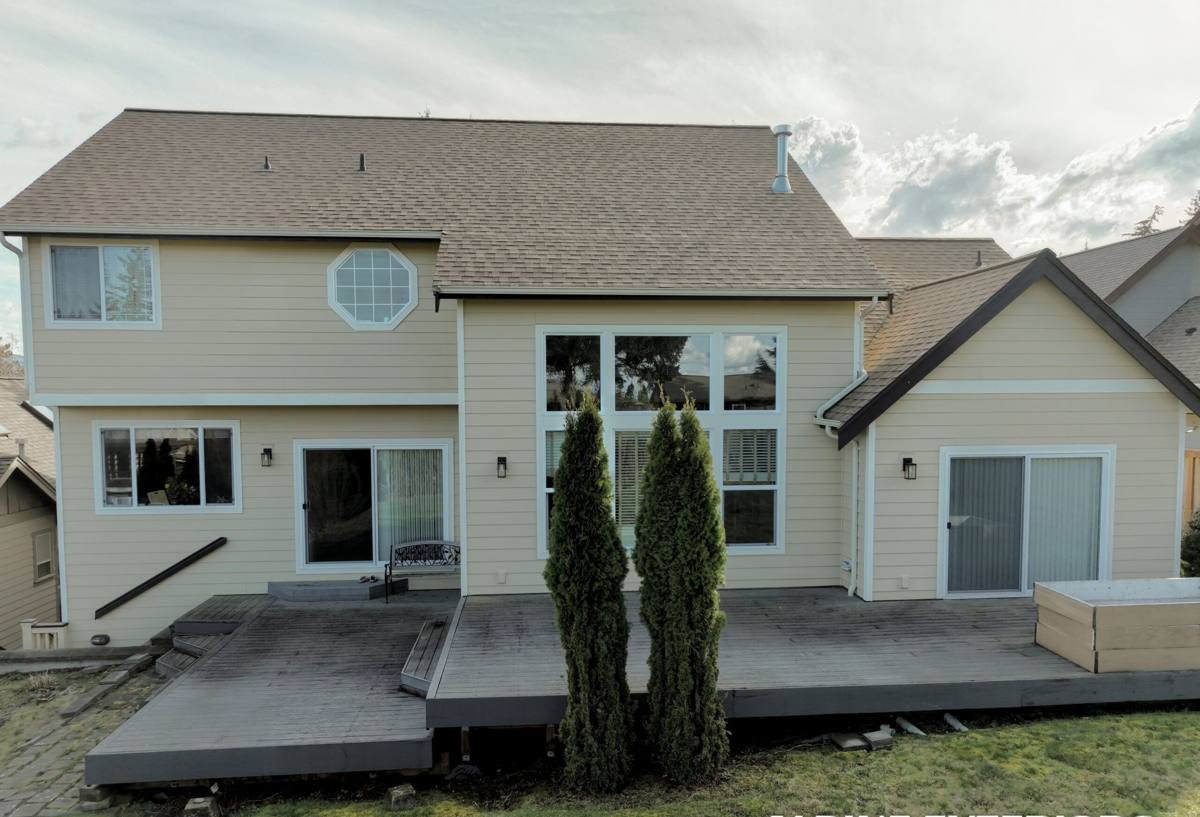
 Building a Deck in Blaine That Actually Holds Up
Blaine sits right on the water at the edge of Whatcom County, and that location is exactly what makes deck building here different from a build twenty miles inland. Salt-laden air off the Strait of Georgia and Semiahmoo Bay, driving rain that comes in sideways during winter storms, and a shoulder season where everything north-facing grows moss inside of a few weeks — these aren't abstract concerns. They're the reasons a deck built with inland assumptions starts failing early: rusted fasteners, soft ledger boards, slick moss-covered boards by the second winter. A deck built for Blaine's specific exposure is a different job from the same deck built in a drier, more sheltered part of Whatcom County, even if the plans look identical on paper.
This page covers what actually matters when you're building a deck in Blaine: the material and hardware choices that make sense here, what a correctly built deck involves structurally, and how our process works from first estimate to final walkthrough.
Why Blaine's Exposure Changes the Build
Salt Air and Metal Fasteners
Properties close to the water deal with airborne salt that accelerates corrosion on anything metal — nails, screws, joist hangers, post bases. A fastener rated for general outdoor use inland can start showing rust streaks within a season or two this close to the shoreline. That's not a cosmetic issue; corroded hardware loses holding strength, and holding strength is what keeps a deck attached to your house and standing on its footings. We spec hot-dip galvanized or stainless connectors for anything within reach of salt spray, and we match fastener coatings to the decking and framing material so you're not mixing metals that corrode each other.
Driving Rain and the Ledger Connection
Most deck failures that make the news start at one place: the ledger board, where the deck attaches to the house. Wind-driven rain doesn't fall straight down here — it gets pushed sideways and up under trim and flashing that would keep water out in a calmer climate. If the ledger flashing isn't detailed correctly, water tracks behind it and rots the rim joist and sheathing from the inside, often for years before it shows on the surface. This is the single detail we're most careful about on every Blaine deck we build.
Moss, Shade, and Standing Water
North and east-facing decks under tree cover in this area grow moss fast, especially through the wet months. Moss holds moisture against the board surface, which accelerates rot in wood decking and can make composite and even PVC boards dangerously slick. Board spacing, airflow underneath the deck, and gap sizing between boards all affect how fast moss takes hold and how much standing water the surface holds after a storm.
Choosing the Right Decking Material for a Blaine Property
There's no single "best" decking material — the right choice depends on your budget, how much upkeep you're willing to do, and how exposed the deck is to salt air, shade, and moisture. Here's how the common options actually perform in this climate:
| Material | How It Handles Salt Air & Rain | Moss/Mildew Behavior | Maintenance |
|---|---|---|---|
| Pressure-treated wood | Holds up fine if fasteners are corrosion-rated; wood itself is not the weak point | Prone to moss and mildew staining without regular cleaning and sealing | Annual cleaning, re-sealing every 1-2 years |
| Cedar | Naturally rot-resistant, but softer surface can weather unevenly near the coast | Still needs cleaning to prevent moss in shaded, damp spots | Periodic cleaning and oil/sealant, more than composite |
| Composite decking | Doesn't rot or corrode itself; hardware still needs to be corrosion-rated | Can still grow surface moss/algae in constant shade; needs occasional washing | Low — periodic washing, no sealing or staining |
| PVC/capped polymer decking | Fully sealed surface, handles salt air and rain exposure very well | Least prone to moss taking hold, but still benefits from washing in shaded areas | Lowest — occasional washing |
We'll walk through this trade-off with you honestly rather than pushing whatever has the best margin. If your deck sits in a sunny, well-drained spot, a well-built wood deck can serve you fine for years. If it's shaded, close to the water, or you don't want a recurring maintenance chore, composite or PVC earns its higher upfront cost.
What a Correctly Built Deck Actually Involves
A deck that holds up in Blaine's conditions isn't about upgrading one material — it's a handful of details done right, all the way through the structure:
- Ledger flashing: proper flashing installed under the house's weather barrier, not just caulked over the top, so water sheds away from the rim joist
- Joist tape: a self-adhering membrane over the top of every framing member so screw penetrations don't become a hundred entry points for moisture
- Corrosion-rated hardware: joist hangers, structural screws, and post bases matched to the coastal exposure, not generic inland-grade fasteners
- Footings sized for the soil: proper depth and diameter for Whatcom County's frost and drainage conditions, not guessed at
- Airflow underneath: enough clearance and ventilation below the deck that framing can dry out between rain events instead of staying damp
- Board spacing: gaps sized to shed water and debris rather than trap it, which also slows moss growth
Skip any one of these and the deck can still look fine for a year or two — the problems that come from cutting corners here show up slowly, which is exactly why they're easy for a rushed contractor to skip.
Our Process, From Estimate to Finished Deck
1. On-Site Walkthrough
We look at sun exposure, drainage, how close you are to the water, and how the deck will attach to your house before we talk materials. A deck plan that works for a sheltered inland lot isn't automatically right for a Blaine property with more wind and salt exposure.
2. Honest Material Recommendation
We'll lay out the real trade-offs between wood, composite, and PVC decking for your specific site and budget — not just the option with the best sales pitch.
3. Permit Handling
Most decks attached to the house, or built above a certain height, require a building permit in Whatcom County and within Blaine city limits. We handle that paperwork as part of the job so you're not the one figuring out what applies to your property.
4. Build, Inspect, Walkthrough
We build to the details above — flashing, joist tape, corrosion-rated hardware, proper footings — and walk you through the finished deck so you know what you're looking at and what upkeep it actually needs.
Living With Your Deck: Maintenance for This Climate
Every deck material needs some upkeep here — the question is how much and how often. A simple seasonal routine keeps moss and moisture damage from getting ahead of you:
- Rinse or sweep debris off the deck surface regularly through fall, when leaves and needles trap moisture against the boards
- Wash shaded or north-facing sections with a deck cleaner or diluted bleach solution before moss gets established, not after
- Check that gaps between boards stay clear of debris so water keeps draining through instead of pooling
- Inspect the ledger board area yearly for any sign of water staining or soft wood, especially after a hard winter
- Re-seal or re-stain wood decking on the schedule the product calls for — skipping a cycle in this climate shows up fast
- Keep an eye on hardware near the water side of the house for early rust, and have it swapped before it's a structural issue
Permits and Working With Local Requirements
Deck permitting in Blaine runs through the city, while unincorporated parts of the surrounding area fall under Whatcom County. Requirements vary by deck height, size, and whether it's attached to the house, so we don't guess — we confirm what applies to your specific property before work starts and handle the submission as part of the job. This also matters for resale: an unpermitted deck attached to a house can become a problem during a future home sale or refinance inspection.
Why a Crew That Already Works Blaine Matters
Deck building isn't a one-size-fits-all trade, and Blaine's combination of coastal exposure, wind-driven rain, and shaded moss-prone lots is different from what a crew mostly working drier, more sheltered parts of Whatcom County sees day to day. A crew that already builds in Blaine knows to spec corrosion-rated hardware without being asked, details ledger flashing for sideways rain as a default rather than an upgrade, and can tell you honestly which decking material will actually hold up on your specific lot. That local pattern-recognition is the difference between a deck that needs real repairs in year three and one that's still solid a decade in.
Get a Straight Answer on Your Deck Project
If you're planning a new deck or replacing one that didn't hold up to Blaine's weather, we're happy to take a look and give you an honest read on materials, scope, and what it'll take to build it right. Request a free, no-pressure estimate using the form below.