 Bellingham Siding
 Deck Repair in Fairhaven: Built for Where You Live
Fairhaven sits close enough to the water that its homes take a different kind of weathering than decks further inland. Salt-laden air off Bellingham Bay, long stretches of driving rain through fall and winter, and a moss season that can run six months or more all work on a deck's fasteners, framing, and surface at the same time. A deck that would hold up fine in a drier part of Whatcom County can develop soft boards, rusted hardware, or a spongy ledger connection years earlier here. Repairing a deck correctly in this neighborhood means understanding that combination of exposures, not just patching whatever board looks bad.
This page covers what deck repair actually involves for a Fairhaven property, how we diagnose what's really wrong versus what's just cosmetic, and what our process looks like from first look to final walkthrough.
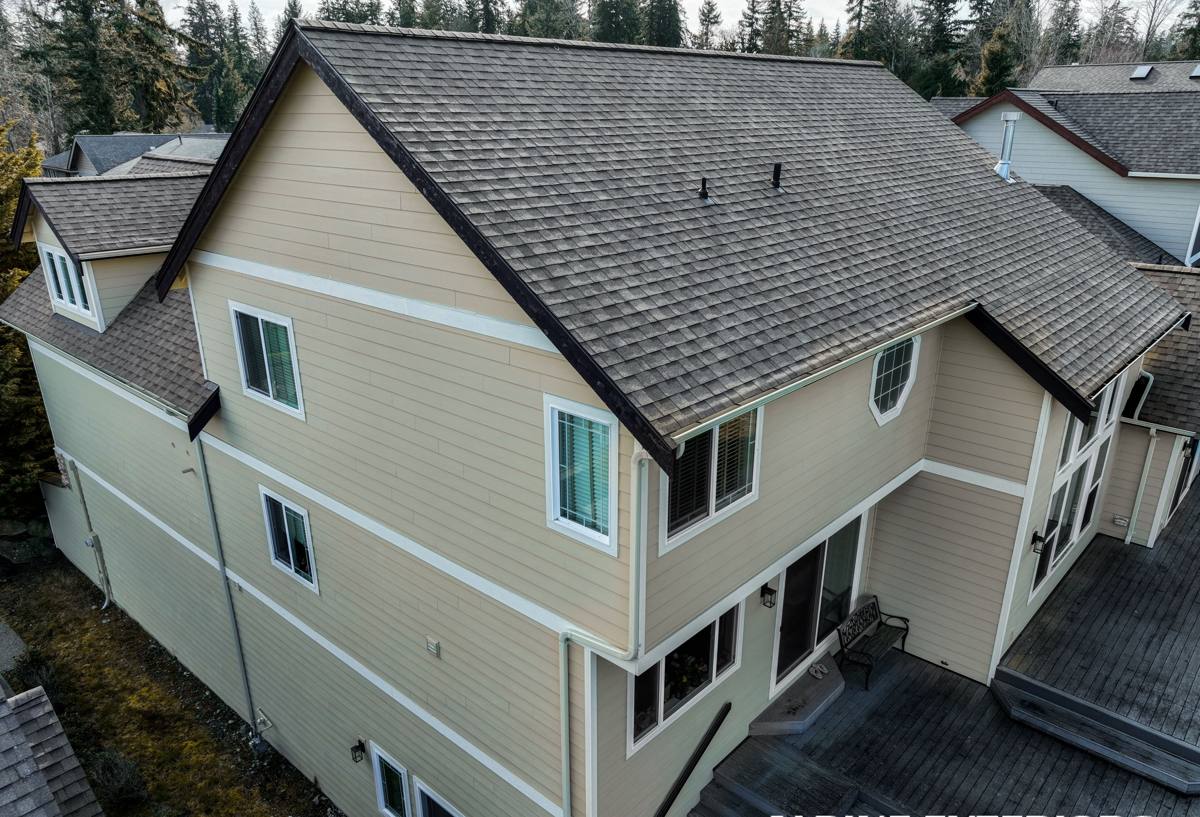
What Fairhaven's Climate Does to a Deck Over Time
Salt Air and Metal Fasteners
Proximity to saltwater accelerates corrosion on anything metal — nails, screws, joist hangers, bolts, and railing hardware. Corroding fasteners lose grip strength long before they look obviously rusted from the top. A board can appear solid while the fastener holding it down has already lost much of its holding power underneath.
Driving Rain and Moisture Intrusion
Bellingham's rain doesn't just fall straight down — wind-driven rain pushes water sideways into places a deck wasn't necessarily designed to shed it: end grain, ledger board connections, stair stringers, and any spot where two pieces of wood meet without a gap. Once water gets into those joints repeatedly over a wet season, it doesn't fully dry out before the next storm arrives.
Moss, Algae, and a Long Wet Season
Shaded portions of a deck, and any deck under tree cover (common throughout Fairhaven's wooded lots), grow moss and algae for much of the year. Beyond looking bad, moss holds moisture against the decking surface and makes boards slick and dangerous underfoot — a safety issue as much as a maintenance one.
Signs a Fairhaven Deck Needs Repair, Not Just Cleaning
Homeowners often call us thinking they need a full rebuild when the deck actually needs targeted repair — or the reverse, where a deck that looks fine on the surface has real structural problems underneath. Here's what we check for:
- Soft, spongy, or bouncy spots when you walk across the decking
- Boards that have cupped, split lengthwise, or pulled away from fasteners
- Rust streaks below joist hangers, screws, or nail heads
- Gaps or movement where the deck ledger meets the house
- Railings or posts that wiggle when pushed
- Stair stringers that flex or show rot at ground contact points
- Persistent moss or algae that returns quickly after cleaning
- Visible daylight or water staining underneath the deck at the framing
Any one of these can be a simple fix. Several at once, especially involving the ledger or main framing, usually point to a deeper moisture problem that needs to be solved before new boards go down — otherwise you're repairing the same spot again in a couple of years.
Repair or Replace? How We Make That Call
Not every deck needs full replacement, and we don't default to recommending one. The decision usually comes down to how much of the structure — not just the surface decking — is compromised.
| Condition Found | Usually Repairable | Usually Needs Replacement |
|---|---|---|
| Individual cupped or split boards | Yes — spot replacement | Only if widespread across the deck |
| Surface graying or moss buildup | Yes — clean, treat, reseal | Rarely on its own |
| Rusted fasteners, sound wood underneath | Yes — refasten or re-hang | No |
| Soft or rotted ledger board | Sometimes, if caught early | Often — ledger is structural |
| Rot at multiple posts or stringers | Rarely | Yes — framing integrity is at risk |
| Deck built without proper flashing at the house | Repair with retrofit flashing | Depends on extent of existing damage |
We'll always tell you honestly which category your deck falls into, including when a repair is the right call even though a replacement would be more profitable for us. A well-executed repair on sound framing can add many years of safe use for a fraction of replacement cost.
What a Correct Deck Repair Actually Involves
Diagnosis Before Demolition
We start by pulling a few boards and probing suspect framing with an awl rather than guessing from the surface. Wood that sounds solid when tapped and doesn't give under a probe is generally fine to leave in place. Wood that's spongy or crumbles is coming out, regardless of how it looks from above.
The Ledger Connection
Where the deck attaches to the house is the single most important structural point on most decks, and it's also the most common spot for hidden water damage in our climate. A correct repair checks for proper flashing between the ledger and the house siding or sheathing, confirms the ledger is through-bolted (not just nailed) into solid framing, and replaces any ledger or rim joist material that's begun to rot before it becomes a safety issue.
Fasteners and Hardware
Given how hard salt air is on metal here, we replace corroded joist hangers, screws, and bolts with hot-dip galvanized or stainless hardware rated for exterior and ground-contact use, rather than reusing what's there or matching with standard interior-grade fasteners.
Framing and Support
Posts, beams, joists, and stringers get checked for rot, especially near ground contact and anywhere water has been pooling or draining slowly. Any compromised framing member gets replaced and properly braced — patching around bad framing instead of replacing it just moves the problem a few years down the road.
Decking Surface
Individual boards that are cupped, split, or soft get pulled and replaced to match the existing decking as closely as possible. Where the whole deck surface has reached the end of its useful life but the framing underneath is sound, resurfacing with new decking over the existing structure is often the most cost-effective option.
Railings and Stairs
Loose railings and posts are a common safety complaint we hear from Fairhaven homeowners, particularly on older decks. We re-secure posts into solid framing (not just surface-mounted to decking), and check that stair stringers and treads meet current safety expectations for spacing and support.
Our Deck Repair Process
- On-site assessment. We walk the full deck — top, underside, and ledger connection — and probe anything questionable rather than relying on a visual check alone.
- Honest scope and estimate. You get a clear breakdown of what needs repair, what's optional, and what we'd recommend replacing outright, with reasoning for each.
- Material selection. We discuss decking and hardware options suited to a marine climate, matching your existing deck where a full match matters to you.
- Repair work. Framing and structural issues are addressed first, then fasteners and hardware, then surface decking and railings.
- Final walkthrough. We check the repaired areas with you, point out any maintenance items worth watching, and make sure the deck feels solid underfoot before we call it done.
Decking Material Considerations When Repairing
When boards need replacing, homeowners usually ask whether to match existing wood decking or switch to composite for the repaired sections. Both are reasonable choices, and the right answer depends on your existing deck and how much of it is being replaced.
Matching with the same wood species keeps a uniform appearance but means the new boards will need the same periodic sealing and cleaning as the rest of the deck to hold up against our wet season. Composite decking resists moss and moisture damage better and needs less upkeep, but mixing it into an otherwise all-wood deck will look different — new composite boards won't age or weather the same way as surrounding wood. We'll walk you through that trade-off honestly rather than pushing whichever material is easier for us to install.
Maintenance That Extends a Repair's Life
A repair is only as good as the upkeep that follows it, especially given how much moss and moisture this area sees. A few habits make a real difference:
- Clear leaves and debris from between boards before they trap moisture through the wet months
- Clean moss and algae off the surface at least once a year, more often in shaded areas
- Reseal or restain wood decking on the schedule appropriate for the product — usually every one to two years in this climate
- Check the ledger flashing and fasteners for corrosion periodically, especially after severe storms
- Keep gutters and downspouts near the deck clear so runoff isn't draining directly onto or under it
Why Hiring a Crew That Already Works Fairhaven Matters
Deck problems in this neighborhood tend to follow patterns — moisture at the ledger, moss in shaded corners, corrosion on older hardware — that a crew working Fairhaven regularly recognizes on sight instead of having to diagnose from scratch. That familiarity matters when it comes to catching a hidden ledger problem before it becomes a bigger repair, or knowing which fastener grade actually holds up this close to the water. It also means someone local to Whatcom County who understands the permitting and code expectations for deck and railing work in the area, and who's available for a follow-up visit without a long drive.
Get an Honest Look at Your Deck
If your Fairhaven deck has soft spots, loose railings, corroding hardware, or just isn't holding up the way it used to, we're happy to take a look and give you a straight answer on what it needs. Use the form below to request a free, no-pressure estimate — we'll tell you honestly whether you're looking at a repair or something bigger, with no obligation either way.